
Month: September 2015


The Klown Kar is Off the Rails
I want to reblog this for it makes us think about what is the truth and what isn’t. Thanks to the author, Zaid Jilani for this post!

11 Distortions, Misrepresentations and Outright Lies in the GOP Debate
September 17, 2015

Photo Credit: via YouTube
Last night, millions of Americans watched two rounds of Republican Party presidential debates at the library of Republican president Ronald Reagan who, if he was alive today, would be considered to be on the far left of his party. First was a debate among candidates who have failed to achieve more than one percent in national polls, and second was the debate among relative frontrunners. Both debates offered a window into an entirely different world, completely unrelated to the one we actually live in. Candidates…
View original post 737 more words
Bowral Tulip Festival 1982 and 1983
We have some pictures to prove that we were at Bowral in 1982 and also in 1983. In 1982 we were in Bowral with our friends and their daughter Ellen who was a good companion for our daughter Caroline who was four at the time. I remember that in 1982 we were not only at Corbett Gardens in Bowral, but we had also tickets to visit a number of private display garden. We enjoyed very much looking at all the gardens.


Caroline with us, her parents, also Ellen with her parents


For the following pictures it says in our album “Bowral Oct.83” During that visit Caroline was not quite five yet. The Tulip Festival was on again in the Corbett Gardens, the same as every year. Since Caroline is to be seen in the picture with some Dutch girls from the Festival, I think that the Tulip Festival must still have been on, even though it was already October.


Uta’s Update, 17th September 2015
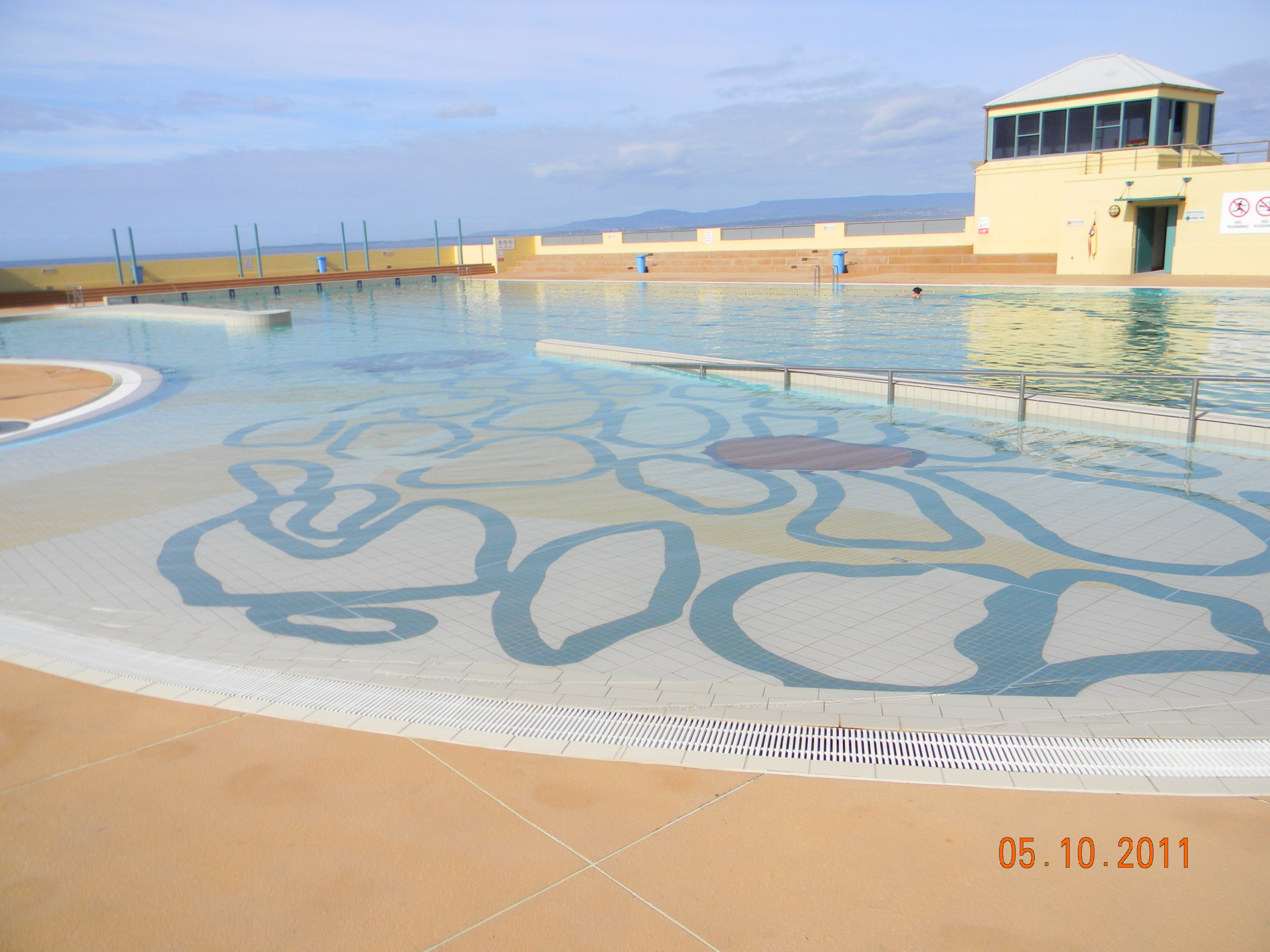
In October 2011 Peter and I had a look at Port Kembla Beach Swimming Pool. The beach is right next to the pool. It was a bit cool, however there was no wind. We had a great walk along the beach. There were hardly any people, even though the school vacation was still on. The pool cafe was open. We sat outside under the umbrella with some good fruit juice.
On the way home we stopped at a Lagoon Reserve and watched some pelicans. For lunch we had grilled fish with salad and chips as well as tea. Delicious meal in a hidden away cafe in a close by shopping centre. The shopping centre was full of people including lots of children. I wonder, why some of those people weren’t on the beach on a beautiful springday like this?
I must say, the Port Kembla pool water still seemed a bit cold. I prefer our solar heated pool in Dapto where the temperature is never less then 24 Degrees Celsius. Still, at the beach I went with my feet a little bit into the water. This was very enjoyable!
By the end of September 2011 we went up the escarpment along Macquarie Pass and then all the way to Bowral, a lovely township in the Southern Highlands of New South Wales, Australia. There are some lovely gardens in Bowral, and most of the tulips there were still in full bloom. Peter took the chance to take lots of pictures on both our outings. We had a lovely time!


Uta’s September2015 Diary
Wednesday, 16th of September 2015
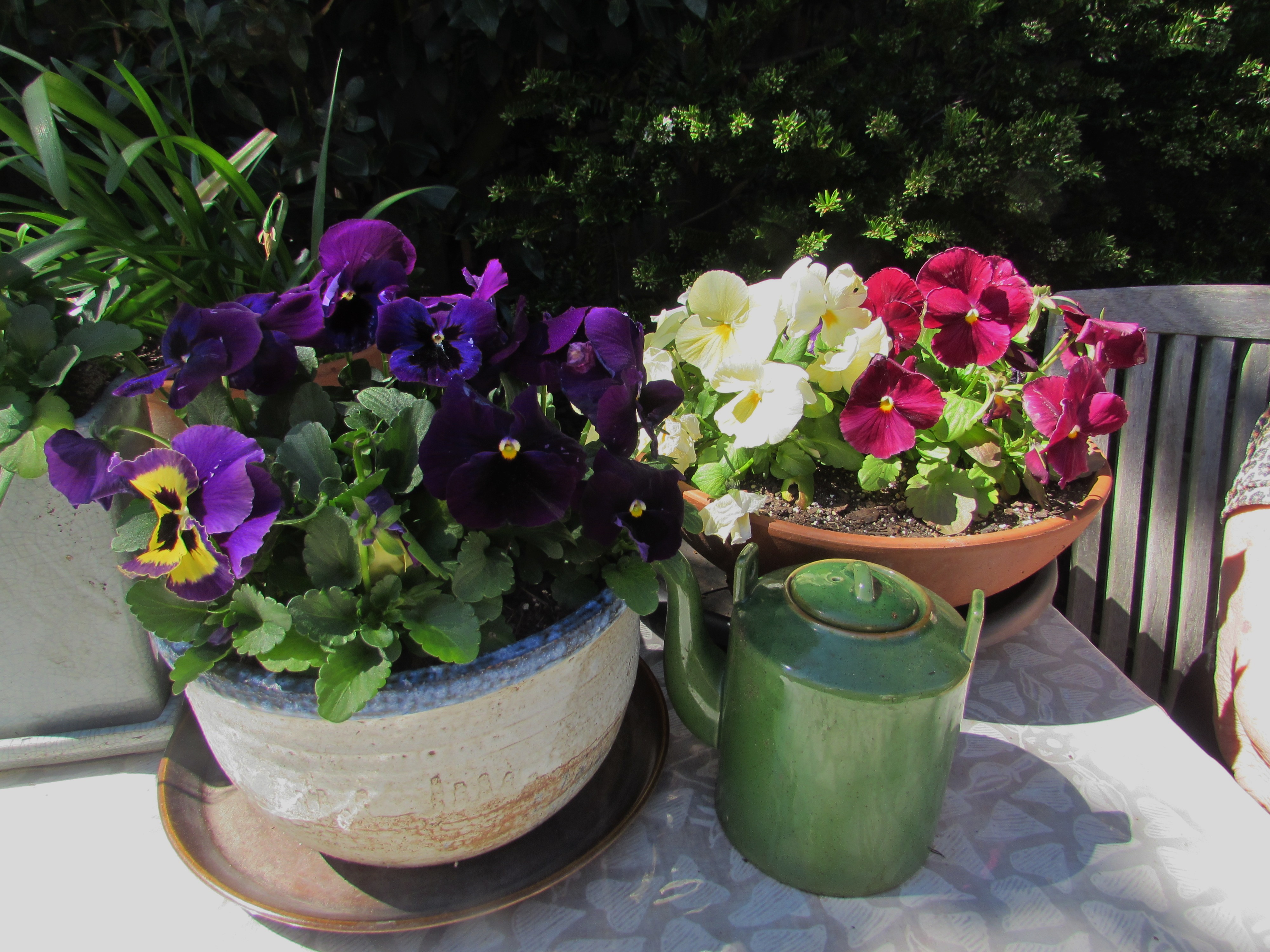
Today we had a look at the flowers in the Leighton Gardens of Moss Vale. We also had a nice visit with our friends in Bowral. Peter took all the pictures for I still have not replaced my lovely digital camera. I miss it so much! On the way home we stopped at the Robertson Pie Shop where we had pies for lunch which taste as good as ever. For afternoon coffee we took some fruit pies home that were filled with beautiful fresh cream. Very yummy indeed!
We were lucky to see some tulips at Moss Vale. We did not mind so much that we did not see the tulips in the Corbett Gardens of Bowral where an immense crowd had gathered for the opening of the tulip festival.



Ongoing War or Peace in Syria?
Syria
West ‘ignored Russian offer in 2012 to have Syria’s Assad step aside’
Exclusive: Senior negotiator describes rejection of alleged proposal – since which time tens of thousands have been killed and millions displaced
Julian Borger and Bastien Inzaurralde
Tuesday 15 September 2015 18.20 AEST Last modified on Tuesday 15 September 2015 23.09 AEST
Share on Facebook Share on Twitter Share via Email Share on Pinterest Share on LinkedIn Share on Google+
Shares
14,626
Comments
2,575
Russia proposed more than three years ago that Syria’s president, Bashar al-Assad, could step down as part of a peace deal, according to a senior negotiator involved in back-channel discussions at the time.
Former Finnish president and Nobel peace prize laureate Martti Ahtisaari said western powers failed to seize on the proposal. Since it was made, in 2012, tens of thousands of people have been killed and millions uprooted, causing the world’s gravest refugee crisis since the second world war.
Martti Ahtisaari Facebook Twitter Pinterest
Martti Ahtisaari said the failure to consider the Russian offer had led to a ‘self-made disaster’. Photograph: Ermal Meta/AFP/Getty Images
Ahtisaari held talks with envoys from the five permanent members of the UN security council in February 2012. He said that during those discussions, the Russian ambassador, Vitaly Churkin, laid out a three-point plan, which included a proposal for Assad to cede power at some point after peace talks had started between the regime and the opposition.
But he said that the US, Britain and France were so convinced that the Syrian dictator was about to fall, they ignored the proposal.
Russia sends artillery and tanks to Syria as part of continued military buildup
Read more
“It was an opportunity lost in 2012,” Ahtisaari said in an interview.
Officially, Russia has staunchly backed Assad through the four-and-half-year Syrian war, insisting that his removal cannot be part of any peace settlement. Assad has said that Russia will never abandon him. Moscow has recently begun sending troops, tanks and aircraft in an effort to stabilise the Assad regime and fight Islamic State extremists.
Ahtisaari won the Nobel prize in 2008 “for his efforts on several continents and over more than three decades, to resolve international conflicts”, including in Namibia, Aceh in Indonesia, Kosovo and Iraq.
On 22 February 2012 he was sent to meet the missions of the permanent five nations (the US, Russia, UK, France and China) at UN headquarters in New York by The Elders, a group of former world leaders advocating peace and human rights that has included Nelson Mandela, Jimmy Carter, and former UN secretary general Kofi Annan.
Syrian president Bashar al-Assad
The Syrian president, Bashar al-Assad. Photograph: Syrian Arab News Agency/EPA
“The most intriguing was the meeting I had with Vitaly Churkin because I know this guy,” Ahtisaari recalled. “We don’t necessarily agree on many issues but we can talk candidly. I explained what I was doing there and he said: ‘Martti, sit down and I’ll tell you what we should do.’
“He said three things: One – we should not give arms to the opposition. Two – we should get a dialogue going between the opposition and Assad straight away. Three – we should find an elegant way for Assad to step aside.”
UN security council is failing Syria, Ban Ki-moon admits
Read more
Churkin declined to comment on what he said had been a “private conversation” with Ahtisaari. The Finnish former president, however, was adamant about the nature of the discussion.
“There was no question because I went back and asked him a second time,” he said, noting that Churkin had just returned from a trip to Moscow and there seemed little doubt he was raising the proposal on behalf of the Kremlin.
Ahtisaari said he passed on the message to the American, British and French missions at the UN, but he said: “Nothing happened because I think all these, and many others, were convinced that Assad would be thrown out of office in a few weeks so there was no need to do anything.”
While Ahtisaari was still in New York, Kofi Annan was made joint special envoy on Syria for the UN and the Arab League. Ahtisaari said: “Kofi was forced to take up the assignment as special representative. I say forced because I don’t think he was terribly keen. He saw very quickly that no one was supporting anything.”
In June 2012, Annan chaired international talks in Geneva, which agreed a peace plan by which a transitional government would be formed by “mutual consent” of the regime and opposition. However, it soon fell apart over differences on whether Assad should step down. Annan resigned as envoy a little more than a month later, and Assad’s personal fate has been the principal stumbling block to all peace initiatives since then.
Facebook Twitter Pinterest
Syria: the story of a revolution
Last week, Britain’s foreign secretary, Philip Hammond, suggested that as part of a peace deal, Assad could remain in office during a six-month “transitional period” but the suggestion was quickly rejected by Damascus.
Western diplomats at the UN refused to speak on the record about Ahtisaari’s claim, but pointed out that after a year of the Syrian conflict, Assad’s forces had already carried out multiple massacres, and the main opposition groups refused to accept any proposal that left him in power. A few days after Ahtisaari’s visit to New York, Hillary Clinton, then US secretary of state, branded the Syrian leader a war criminal.
Sir John Jenkins – a former director of the Middle East department of the UK’s Foreign Office who was preparing to take up the post of ambassador to Saudi Arabia in the first half of 2012 – said that in his experience, Russia resisted any attempt to put Assad’s fate on the negotiating table “and I never saw a reference to any possible flexing of this position”.
Jenkins, now executive director of the Middle East branch of the International Institute for Strategic Studies, said in an email: “I think it is true that the general feeling was Assad wouldn’t be able to hold out. But I don’t see why that should have led to a decision to ignore an offer by the Russians to get him to go quickly, as long as that was a genuine offer.
“The weakest point is Ahtisaari’s claim that Churkin was speaking with Moscow’s authority. I think if he had told me what Churkin had said, I would have replied I wanted to hear it from [President Vladimir] Putin too before I could take it seriously. And even then I’d have wanted to be sure it wasn’t a Putin trick to draw us in to a process that ultimately preserved Assad’s state under a different leader but with the same outcome.”
Pushed back into the fire: the refugees who feel compelled to return to Syria
Read more
A European diplomat based in the region in 2012 recalled: “At the time, the west was fixated on Assad leaving. As if that was the beginning and the end of the strategy and then all else would fall into place … Russia continuously maintained it wasn’t about Assad. But if our heart hung on it, they were willing to talk about Assad; mind: usually as part of an overall plan, process, at some point etc. Not here and now.”
However, the diplomat added: “I very much doubt the P3 [the US, UK and France] refused or dismissed any such strategy offer at the time. The questions were more to do with sequencing – the beginning or end of process – and with Russia’s ability to deliver – to get Assad to step down.”
At the time of Ahtisaari’s visit to New York, the death toll from the Syrian conflict was estimated to be about 7,500. The UN believes that toll passed 220,000 at the beginning of this year, and continues to climb. The chaos has led to the rise of Islamic State. Over 11 million Syrians have been forced out of their homes.
“We should have prevented this from happening because this is a self-made disaster, this flow of refugees to our countries in Europe,” Ahtisaari said. “I don’t see any other option but to take good care of these poor people … We are paying the bills we have caused ourselves.”
More news Topics
Syria Middle East and North Africa Russia Europe United Nations
A New Leadership Style
Malcolm Turnbull makes lunge for the prime ministership. Michelle Grattan writes in The Conversation how the day unfolded:
Here are a few quotes from yesterday, which sounded to me that Turnbull’s promised style of leadership would be an improvement to what we have been used to.
Turnbull said that Abbott “has not been capable of providing the economic leadership our nation needs. He has not been capable of providing the economic confidence business needs”.
In a swingeing attack on Abbott’s style, Turnbull said: “We need advocacy not slogans. We need to respect the intelligence of the Australian people.
“We also need a new style of leadership in the way we deal with others – whether it is our fellow members of parliament, whether it is the Australian people.
“We need to restore traditional cabinet government. There must be an end to policy on the run and captain’s calls.
“We need an open government that recognises that there is an enormous sum of wisdom within our colleagues in this building and, of course, further afield.”
Australia’s Refugee Intake
THIS IS A COPY OF AN ARTICLE IN THE CONVERSATION
I thought this article gives some very interesting information about Australia’s refugee intake, and that maybe some of my blogger friends would like to have a look at it.
Where does the magic number for Australia’s refugee intake come from?
September 11, 2015 2.30pm AEST

Disclosure statement
Sandy Gifford receives funding from the Australian Research Council supporting research projects on refugee settlement in Australia.
Partners

Swinburne University of Technology provides funding as a member of The Conversation AU.
Republish this article
We believe in the free flow of information. We use a Creative Commons Attribution NoDerivatives licence, so you can republish our articles for free, online or in print.
Australia commendably agreed this week to take an additional 12,000 refugees affected by the Syrian conflict. This almost doubles the humanitarian intake, from 13,750 to 25,750.
Almost all the discussion about how many refugees Australia should or could take revolve around the figure of roughly 13,000. Why? How did this number come about? Why has it become the de facto starting point for debates about Australia’s response to refugees? And why the number 12,000 for the one-off intake of refugees displaced by the Syrian conflict?
Historical evolution
The answer to how the magic number 13,000 has come about is elusive. Although Australia has been settling refugees for more than 170 years, the current co-ordinated system of refugee resettlement came into being in 1981 with the establishment of the Special Humanitarian Program.
In the early 1980s the annual intake of refugees numbered about 20,000. Then, in 1984, the annual intake was 14,207. It has fluctuated between 11,000 and 14,000 ever since, with the exception of about 20,000 humanitarian visas being issued in 2012-13.
The details of what makes up these numbers is messy, being a combination of refugee and other humanitarian visas. But whatever the rationale was for setting yearly quotas around 13,000 back in the early 1980s, it has persisted for more than 30 years.
With the additional 12,000 places, Australia will now take close to 18,000 refugees. How will these refugees be selected for resettlement? Prime Minister Tony Abbott said that Australia will work with the UN High Commissioner for Refugees (UNHCR) to resettle 12,000 refugees who are in refugee camps in Lebanon and Jordan. Priority will be given to women, children and families from persecuted minorities.
But the UNHCR has commented that this way of selecting UNHCR refugees is highly unusual.
The UNHCR’s role
Each year, the UNHCR sets an annual quota for submission places in its Refugee Resettlement Program. The UNHCR’s capacity to process resettlement applications largely determines actual submission places. It is estimated that, without additional resources, the UNHCR will be able to process only 53% of refugee applications in 2016. This is one reason it can fall short of its target.
Resettlement countries then set their quotas and this shapes the acceptance rates of UNHCR submissions. Finally, there are the actual resettlement departures. This happens after resettlement nations have completed all their requirements for processing those refugees they have agreed to resettle.
Sometimes this can take years. The upshot is that while resettlement under the UNHCR scheme is a critical part of the protection puzzle, it plays a very small part in finding durable solutions for refugees. Increasingly, alternative forms of admission – such as family reunification and labour mobility – are necessary to complement the traditional resettlement program.
So, in selecting refugees under this program, what is “usual” is a partnership process between member nations and the UNCHR. Member nations do not simply say what kinds of refugees they will or will not take, although they do set out their own priorities for filling their quotas within the submissions put up by the UNHCR.
Member nations do this in part through annual meetings held each year in June or July. These meetings, hosted by the UNHCR and held in Geneva, are known as the Tripartite Consultations on Resettlement. They have been held for the past 21 years. NGOs, the UNHCR and member resettlement nations come together and craft policy around resettlement. The meetings inform and are informed by a UNHCR report on projected global resettlement needs for the coming year.
The UNHCR projected resettlement needs for refugees in 2016 is 1,150,000 – an increase of 66% from the estimated needs for 2014. Much of this increase is attributed to the Syrian conflict. The 80,000 resettlement places made available by member nations in 2015-16 will fail to meet this need.
Of the 30 member resettlement nations, 28 have confirmed they will receive Syrian refugees. In the 2016 Global Resettlement Needs Report, many countries were specifically noted for their contributions to meeting this need. Some member nations – including Germany – were welcomed for introducing alternative forms of admission for Syrian refugees.
Australia was noted in the report as having had a negative impact on refugee resettlement. This is due to the change in government policy that removed the right to family reunion for those who arrived by boat.
Raising the number
While the traditional UNHCR refugee resettlement program is important, it is able to make only a small impact on the growing numbers of refugees in need of a permanent solution.
Resettlement needs have always been larger than resettlement submissions, which have always been larger than member nations’ acceptance rates. So, there is a persistent and large gap between resettlement needs and resettlement departures. This underlies the need for alternative forms of resettlement.
This leads back to Australia’s magic number of 13,000, which appears to act as the constraining average for debates on how many refugees Australia should and can resettle. But this number should be substantially higher than it currently is.
Australia claims it leads the world when it comes to refugee resettlement. Much of this claim is true – and this is why Australia should and can take more refugees. Australia’s first co-ordinated resettlement program – the Special Humanitarian Program – brought a significant growth in specialist refugee settlement services, including torture and trauma services.
These programs – the On Arrival Accommodation program, the Community Settlement Services Scheme, and, in 1997, the Integrated Humanitarian Settlement Strategy – built specific expertise in refugee settlement needs across the social services sector.
There is no sound reason why 13,000 should remain the benchmark number around which discussions of how many refugees Australia should take revolve. It is likely that these decisions are largely political.
And why the number 12,000 for the new intake of refugees from the Syrian conflict? It is larger than the 10,000 proposed by the Labor opposition and smaller than the 13,000 that has been the “norm” for the last 30 years. Let’s begin change by making 26,000 the new “black” and go up from there.
Wollongong, January 2013
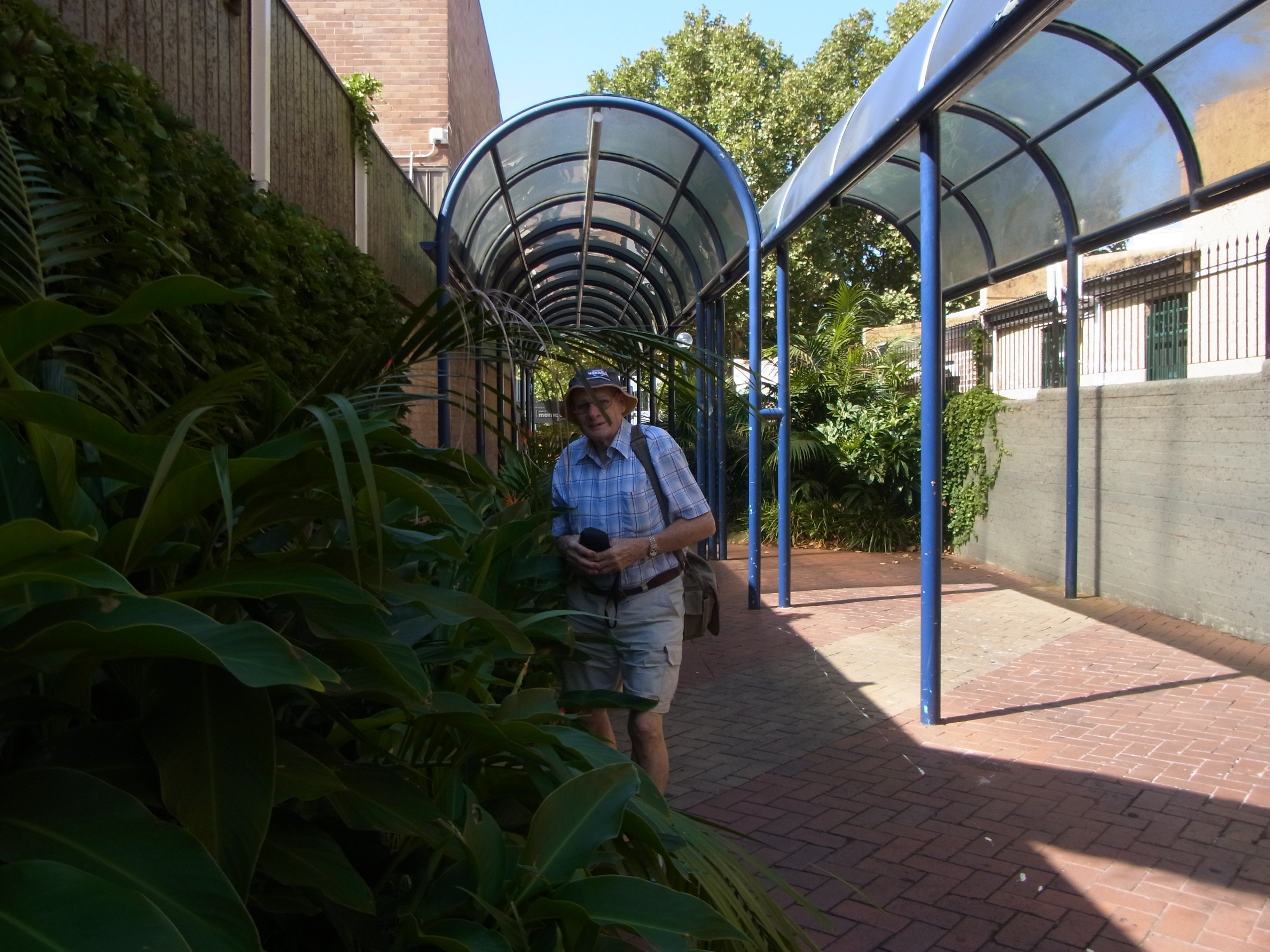
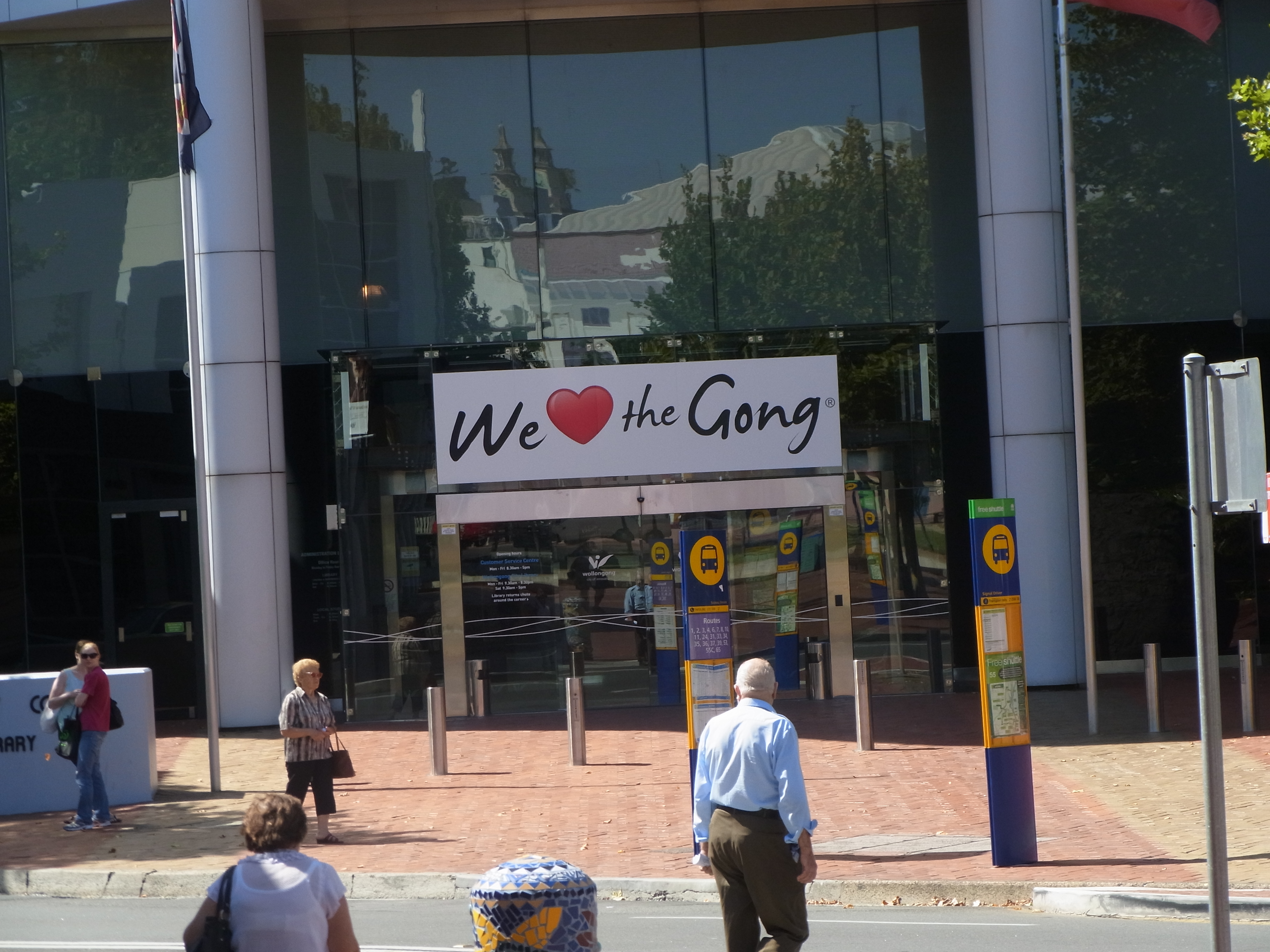
In January 2013 I published these pictures about Wollongong. Peter had to go to the Hearing Clinic on that morning when we took the pictures. This morning I had another look at these pictures. The mall in Wollongong has undergone extensive renovations over the past couple of years or so. Next time we are in Wollongong I’ll try to photograph what the mall looks like now.


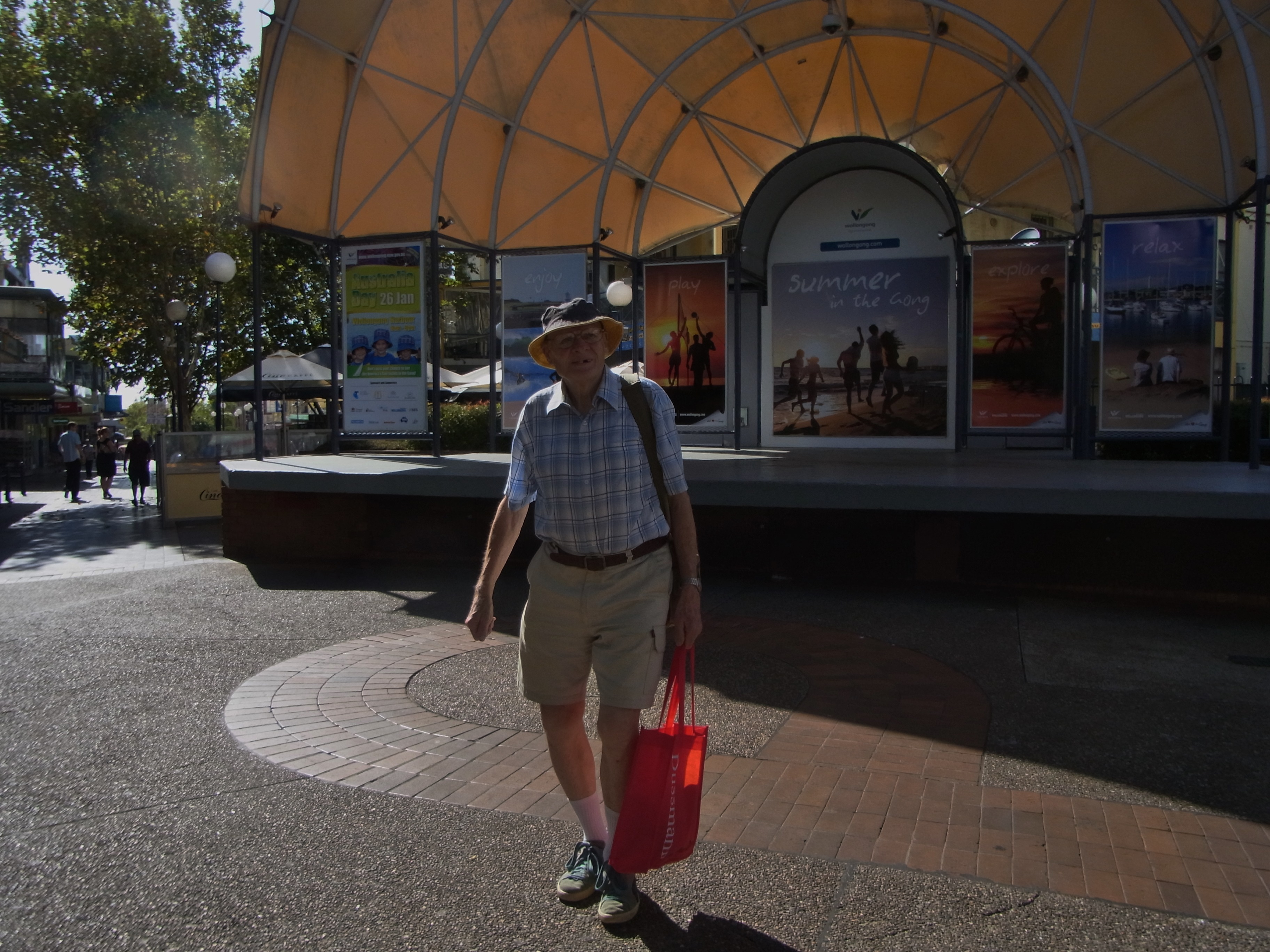

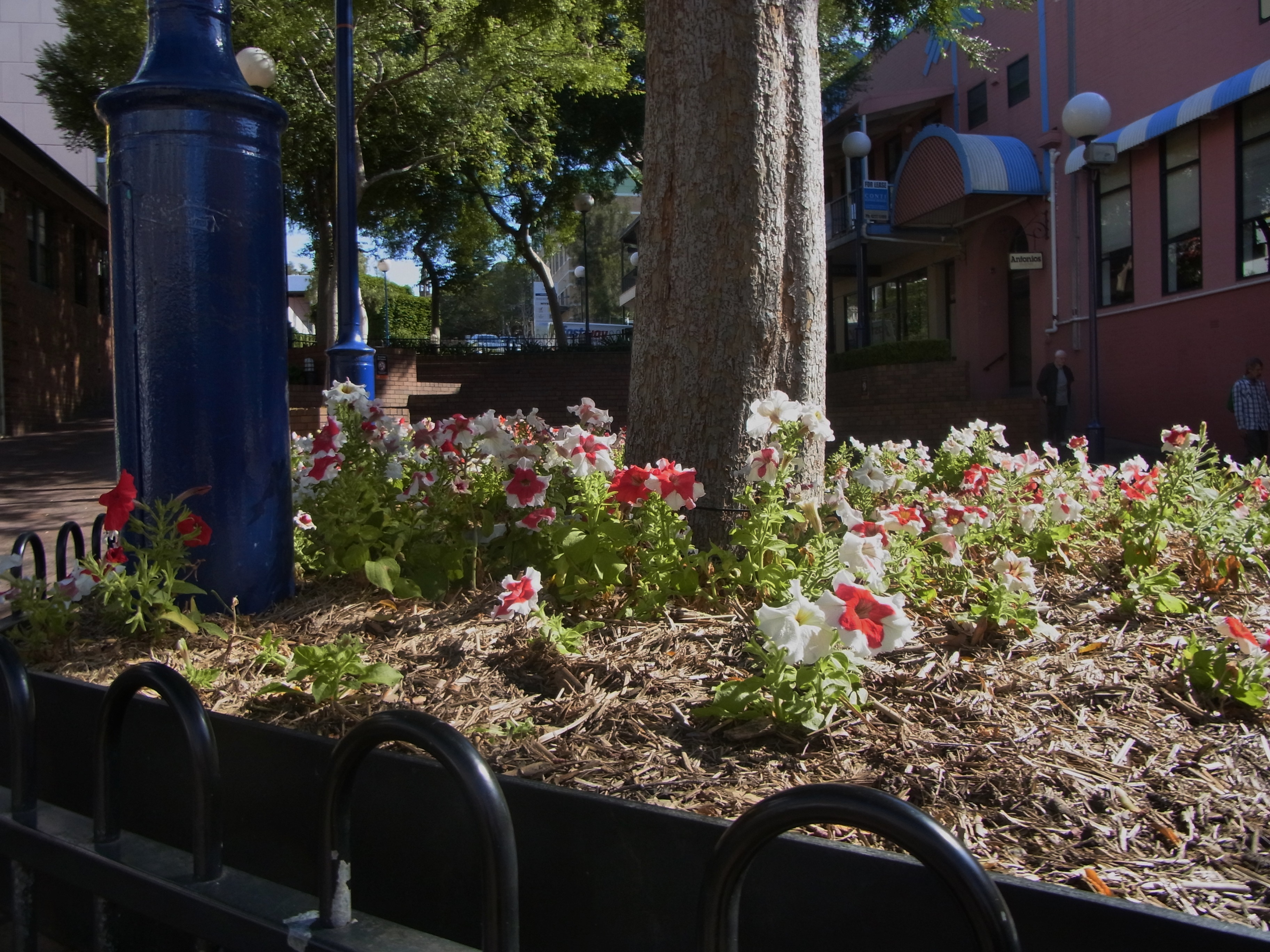


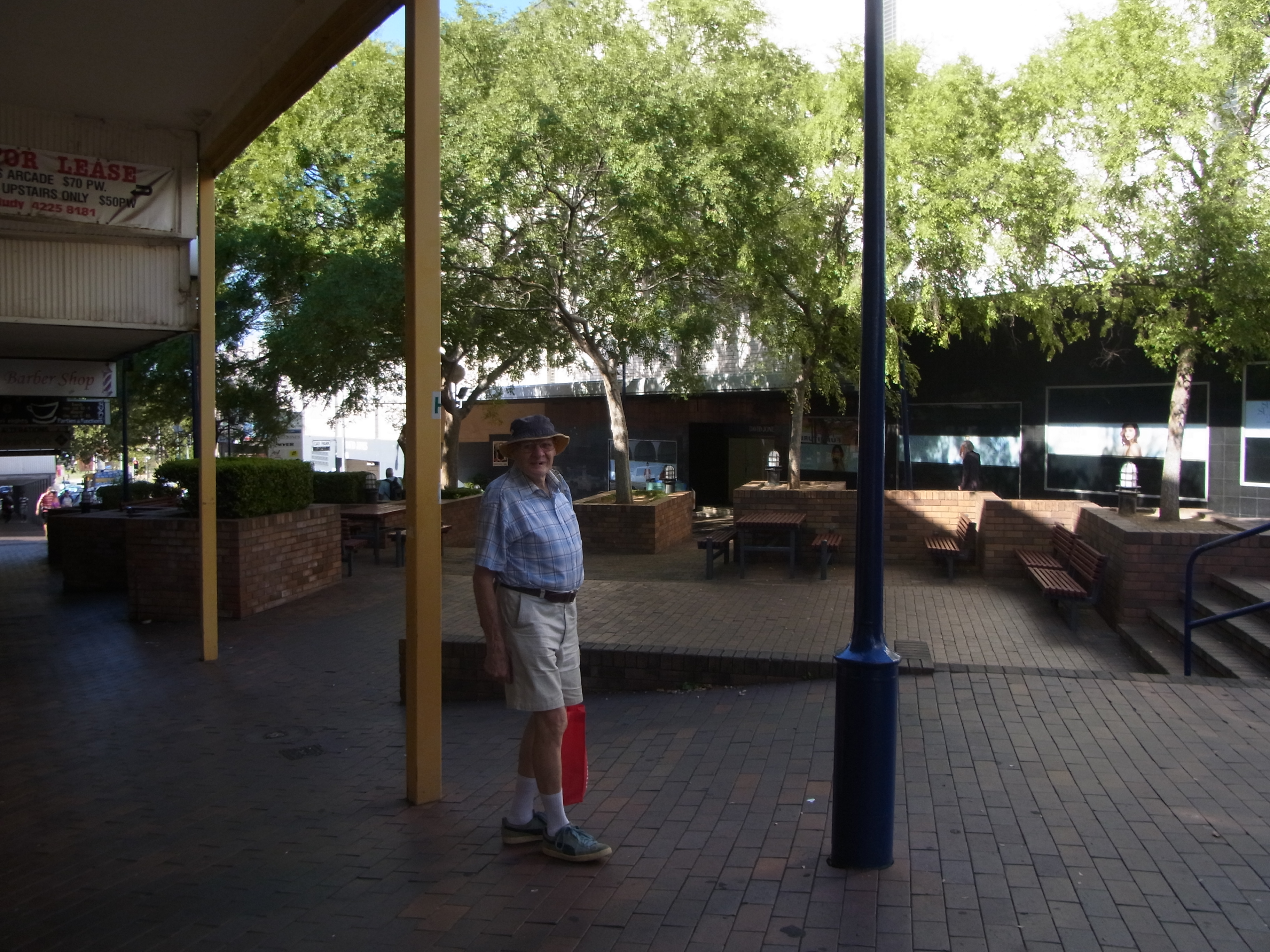


It was already getting quite warm on that morning. The following Saturday I wrote to a blogger-friend in German:
“Wir hatten gestern 45 Grad! Aber jetzt sind es 20 Grad weniger. Ich habe gut ausschlafen können. Peter schläft zur Zeit noch. Er wird aber wohl auch bald aufwachen. Nachdem am Abend eine Abkühlung gekommen war, konnten wir früh zu Bett gehen.
Ich glaube bei uns in der Gegend hatten wir noch nie 45 Grad gehabt. Das muss eine Rekordhitze gewesen sein. Wir hoffen nun, dass es heute nicht wieder derartig heiss werden wird.
Wir wohnen ja nicht weit weg von Sydney. Gestern gegen 15 Uhr hatte Sydney 45.8 Grad. im Westen von Sydney waren kurz nach 14 Uhr 46.5 Grad!!!”
Hier is what this means in English: Where we live we had on that Friday 45 C. Saturday morning it was 20 C less, probably only about 25 C. We could sleep well after the huge heat during the day for by nighttime the temperature had already dropped quite a bit. I said it was probably the first time that the temperature in our area had gone up to 45 C (120 F!!). In Sydney the temperature around 3 pm on Friday was 45.8 C, in the Western Suburbs of Sydney it was 46.5 C soon after 2 pm!!!
” . . . . but what comes next?”
Australia sends its warplanes into Syria – but what comes next?
Denis Dragovic, University of Melbourne
Prime Minister Tony Abbott has announced an expansion into Syria of Australia’s military operations against Islamic State (IS), joining the US, Canada and several Arab nations. Long-term success will depend upon the government investing equally in regional diplomacy and reconstruction to secure any military gains.
Remarkably, the preceding public debate has largely been muted – with a few exceptions. These have included reports suggesting that Abbott had initiated the request from US President Barack Obama for Australia’s involvement and off-hand remarks by Vice-Admiral David Johnston, chief of joint operations, that acquiescing to the US request would add little value.
Former foreign minister Bob Carr came out in support of expanding operations into Syria for moral reasons.
The decision to expand operations is justified on operational grounds. To effectively carry out its ongoing mission in Iraq, a limited expansion of military operations into Syria was necessary. Such an expansion – a legal grey area – will allow Australian aircraft to pursue IS personnel fleeing across the border and to attack their command-and-control structures used for attacks in Iraq.
Making the announcement on Wednesday, Abbott emphasised that the aircraft would be targeting IS and not the Assad regime, “evil thought it is”. Airstrikes are expected to begin with the next week.
The widening of the area of operations will not increase Australia’s current troop deployment. This is made up of 400 personnel supporting aerial missions over Iraq, 200 SAS soldiers training Iraqi counter-terrorism units and a further 300 soldiers training Iraqi forces at the Taji training base north of Baghdad.
Why now is the right time
While presented as a limited expansion driven by operational needs, the announcement is also a timely commitment with wider strategic consequences. The decision recognises a rapidly changing landscape.
In late August, Turkey began military operations against IS while continuing its rapproachment with Saudi Arabia. This coming together of two regional powerhouses, along with some European countries considering committing to the fight, makes Australia’s announcement part of a growing international consensus to act.
Additionally, Syrian-Kurdish military groups have had considerable success against IS in recent months. They have cleared key towns in northern Syria. This has left only a small area, between the Euphrates River and the town of Azaz, under IS control.
IS uses this last remaining area along the Turkish border to traffic oil and historical artefacts, resupply food and ammunition and welcome thousands of new foreign recruits.
Australia’s decision, while not committing to supporting a planned US and Turkish effort to expel IS from this northern border area, will add legitimacy to the international community’s collective action while applying military pressure to IS’s eastern operations.
What comes next?
In August 2013, Abbott cautioned against military action in Syria:
We should be very reluctant to get too involved in very difficult conflicts which we may not be readily able to influence for good.
Whether military intervention can now influence the Syrian and Iraqi civil wars for good depends upon there being an accompanying diplomatic strategy that seeks to find a durable long-term solution. Military power alone cannot address the political and ideological motivations driving IS’s successes.
The Syrian civil war is in its fifth year. More than 200,000 civilians have been killed. One-third of the country’s population – seven million people – are internally displaced. Another four million are refugees.
What was an ethnically diverse country pockmarked with different histories, cultures and languages is now uniformly divided. In the west, along the coast, are the Alawites, Syrian President Bashar al-Assad’s supporters. In the north are the Kurds. In the east are the Sunnis. Interspersed within these three are the minority Druze, Christians and Shia.
Nearly five years of war has effectively redrawn the borders, pushing people to move to what have become self-governed regions. As such, the international community should shift its efforts away from reviving a long-lost idea of a united Syria and instead push for peace by recognising the redrawn ethnic boundaries.
We can look to the experience of the multi-ethnic Bosnia and Herzegovina following its five-year war to see how a previously integrated and heterogeneous society became segregated through conflict, and yet managed to establish a tenuous but peaceful co-existence by establishing autonomous regions.
Similarly, we must learn from the current catastrophe in Libya and the post-invasion debacle of Iraq. In both circumstances, the international community ignored the need to commit resources after the war to sustain the peace – with devastating consequences.
For expanded military operations against IS to succeed, Australia must additionally commit non-military resources, diplomats, stabilisation and reconstruction specialists as well as financing. It must have a realistic view of the end goal and start planning to stabilise and rebuild any territory taken from IS.

Denis Dragovic, Honorary Fellow, University of Melbourne
This article was originally published on The Conversation. Read the original article.
 AuntyUta