Europe’s Refugee Crisis

Only a global response can solve Europe’s refugee crisis
September 8, 2015 6.08am AEST
Author

Phil Orchard
Senior Lecturer in Peace and Conflict Studies and International Relations; Research Director at the Asia-Pacific Centre for the Responsibility to Protect at The University of Queensland

Disclosure statement

Phil Orchard receives funding from the Australian Research Council.
Partners

The University of Queensland

The University of Queensland provide funding as a member of The Conversation AU.

Republish this article

We believe in the free flow of information. We use a Creative Commons Attribution NoDerivatives licence, so you can republish our articles for free, online or in print.

Republish

A global approach would significantly increase the burden-sharing between the refugee-hosting countries near Syria and the rest of the developed world. Reuters/Stoyan Nenov
Email
Twitter16
Facebook17
LinkedIn1
Print
The recent deaths of asylum seekers attempting to reach European shores have prompted ongoing calls for action. But, given the scale of the issue, only a comprehensive, global program can go some way to solving the crisis.

The UN High Commissioner for Refugees (UNHCR) notes that more than 366,000 refugees have arrived in Europe by sea so far in 2015. And 80% have come from the world’s top ten refugee-producing countries, including half from Syria.

This can be a deadly voyage. The International Organisation for Migration reports that at least 2373 migrants have already died trying to reach Europe this year.

This reflects the immensity of the crisis created by the Syrian conflict. More than 4 million refugees are now in the countries bordering Syria – Turkey, Lebanon and Jordan – while an estimated 7.6 million are internally displaced within Syria.

An individual country response?

Individual countries have begun to show leadership. This began with German Chancellor Angela Merkel’s commitment that Germany would begin processing all asylum seekers who applied on its territory. In so doing, she waived the European Union’s (EU) Dublin Regulation, which establishes that asylum seekers must lodge their claim in the first EU country they enter.

Merkel’s plan may lead to Germany taking up to 800,000 refugees this year. She laid out her country’s response in stark moral terms. She argued that:

Germany is a strong country, we will manage … If Europe fails on the question of refugees, then it won’t be the Europe we wished for.
The UK has reversed its previous position. Prime Minister David Cameron said:

We will do more in providing resettlement for thousands more Syrian refugees.
Prime Minister Tony Abbott has announced that Australia will take a “significant” number of Syrian refugees beyond the 4500 that it has already pledged to accept.

However, the scale of the crisis means that no single country can deal with it alone. Germany’s plan would involve direct EU responsibility for registering and looking after newly arrived refugees in Greece and Italy, as well as creating a common policy on safe countries of origin.

The UNHCR has argued that Europe cannot respond to this crisis “with a piecemeal or incremental approach”. Instead, it has recommended a mass relocation program with 200,000 places, coupled with improved reception capacities – especially in Greece.

But neither Germany’s nor the UNHCR’s plan would deal with the main issue: refugees would still have to risk death crossing the Mediterranean Sea to reach Europe to access these programs.

A regional response?

Others argue for a regional response. One suggestion is the creation of a safe zone, which would allow Syrians to remain within the country. Australian Foreign Minister Julie Bishop has echoed this call.

Ethicist Peter Singer has argued that the affluent countries need to provide much more support to the countries supporting large numbers of refugees. Singer also said that sending asylum seekers to safe refugee camps supported by the developed world would eliminate people smuggling.

But these proposals reflect the flipside of the problem: that the world needs to respond to the refugees crossing the Mediterranean and also assist the countries harbouring the bulk of the 4 million Syrian refugees.

The UNHCR has announced that its budget this year will be 10% less than last year’s, while the World Food Programme (WFP) has had to cut the rations being provided to the refugees. The most vulnerable refugees in Lebanon will have only US$13 per month to spend on food, and the WFP may need to cut all assistance to refugees in Jordan.

The UNHCR’s budget for providing support for refugees is 10% lower than last year’s. Reuters/Osman Orsal
What’s really needed

What is needed, therefore, is a comprehensive, global program. This would include three elements:

increased humanitarian assistance to the countries around Syria

safe processing centres in Turkey and in either Libya or Tunisia to process asylum claims

a global resettlement scheme for refugees and provisions for safe returns for those denied claims.

With respect to humanitarian assistance, the UN Syria Regional Refugee Response Appeal is requesting US$4.5 billion to respond to the situation in Syria and neighbouring countries, but has received only 37% of that total.

This shortfall has been the case since the Syrian conflict began. Most yearly appeals have received only around 50% of the request funding. This has placed immense pressure on both the international aid agencies responding to the conflict and on the refugee host countries themselves.

A safe processing centre model would serve to deter refugees from crossing the Mediterranean and have the advantage of centrally co-ordinating the processing of individual refugee claims. This, in turn, could:

… enable a fairer distribution of responsibilities among states for providing protection and assistance to refugees.
The UNHCR has noted that such centres could be legal under international law if they clearly reflect the international legal standards – including the UN Refugee Convention and the principle of non-refoulement – and have formal authorisation from host nations. The UNHCR would be the obvious organisation to run the refugee determination process within these centres.

Critically, the centres would need to be safe and agreements would need to be made with the individual host countries. Turkey would likely support such an initiative. Given the current insecurity in Libya, however, a centre would either need international protection – such as peacekeepers – even with government consent, or alternatively could be established along the border in Tunisia.

But these centres would not work without a clear onward path for processed refugees. The EU is now discussing possible resettlement numbers. Other than the UNHCR’s proposed 200,000 figure, European Commission President Jean-Claude Juncker has suggested that individual EU states resettle 120,000 asylum seekers who are currently in Hungary, Greece and Italy. Others have suggested higher figures.

A global commitment to take 400,000 refugees – 10% of the Syrian total – from these processing centres in not unreachable. The model here is the Comprehensive Plan of Action, negotiated in 1979 to respond to the Indochinese boat people. The plan included regional screening for refugees and, while not perfect, resulted in the resettlement of more than 500,000 refugees over six years.

A resettlement scheme could also be combined with a temporary admission process. The EU already has a temporary protection directive created after the war in Kosovo. That directive allows for refugees to be granted temporary protection in accordance with the Refugee Convention for a period of one year, which can be extended.

Given the nature of the Syrian war, a longer protection period would be warranted.

By combining these three approaches, individual countries would have the opportunity either to commit to refugee resettlement or to fund the centres’ humanitarian operation and costs – or both. Most importantly, these approaches would significantly increase the burden-sharing between the refugee-hosting countries near Syria and the rest of the developed world.

Refugees
Middle East
Migration
Syria
Asylum seekers
Syrian refugees

What is the Fate of Europe?

http://www.strategic-culture.org/news/2015/08/07/us-is-destroying-europe.html

U.S. is Destroying Europe,
an article by Investigative historian Eric ZUESSE | 07.08.2015

This is what it says towards the end of this article: “By weakening European nations, and not only nations in the Middle East, Obama’s war against Russia is yet further establishing America to be “the last man standing,” at the end of the chaos and destruction that America causes.”

I do not copy the whole article, but here is a bit more about what the author reckons is the weakening of European nations:

” . . . Libya has become Europe’s big problem. Millions of Libyans are fleeing the chaos there. Some of them are fleeing across the Mediterranean and ending up in refugee camps in southern Italy; and some are escaping to elsewhere in Europe.

And Syria is now yet another nation that’s being destroyed in order to conquer Russia. Even the reliably propagandistic New York Times is acknowledging, in its ‘news’ reporting, that, “both the Turks and the Syrian insurgents see defeating President Bashar al-Assad of Syria as their first priority.” So: U.S. bombers will be enforcing a no-fly-zone over parts of Syria in order to bring down Russia’s ally Bashar al-Assad and replace his secular government by an Islamic government — and the ‘anti-ISIS’ thing is just for show; it’s PR, propaganda. The public cares far more about defeating ISIS than about defeating Russia; but that’s not the way America’s aristocracy views things. Their objective is extending America’s empire — extending their own empire.

Similarly, Obama overthrew the neutralist government of Viktor Yanukovych in Ukraine in February 2014, but that was under the fake cover of ‘democracy’ demonstrations, instead of under the fake cover of ‘opposing Islamic terrorism’ or whatever other phrases that the U.S. Government uses to fool suckers about America’s installation of, and support to, a rabidly anti-Russia, racist-fascist, or nazi, government next door to Russia, in Ukraine. Just as Libya had been at peace before the U.S. invaded and destroyed it, and just as Syria had been at peace before the U.S and Turkey invaded and destroyed it, Ukraine too was at peace before the U.S. perpetrated its coup there and installed nazis and an ethnic cleansing campaign there, and destroyed Ukraine too.

Like with Libya before the overthrow of Gaddafi there, or Syria before the current effort to overthrow Assad there, or the more recent successful overthrow of Ukraine’s democratically elected President Viktor Yanukovych, it’s all aimed to defeat Russia.

The fact that all of Europe is sharing in the devastation that Obama and other American conservatives — imperialists, even — impose, is of little if any concern to the powers-that-be in Washington DC, but, if it matters at all to them, then perhaps it’s another appealing aspect of this broader operation: By weakening European nations, and not only nations in the Middle East, Obama’s war against Russia is yet further establishing America to be “the last man standing,” at the end of the chaos and destruction that America causes.

Consequently, for example, in terms of U.S. international strategy, the fact that the economic sanctions against Russia are enormously harming the economies of European nations is good, not bad.

There are two ways to win, at any game: One is by improving one’s own performance. The other is by weakening the performances by all of one’s competitors. The United States is now relying almost entirely upon the latter type of strategy.”

Do we have Special Needs in an Emergency?

Do we have special needs in an emergency? I wrote this in my diary on the 2nd of November in 2013. At the time large areas of New South Wales experienced very hot conditions and fast spreading fires. I wrote that Peter copied for us from the internet a plan for an emergency during a HEATWAVE. It said: “ABC Emergency delivers official warnings and alerts and publishes emergency coverage sourced form ABC Local Radio and ABC News.”

I copy all this again, for after the recent rains with everything growing very well and with very hot conditions forecast for this summer, maybe we should be prepared again for outbreaks of fires.

So here is the list of some of the things we should have prepared in our SURVIVAL KIT:

BATTERY-OPERATED RADIO (WITH SPARE BATTERIES)
Torch (with spare batteries)
Strong shoes, gumboots, leather gloves and overalls
First aid kit and medications we need
A change of clothes, toiletry and sanitary supplies
Water in sealed containers – ten litres per person (for three days)
Three days supply of canned food (plus can opener and utensils)
Pillows and blankets (woollen and thermal)
Mobile phone and charger
Strong plastic bags (for clothing, valuables, documents, and photos)
Spare car and house keys

Several Emergency Services are mentioned that can be of help.

Here is what we should do before a HEATWAVE:

Stay hydrated – it’s recommended to drink two to three litres of water and to avoid alcohol and caffeine
Dress light

Check on family and friends – twice a day
Avoid exposure to the sun
Get your home ready – draw curtains, blinds, awnings at the start of the day to keep the sun out
Seek air-conditioning in a shopping centre, library or other public place. (We do not have air-conditioning)
Fans can also provide relief (We do have fans.)

During a HEATWAVE we should phone for assistance immediately if we show any symptoms of heat stress including extremely heavy sweating, headache and vomiting, confusion, swollen tongue

After a Heatwave we should be careful of falling tree limbs – they can be a hazard during periods of extended high temperatures.

Uta’s Diary, 3rd of September 2015

In September 2013 my blogger friend Linda wrote in a comment to one of my blogs:

“As I grow up 🙂 I discover that families the world over and through the centuries have been weird. Just plain weird! It’s a good thing to know. More kids should recognize this fact so they wouldn’t feel so isolated by the facts of their families.”

And my reply was:
“Quite amazing, Linda, isn’t it? What exactly do you mean by ‘weird’? Families that are somehow ‘dysfunctional’? What about divorce? Hasn’t this been on the increase in our time? Maybe it has partly to do with the increase in life expectation? In any case I believe it is important for children to know who their parents are. Whether they stay through all their growing up years with one, two or none of their parents this is a different matter. Some parents might not be the best option for a child, but the same goes for some institutions. It all depends. I did get to know during my growing up years some very well functioning families. I am talking about our extended family and about the families of some of my friends. I also saw examples of desperately struggling war widows with for instance four children and a bone breaking job with very little money. When I was a child a lot of people seemed to blame WW II for the increase in dysfunctional families.”

I experienced my growing up years in Berlin, Germany. During my teenage years I was always dreaming of living in some other country with a different family. I feel, having lived in Australia since 1959 I grew more and more apart from Berlin. Over the years I have been back to Berlin for some family visits. But I am always glad when I am back in Australia. It is quite amazing how Berlin has changed over the years. I can understand how a lot of young people feel now

A cafe in Berlin, where we like to go to when we visit Berlin.
The cafe is right at the Gendarmen Markt.

attracted to living in Berlin. However, I definitely want to spend the last few years of my life in Australia. Even my husband Peter, who has still very strong attachments to Berlin, prefers to live in Australia for as long as he can still afford to go back to Berlin for regular visits!

My parents separated soon after WW II. Then, around 1950, my mother demanded a divorce. During 1948/49 Peter’s mother left Peter’s father and got a divorce from him. Peter and his two sisters moved along with their mother. Both our fathers, Peter’s and mine, died long before our mothers. Both fathers had suffered badly due to war experiences.

All my cousins seem to come from very stable families. The generation of my nieces and nephews is different though. Whereas Peter’s nieces and nephews seem to come from rather stable families. Of course, Germans these days have very small families. Some people point out,  the increased influx of migrants to Germany could be a blessing,  for there are too many old people in Germany and not enough young people. Still, this enormous influx of refugees, that is taking place right now,  does cause major upheavals. I hope, all this can be settled in a humane way, and a lot of effort will be directed towards avoiding outbreaks of violence.


Uta’s Diary, 2nd of September 2015

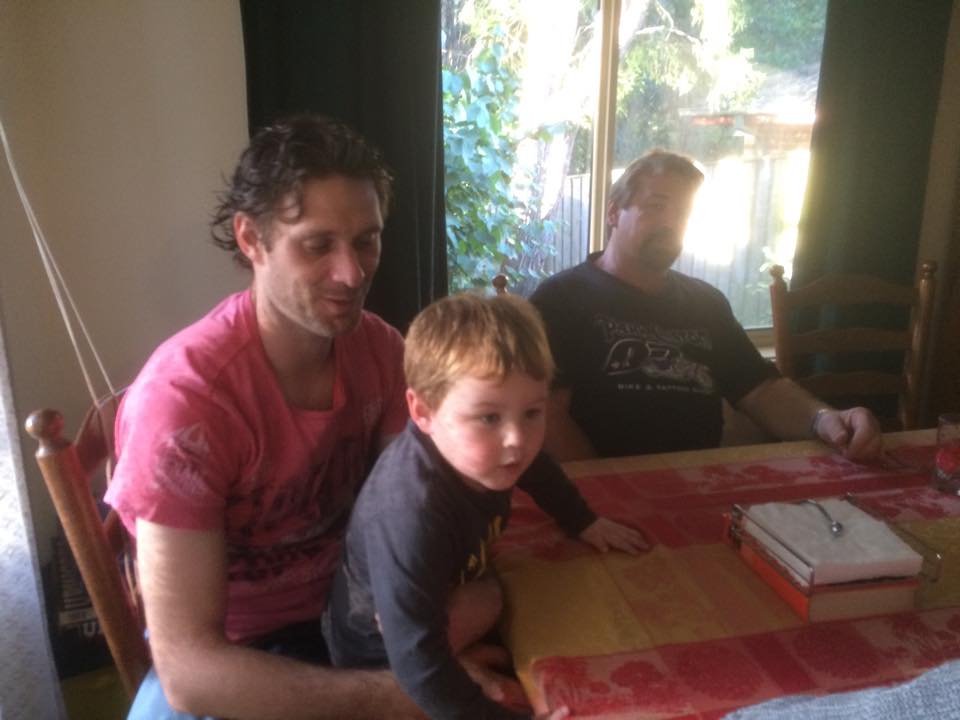
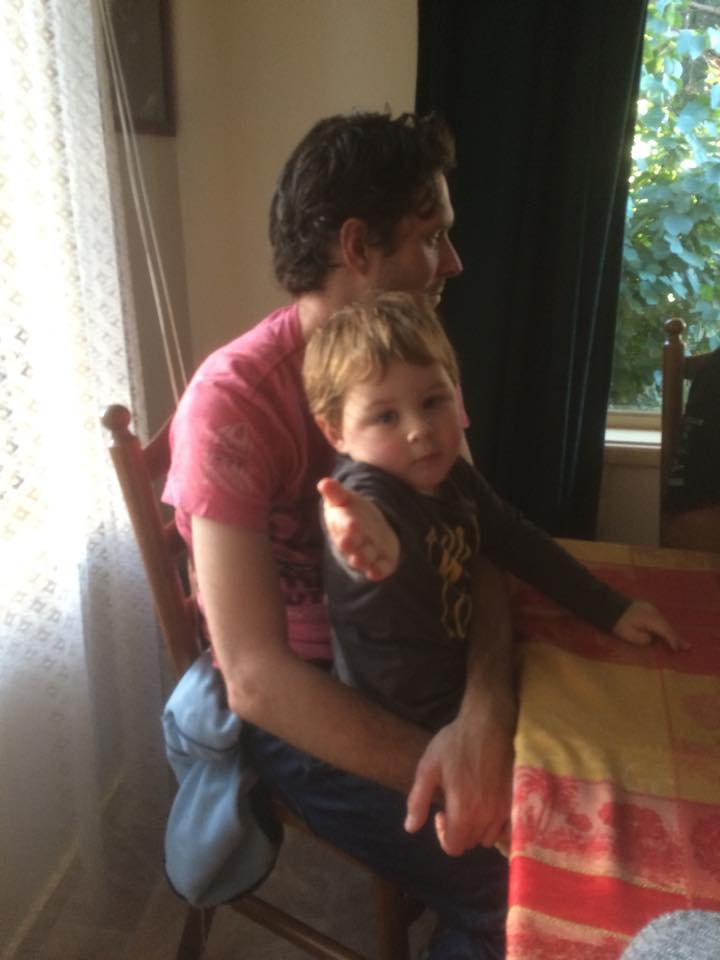
Last Sunday turned out to be a lovely family day at our home. It was beautiful to be surrounded by children, grand-children, and great grand-children for a few hours in the afternoon.  Some almond-cake was left from Gaby’s birthday. There was also freshly baked cheese-cake. Peter had baked this cake!

IMG_1034

IMG_0639

Our daughter Monika took a few pictures with her phone. On most pictures you can see either Lucas or Alex, Monika’s two little grandsons.
As promised, Monika let us have these pictures. So I am going to publish here some of them:

11920381_10207692619339086_770919645_n

11911698_10207692619979102_329149932_n

11922973_10207692620019103_1162597858_n

11924671_10207692621059129_1331407223_n

11948208_10207692622059154_879370842_n

11948208_10207692622059154_879370842_n (2)

11949673_10207692624819223_1408442958_n

11949757_10207692623419188_754561025_n (5)

11950868_10207692620699120_2130607373_n (3)

11950979_10207692624179207_616521434_n

11930656_10207692625299235_372501843_n

The older I get the more I seem to reflect on times past. I often felt very much out of place as a young person. Also I tended to be “zurückhaltend”, that is I was usually more the listener and observer and did not show a great deal of affection and emotion. On the other hand, I also remember times when I felt free and communicative and very talkative.

When I think of my parents, the most remarkable memory about them is, how very different they were. Here is a bit of how my father may have influenced me, and then how my mother’s influence was so very different.

My father was the most open minded and tolerant person. He liked to talk to me about a lot of things. He always treated me as though I was trustworthy and mature for my age, able to understand different points of view. Very rarely did I see him being angry with me. He only tended to be somewhat angry when, all of a sudden, I behaved in a very unpredictable way. Despite his open mindedness he was basically a very conservative man. If I showed signs of departing from his view of the world, this would upset him personally. Still, he was loving and forgiving, and eventually he was always able to accept my departure from some of his conservative views.

Now, my mother was in every way the opposite of my father. On the whole she was maybe rather tolerant as far as I was concerned because she loved me. But she made it very clear, that she did not love my father anymore. She showed not the least bit of tolerance towards him, on the contrary, she showed a lot of hatred, for in her opinion he was a “Versager” who did not do anything for his children. She thought it was not up to her to look after him when he had serious health issues. Maybe she thought he was just pretending. Also, she hardly ever talked to me about things that were important to me. She tended to keep very important things from me, for she wanted ‘to protect’ me! At least, this is how I remember it. I knew she loved me very much. Still, I always felt I was not the daughter she imagined I should be. I remember she telling me, I was an “Oppositionsgeist”. So I must have been speaking up about some things that disturbed me a great deal. I felt very bad for opposing her, but I could not help it. Of course, on the outside I tried very hard to go along with what she expected of me, just to keep the peace. Alas, I think I came into inner conflict about it. In short, I often did not feel happy about myself.

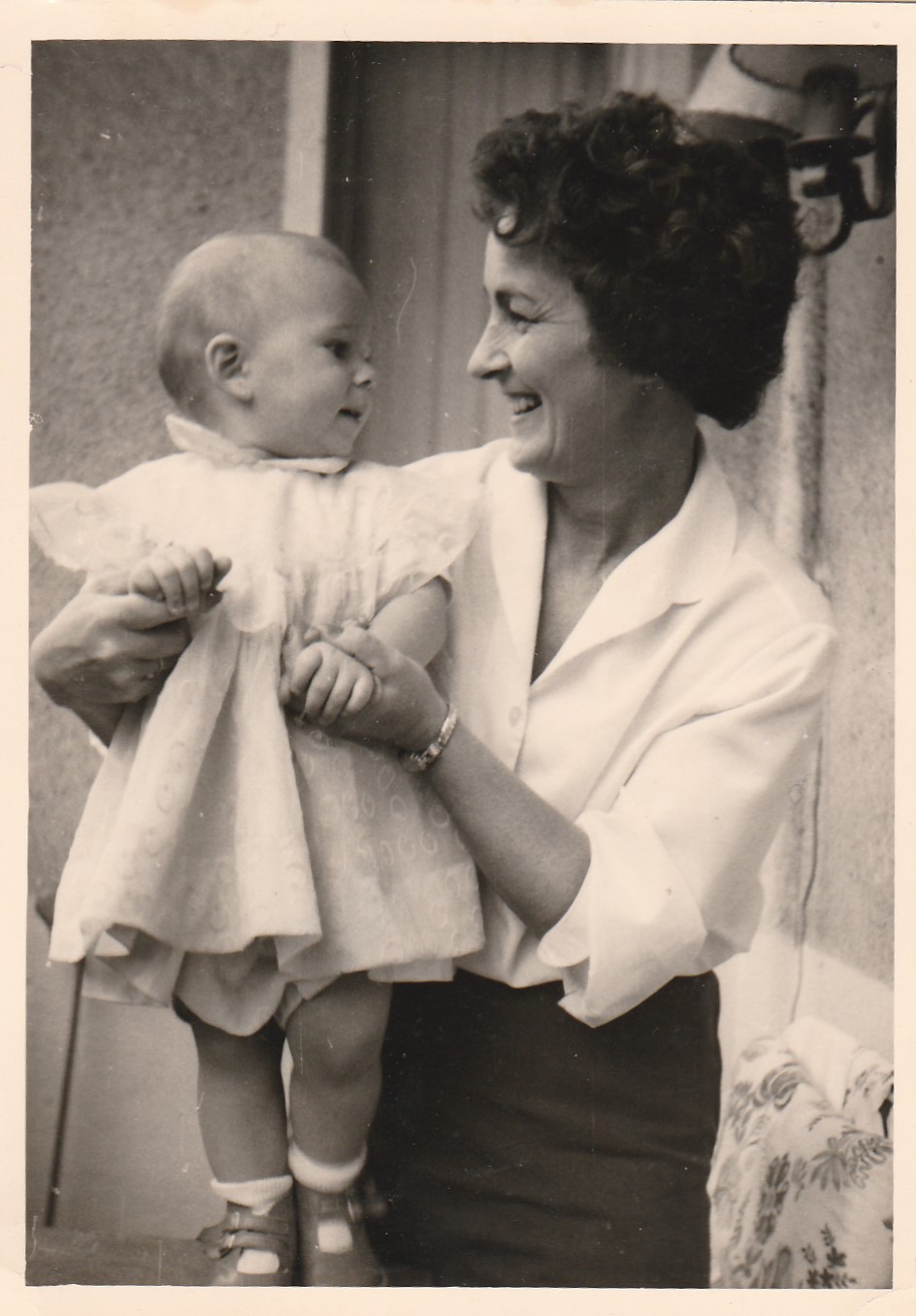
But all this is in the past. Peter suggested, I could insert a few photos with my father and mother and Baby Gaby in 1958.

my Father with Gaby in February 1958
My Mother with Gaby in August 1958
My Father in his Office ca. 1955

Last Sunday was a great day for us. The following Sunday, which is Fathers’ Day here in Australia, we are all going to meet for lunch at a Thai Restaurant.

The Meaning of Life – Mary Robinson

Presented by Geraldine Doogue, Compass explores the interface between religion and life as experienced by individuals and communities – including ordinary Australians, public leaders, religious thinkers and philosophers. #ABCcompass, Sundays 6.30pm

The Moral Compass

Series 29 | Episode 27CCDOCUMENTARY/FACTUAL27 mins

Geraldine Doogue debates the hot-button moral, ethical and religious controversies of our day in this smart and entertaining Compass series, The Moral Compass.

To enquire about obtaining a copy of this program please contact ABC Program Sales 1300 650 587 or progsales@abc.net.au


http://www.abc.net.au/compass/s4289196.htm

Mary Robinson, Ireland’s first woman President, talks to Irish broadcasting legend Gay Byrne about the people, ideas, values and beliefs that give her life meaning.

A brilliant lawyer and human rights activist before entering politics, she famously challenged the influence of the Catholic Church in Irish society and helped to bring about changes in the law concerning contraception, divorce and homosexuality. And yet she remains the product of a traditional religious upbringing and education and sees those values as the moral engine behind her continuing work for human rights and what she calls climate justice.


Peter B. Todd :

31 Aug 2015 9:51:23am

Splendid interview with Mary Robinson who respects the great religious traditions of the earth while alluding to a numinous principle implicit in cosmology and in the evolutionary process from which humankind’s symbolic consciousness has emerged. Humanity not only participates in a numinous dimension but also in co-creative divinisation by directing the future cosmic evolution. Her comment on Christ was particularly insightful. The implication seemed to be that Christ was an epiphany of a continuing incarnation of God in history as articulated by the fourteenth mystic Meister Eckhart and in the work of such contemporary thinkers as the Jesuit palaeontologist Teilhard de Chardin. This concept of God is archetypal and NOT that of an anthropomorphic, interventionist, creator. I elaborate these ideas in my book “The Individuation of God: Integrating Science and Religion” (Chiron publications 2012) and in my Skype interview with Bruce Sanguin

LINK: http://brucesanguin.com/interview-with-peter-todd/