Referring to some Observations in the recent Uta Diaries

I started yesterday morning with looking at some of my drafts and I decided it was about time that I should get rid of all the drafts that I did not need anymore. The first draft I looked at I wanted to publish rather than seeing it ending in ‘trash’. I love Di Morrissey’s books and am very impressed that she is able to write a comprehensive well researched novel every year. She wrote already 27 novels. I believe most of these are bestsellers. Here is what I found in Wikipedia:

“Di Morrissey AM is one of the most successful novelists of Australia with 27 best-selling novels and five children’s books published. Wikipedia

Here you can find out more:  http://dimorrissey.com.au/about-di/


And I referred to this video in yesterday’s diary:

“Jennifer Byrne presents an interview with Bryce Courtenay, Lee Child, Di Morrissey, and Matthew Riley.”


I always liked to watch and listen to the Jennifer Byrne interviews. Bryce Courtnenay’s books I used to be very familiar with over many years. I still own some of his books. Wouldn’t I like to read again and again these books: Maybe, maybe one of these days when due to the Coronavirus I am going to have lots of spare time, I am going to read, read, read!

Further on yesterday I published this item about how migrant workers had to clean up university students’ mess. So what I had observed about the life of cleaners during my long life, this is what I really had wanted to write about.

In my following diary posts I mentioned about the help that my family used to be able to afford. Some people were actually honorary helpers, like Tante Mietze who for many years lived with Peter’s family and tirelessly did all sorts of work for the family right into very old age. She was a real jewel and all the family still hold her in high esteem many years after her death.

I guess that most people cannot afford hired help any more these days, is partly because cleaners and all sorts of workers can these days demand higher wages. If for instance people employ migrant workers and try to underpay them, it is said they are being used as ‘slave’ labour.

I always had this opinion when in a family with several children both father and mother have outside well paying jobs, the wife’s salary should in the first place be used to employ some home help. Why else would a woman want to have an outside job if it did not pay enough for some home help? Now, I would very much like my readers’ thoughts on this. Please, do not hesitate to make a comment, when you do not agree with my opinion on this.

Another topic would be how do families cope these days with separation or divorce of parents, and how do wives fare then if they do not have a well paying job.

Uta’s Diary continued

I am still on the subject of cleaning and home help. This morning I mentioned in my diary how Peter’s mother and my mother managed in old age.  This is what I wrote:

Both Peter’s father as well as my father did not live to a very old age. So age care was not an issue. Both our mothers though did live into their eighties. How were they cared for? Well, my mother paid her granddaughter to come in on a regular basis and do some work for her, and Peter’s mother paid one of her daughters to do some work for her. Both mothers lived in a very small apartment when they were at an advanced age.

Peter’s mother was actually towards the end of her life in a care home. She had one room in that place. She did not like to eat anything except for cake. I think she was 87 when she died.  My mum ended up in a hospital after a severe stroke when she was ‘only’ 83 and she very soon passed away then.

Peter’s mother trained to work as a child carer after leaving school early. Probably when she was only 14. But soon after her training she joined the postal service, where she retired from with an adequate pension after 40 years service. Since she had three children, she was lucky that her aunt, Tante Mietze,  offered to stay with the family. So there was always somebody there for the children when Peter’s parents were out working. Peter says, his father would have preferred his wife staying home and not going out to work. But since Peter’s parents separated and divorced after the war, the mother was only too glad that she had never given up her job and that she still had Tante Mietze to look after the family.

My mum had in the 1930s and until the end of the war in 1945 always some live-in home help. The home help was called ‘Dienstmädchen’. These girls were rather young when they were employed. During the war we had Maria, who was Polish from the city of Lodz. Before the war we had every year another girl, all of them German girls from the country. I think I wrote a lot about Maria in my ‘Childhood Memories’. It seems to me she was extremely intelligent and efficient. Even my very demanding mum could not find any fault with her.

By the way as far as I know, Tante Mietze was from the country. At age 14 she moved to Berlin to be employed by a prosperous Jewish family as one of their home helps. This was before World War One!

Now I want to mention my father’s parents. They were German citizens who lived in Lodz. The Germans in Polen at the time were going back several generations! The grandparents had six children, and all of them married and had children. Grandfather was a ‘Tischlermeister’ (joinery master) and all his life self employed. At some stage he had a lot of people working under him. I am not sure what sort of home help grandmother may have had when she had all these children. I am sure the older children would have helped with some of the younger ones. Anyhow when I knew the grandparents. grandmother always used to have two very young Polish girls to help her in the house. However, in January of 1945 the grandparents as well as all the family, that was still residing in Lodz, had to flee the city, for the Russian army was getting very close. Nearly all of them made it to Germany. They were  on the road in freezing temperatures. My uncle Ludwig, who was the grandparents’ younger son, had married late. I think he was in his forties and therefore not required to be in the army. As far as I know he was right to the last still doing his best filling army orders in grandfather’s furniture factory. Anyhow, Ludwig was married to Hilde and they had a young daughter and a new born son, who did not survive the escape from Lodz. I think it was so cold on the way that babies’ nappies did get frozen to their bodies! I think this casualty of the little guy was the only casualty the family had to suffer during the whole war!

So the family had to settle somewhere in Germany as very poor refugees. Grandfather did not survive this life of a refugee for very long. He died in Leipzig in March 1947 being aged 77. Everybody thought he did reach a very good old age. Here I wrote about his gravesite and about our visit to Leipzig:

A Cemetery in Leipzig

A Cemetery in Leipzig

In Love with Leipzig


Uta’s Diary

Today I want to write about the life of an old age couple and who does the cleaning.

I turned 85 last September and Peter turned 85 a few days ago. Peter has multiple health problems. However the good thing is that so far he can still live at home. To me it seems like an enormous blessing that Peter and I can both live together at home. We enjoy every minute of it for we know that sooner or later all this is going to change; so we might just as well make the most of it while it lasts.

So, who does the cleaning? I would like to think, that we share it. With the sharing this works now only some of the time. Our strength is rather limited. So we cannot be too particular about certain cleaning jobs that should be done.

Some of our children sometimes act as though we do not have enough money to spend on ourselves. But so far this has not been the problem, not at all. On the contrary, we still have some savings and are usually able to save a bit more money on a weekly or monthly basis. Despite quite a bit of spending for medical items and consultations with specialists (General Practitioner consultations are mostly without any charge!), we feel medical expenses do not send us broke. Ambulance and hospital stays are for free! So, just how lucky are we? For some people in other countries this must seem like Australia is a dream country. I must say, we know we are extremely lucky.

And I must say, we are extremely lucky that we can still look after ourselves at home. With advancing age there are of course more and more dfifficulties in doing this. I for instance have advanced recently to using a ‘walker’. This light frame with wheels is extremely useful for when I feel very weak and rather than just using my walking stick to support me, I have this walker which makes it easier to move along! I believe my daughters think I have never done a lot of cleaning but now with advanced age it really is getting more and more difficult. Still, with Peter usually being able to do rather more than his share, we have sort of managed so far. Of course we could pay for some subsidised help. But this kind of help is very difficult to get in our area, unless it is an emergency. Anyhow, we have been put on a waiting list for subsidised help. We feel we are not in a position to pay for a lot of hourly help the way hourly work is paid for in Australia. That goes too for the rates that we would have to pay for gardening. So our backyard, where a lot of gardening should be done, gets extremely neglected!

Since we cannot pay for a lot of outside help, we should really be living in a somewhat more suitable place for old age pensioners. There are lots of reasons why it is rather difficult to move to a place like this unless it is an aged care home. And we would rather like to stay away from aged care homes. Even the very expensive ones tend to have staff shortages, and we could not afford a very expensive one anyway.

Both Peter’s father as well as my father did not live to a very old age. So age care was not an issue. Both our mothers though did live into their eighties. How were they cared for? Well, my mother paid her granddaughter to come in on a regular basis and do some work for her, and Peter’s mother paid one of her daughters to do some work for her. Both mothers lived in a very small apartment when they were at an advanced age.


Today’s Diary continued

Jenna Price today wrote an article in the Sydney Morning Herald with the heading:

At Sydney uni’s privilege factories the ‘mostly migrant’ workers clean up rich kids’ mess

Jenna Price says in this article the following: “. . . . we all know about the acceptance of alcohol and sexual assault, the relentlessness of the culture which says boys will be boys and girls will learn their place. What was more surprising to me was the stories of young men defecating in the halls and in the bathrooms . . . .”

I wonder what ‘culture’ we live in!!

The above Twitter notices I found when I googled the name ‘Jenna Price’.

This afternoon I wanted to write something completely different in my diary. Then Peter told me about the before mentioned heading in the SMH. I had no idea what was meant by “rich kids’ mess”. Now that I know, I am lost. I don’t know what to say to this . . . .

I had actually had wanted to say today a lot about the life of cleaners, that is people who are employed to clean up other people’s mess. In my head I had already contemplated how I could write about what over my whole life I had observed about the treatment of cleaners. Well, actually not just cleaners but all sorts of helpers that were employed to do some of the work that otherwise Madam or Sir would have to do. The very rich could always keep servants and as far as I know they still do. And why not? They can easily afford to pay for the service. In the past even people that were not all that rich could afford to pay for some help.

Maybe I start now on another post to write some more about what over my long life I had observed about the treatment of cleaners and other helpers in and around the home. I feel I could write for hours about it and how this 85 year old couple would enormously appreciate some daily help!

One Day before Mothers Day 2020

Today is Saturday, the 9th of May 2020. Next Saturday, the 16th of May, is Peter’s birthday. For Peter’s birthday we expect to be allowed to have a few visitors. This is why for tomorrow, on Mothers Day, we stay on our own, that is, just Peter with me having a nice special day. We do not mind this at all, since there is the pleasure of looking forward to having some visitors in one weeks time.

We had a very warm day yesterday, like a very pleasant summer day really, even though it is supposed to be autumn already in Australia. We expect to have another very warm day today. But from tomorrow on we are probably going to have much cooler temperatures again.

When we have a few visitors next week, we aim at spreading out in our backyard so we can still observe social distancing. We have a large and a very little table and plenty of garden chairs. So it should be possible to place everybody at a certain distance for as long as the weather is suitable for spending time outside. Especially for our great-grandchilden I think it would be good to be able to run around outside instead of being cooped up inside.

Thinking of the space at the back of our house, I am getting somewhat anxious that quite a bit more gardening is required. I actually tried to do some gardening here and there. But I feel it is never enough what I can do, and what Peter can do is very limited too. We have this extra problem now with our frontyard, that is actually common property. However there are certain issues again as to the maintenance of the common area. This is quite upsetting for me, but I try, not to worry too much.

DSCN5884


DSCN5885

DSCN5880 This picture is from the frontyard, the others are from the backyard!

Some Thoughts on the Education of Children a few Generations ago and now

Growing up in the 1930s and 1940s in Germany something of utmost importance seemed to be ‘die Kinderstube’. I was made to believe that without a proper ‘Kinderstube’ a child had no proper chance to get on in life. So my mum and aunt would tell me, how fortunate I was to have this ‘Kinderstube’. How then did I experience this fantastic place called Kinderstube? Oddly enough, I had a ‘Kinderzimmer’. My Kinderzimmer was never called ‘Kinderstube’. It was just that all our rooms were called ‘Zimmer’. To call a room ‘Stube’ was socially not acceptable according to Mum. I was made to understand that only socially low standing people would call their rooms ‘Stuben’. Nonetheless, to have a kinderstuben upbringing seemed to be of the utmost importance!

So, as a toddler I would spend many hours every day in my Kinderzimmer. All my toys would be kept in that Kinderzimmer. I loved my Kinderzimmer and all my toys. I was very much used to be playing with my toys in my Kinderzimmer. So, mostly I would spend a lot of time all by myself in that Kinderzimmer. I remember it quite well, how I would spend time all by myself. I did not mind this, really, because I was used to it. But I always was most happy, when another person would spend some time with me!

I think when I was about four or five, I was allowed to invite a childhood friend to come to my place and play with me. We might be allowed to have a bit of a look into the livingrooms, but to spend time to play in one of the livingrooms was not the done thing. Playtime with my companions would always take place in the kinderzimmer. The same would happen when I went visiting one of my friends.

Did I go to Kindergarten? No way! When I asked Mum, why can’t I go to Kindergarten, she would say, that only kids who had a working mother, needed to go to Kindergarten. And these mothers only had to work because the kids’ fathers did not have a sufficient income.

I could not wait to start school. I knew the beginning of the schoolyear would be at Easter. I would have liked to start school at Easter in 1940. However my birthday is in September. That meant I could not start school at Easter in 1940 because I was then only five years old. It was said I needed to be six years old to start school. In 1941 there was a change: School begin was transferred to the beginning of September, and then I was already nearly seven!

For the first day of school children were accompanied by an adult and receive a ‘Zuckertüte’ that was filled with sweets and fruit. From the second day on children did walk to school and back home all by themselves!

Our school hours in first class were twice 50 minutes. This was our schooling for the whole day! Usually I walked to school with Rosemarie who lived across the road from where I lived. When I started school there were 200 kids enrolled in that school on that day. They made up four first classes, two classes for girls and two classes for boys. That means in every class were about 50 kids!

The war, World War Two that is, had started in September 1939 and ended in May 1945. It so happened that from the beginning of January 1945 all German schools had been closed because the end of the war was near. Later that year I started highschool, that is I had to wait till September for ther school to open. So, in September 1944 I had started fourth class. Only three months later this class was finished. And this was all the official schooling I had till September 1945!

How does the life of kids of my generation differ from the life of todays kids? Todays parents have so many problems with teaching their kids because of the Coronavirus. I do understand that it is very difficult for a lot of parents to have to adjust to all the recent changes because of the virus. I just ask myself, how did my generation manage to grow up in times of war and during the aftermath of the war?

I just copied this post about my early childhood with some pictures:

I published this some time ago: What Mum wrote in the Book “UNSER KIND – OUR CHILD” and some of my Toddler and early Childhood Photos and Photos of my Parents and Family

This saying about ‘the Kinderstube’ I think was well known all over Germany. Whenever a child would not behave exactly ‘the right way’ that child would be asked: “What sort of Kinderstube did you have?”  or perhaps the question would be: “Did you not have a Kinderstube?” and the answer might have been: “Yes, but I was not in it!”

Another saying comes to mind: “Children are meant to be seen but not heard.” I think this meant if a child was allowed to sit together with a group of adults, the child was expected to say not a word unless spoken to.

Here are two questions of mine: “Children who had a Kinderstube, were they fortunate?” And the other question: “What if children did lose a great amount of schooling because of the influences of war?

I guess children are always in some way affected by wars. Our present day children in first world countries may have very little knowledge about wars and how to live through a war. Now because of the restrictions that are imposed upon us because of the Coronavirus it is said it is like being in a war. I wonder, how our children and their parents and grandparents may be able to adjust to it to find themselves all of a sudden in a warlike world?

I published this some time ago: What Mum wrote in the Book “UNSER KIND – OUR CHILD” and some of my Toddler and early Childhood Photos and Photos of my Parents and Family

What Mum wrote in the Book “UNSER KIND – OUR CHILD” and some of my Toddler and early Childhood Photos and Photos of my Parents and Family

UNSER KIND’ – OUR CHILD , this is the title of a book Mum used for recording notes about my development. Here are some of the notes:

“Uta was born on Friday, 21st September 1934, at 19 hrs and 55 min. in Berlin-Schöneberg. Her birth weight was 3200 g, she was 51 cm in length.

Friday, 5th October 1934, Uta 14 days old. This is the day when she was outside for the first time. She had her first solid food on the 23rd December. She enjoyed eating biscuit with orange juice. On 2nd April 1935 she drank out of a small cup all by herself.

On 27th February 1935, Tante Ilse’s birthday, she wore a dress for the first time. She congratulated Aunty with some violets in her hand. When Uta was four months old she raised herself up into a sitting position for the first time. She could already stand quite well when she was six months. She was ten months and two days old when she took the first two steps all by herself. She could climb one step by herself at twelve months without holding onto anything.

Her first tooth appeared when she wasn’t quite seven months old yet. At twelve months she had six teeth at the top and two at the bottom. These teeth appeared one after another without any problems. On the 20th of March Uta wore ‘Schuhchen’ (little shoes) for the first time.

On the 24th of March 1935, a Sunday, she was baptised in the ‘Kirche zum Heilbronn’ by Pfarrer Wiligmann. Uta’s first words were “wau, wau”. Later she said “Mama” and then “Papa” and “Buh”. With “Buh” she meant ball.

She had three small pox vaccinations, because the first two weren’t successful. (Unsuccessful on 12.5.36 and 24.10.36. Successful vaccination on 13.4.37.)”

Here now is what Mum wrote on the 26th of September 1935: “Uta likes children a real lot. She wants to play with every one. She loves to play in the sand. – When I take her out she always likes to stand up in her pram and she smiles at every one. People always take notice of her. When Uta was ten months old I took her on a bike-tour. She was placed in a basket-seat which was fastened to my handle-bar. We went along the Promenade of Münster. It started raining a bit. Because of this she ended up with a bit of a cold.

She was eleven months when she was for the first time in an outside water, the Aasee of Münster. The temperature was 24 degrees (Celsius). Uta went across the German border into Poland when she was nine months. This was her first major trip. Destination Lodz.

For Uta’s first birthday we were still in Münster. Sissi and Teo were our guests. Uta loved all the presents. All day long she played with her toys.”

And there’s a list of all the presents I received, from Aunty in Berlin, from Grandma in Leipzig and also from the grandparents in Lodz.

These are pictures from Lodz in June 1935. I’m in the pictures with my cousin Horst who was born in February 1935.

These are pictures of me from July 1935 in Münster/Westphalia

These are two more pictures from September 1935

Mum wrote I loved to play with sand. Here I’m sitting at one of the sand-boxes (Buddelkasten) with my ‘boy-friend’. I think I was fond of boys at a young age!

The last two pictures are taken in my ‘Kinderzimmer’. I have great fun sitting in the little bed which is for dolls and teddies. There’s one of the chairs which was a gift all the way from Lodz for my first birthday.

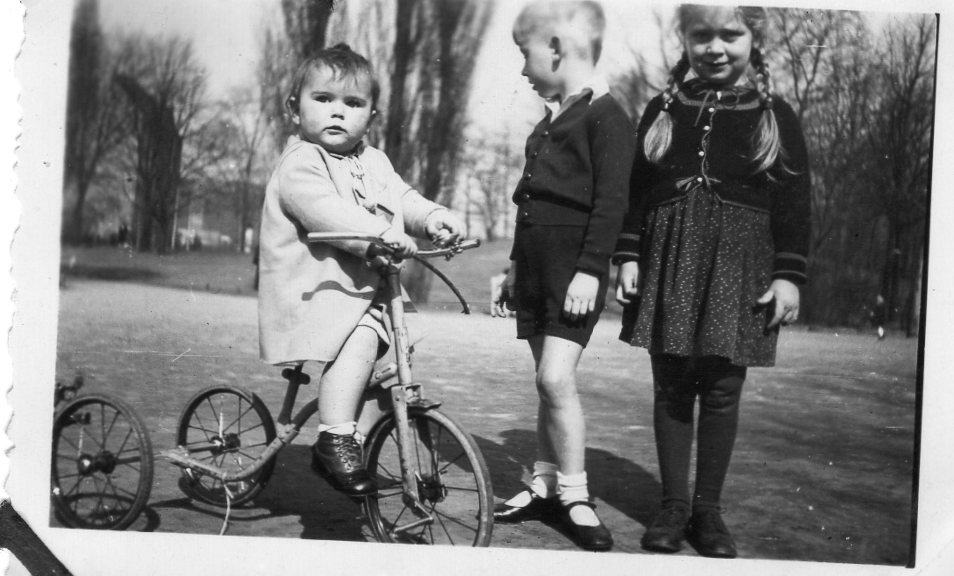
I have here a few more pictures Mum took of me as a toddler. Apparently I wanted to try out whatever other children had, be it a toy car, a doll’s pram or a big tricycle. I didn’t own any of these things, but gee I was keen on trying them out!

How on earth did Mum convince the children to let me try out their things so she could take these photos?
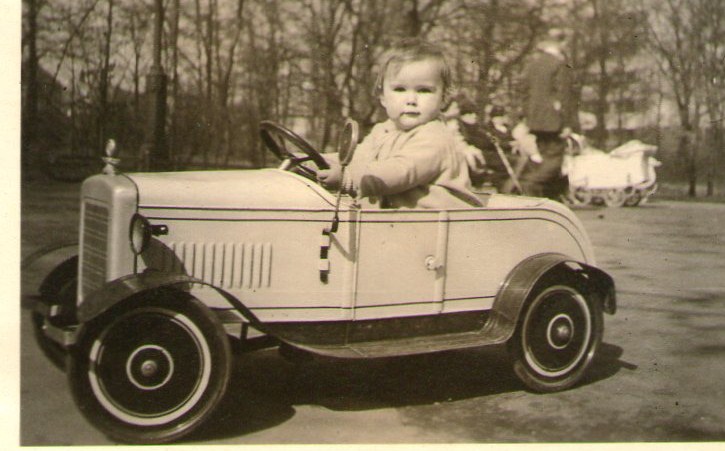
.

On my fourth birthday Tante Ilse gave me a ‘Puppenwagen’, a pram for my
dolls.

Mum kept a big photo album with pictures of me. Growing up, I always liked to look at all these pictures. However, I remember distinctly that the following pictures annoyed me quite a bit. I felt awful that the pictures showed me being so very plump! When I was told I looked ‘cute’ I tended not to believe it. I was self conscious at an early age and mostly didn’t feel ‘cute’ at all. I still often don’t like my picture taken because I think I might look awful! The adults in the pictures are my Mum, Tante Ilse and Onkel Addi. I wonder who took the pictures with all three adults in it. Was it perhaps my father? Pussi was Tante Ilse’s dog. Apparently I loved carrying this dog.

For good measure I want to include here another blog with my father and mother in it and some of the extended family.

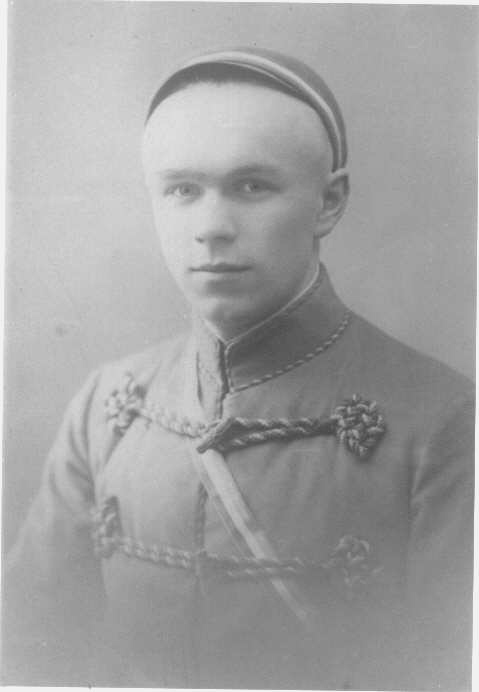
My father, Alexander Spickermann, was born in Lodz on the 13th of May 1904. The following picture of him was taken in about 1916. This is the earliest picture I have of him.

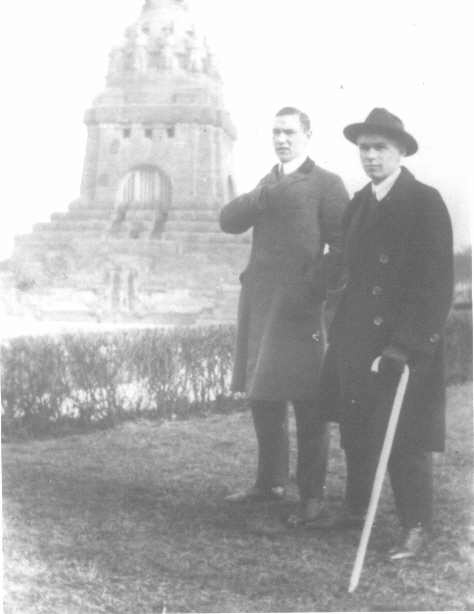
Alexander’s brother Edmund Spickermann, was born in 1902. Both brothers studied in Leipzig, Germany. The following pictures are from 1925 in the city of Leipzig. There is first Alexander and then Edmund. Both brothers are in their student outfits. And then there is a picture of both of them in front of the Völkerschlacht-Denkmal in Leipzig.
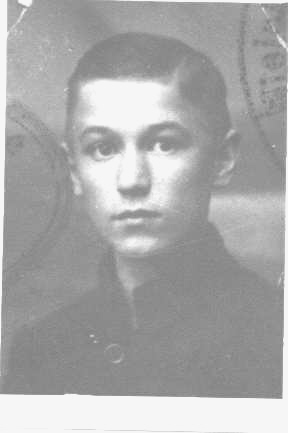
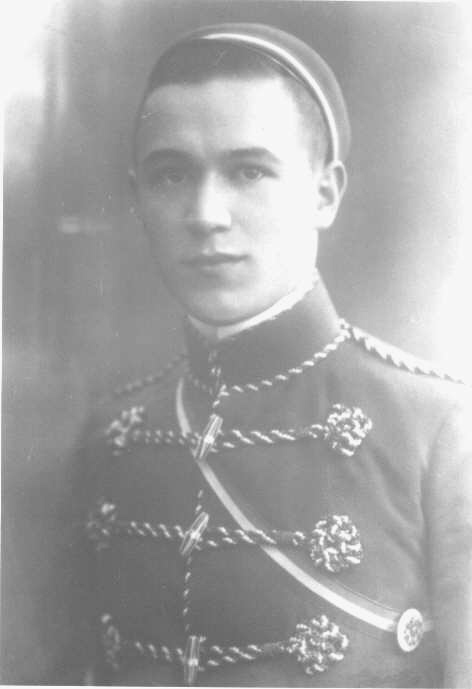
Alexander ca 1916

Leipzig ca. 1925

Edmund ca 1925

Alexander und Edmund am Voelkerschlachts Denkmal after 1925

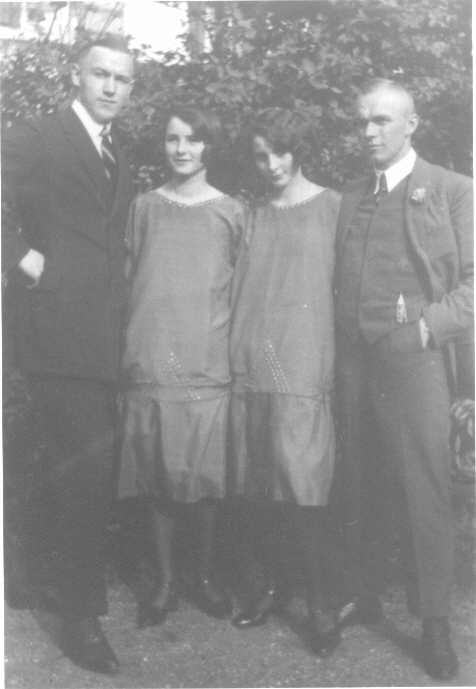
Alexander, Charlotte, Ilse, Edmund 1925

Alexander and Charlotte are my parents. They were married on the 25th of September 1930. Earlier that year, that is in 1930, Alexander promoted to Dr. phil and Edmund, I think, to Dr. rer.pol. The above picture is from 1925 when Alexander and Edmund first met Charlotte and Ilse. Charlotte was only fourteen years old at the time. Her sister Ilse was eighteen. Below is my parents’ wedding photo from the 25th of September 1930. (Charlotte was born on the 23rd of March 1911 and Ilse on the 27th of February 1907).
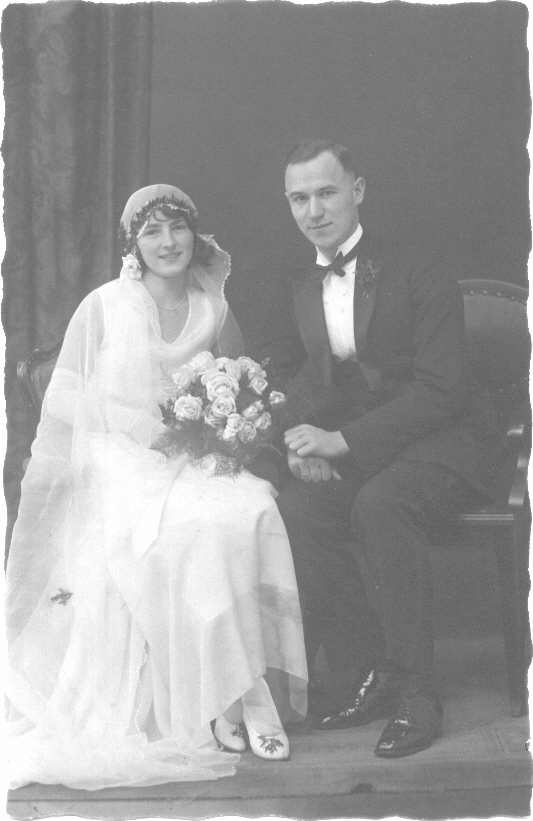
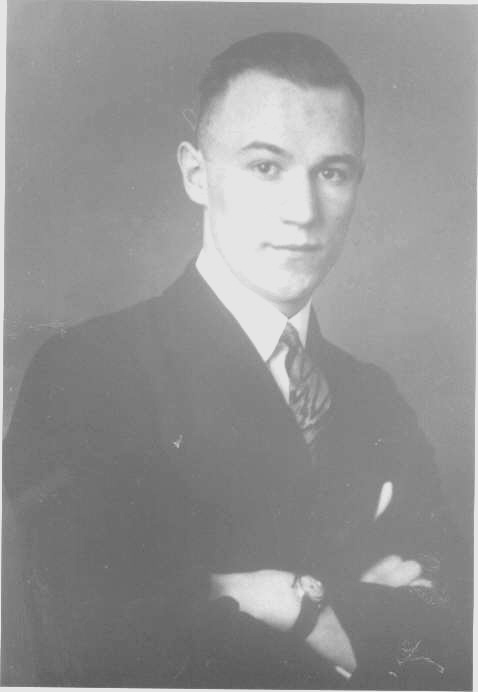
25.9.1930

ca 1930

Ostern 1935 mit Oleg

Above is another photo of Dad from 1930. The next photo was taken around Easter of 1935.

Dad is holding me. I had been born on the 21st of September 1934. So I am about six months in that picture.

2-06-2009 5;02;29 PM

In the above picture Dad is probably not quite forty yet. And then there is the photo of the Grandparents’ Golden Wedding Anniversary in Litzmannstadt (Lodz) in November of 1943. On the left is my sixteen year old cousin Ursula; next are Dad and Mum and I am in front beside Grossmutter (Grandma). I am nine years old.

Golden Wedding (2)

Below now is the picture that was taken in June of 1938 soon after the home-birth of my brother Bodo. Since February of 1930 Ilse had been married to Adolf Schlinke (Onkel Addi). They owned this beautiful car, called ‘Wanderer’.
Grossvater Josef Spickermann (Granddad) was in Berlin for a visit. Presumably to see Bodo, his new grandson. The Schlinkes took Granddad, Dad and me for an outing in their car. The picture was taken in Berlin at the Reichssportfeld. Dad is in the picture on the left.

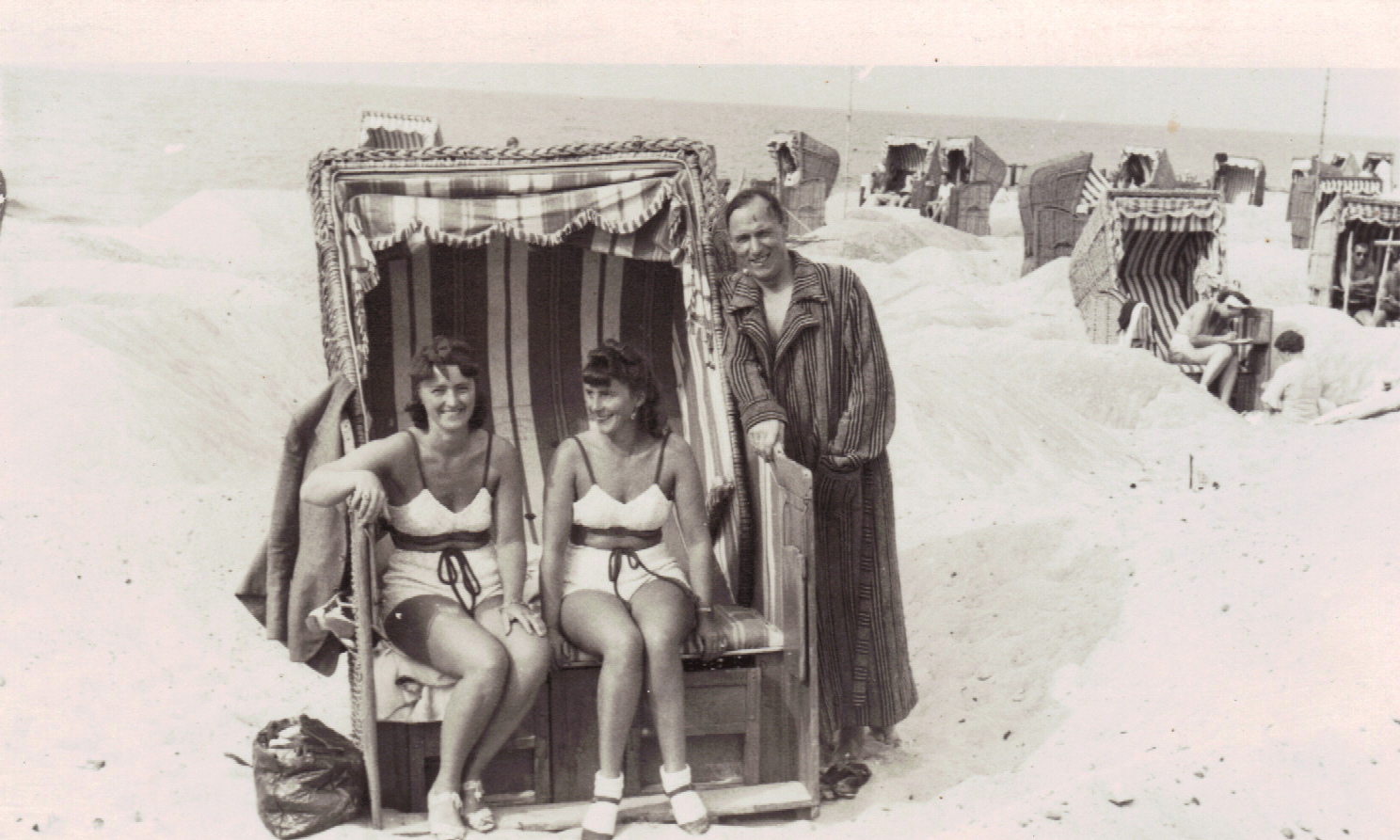
The next picture is taken at the Baltic seaside resort of Graal/Müritz in 1940. In the ‘Strandkorb’ are Mum and Tante Ilse, Dad is standing next to them.
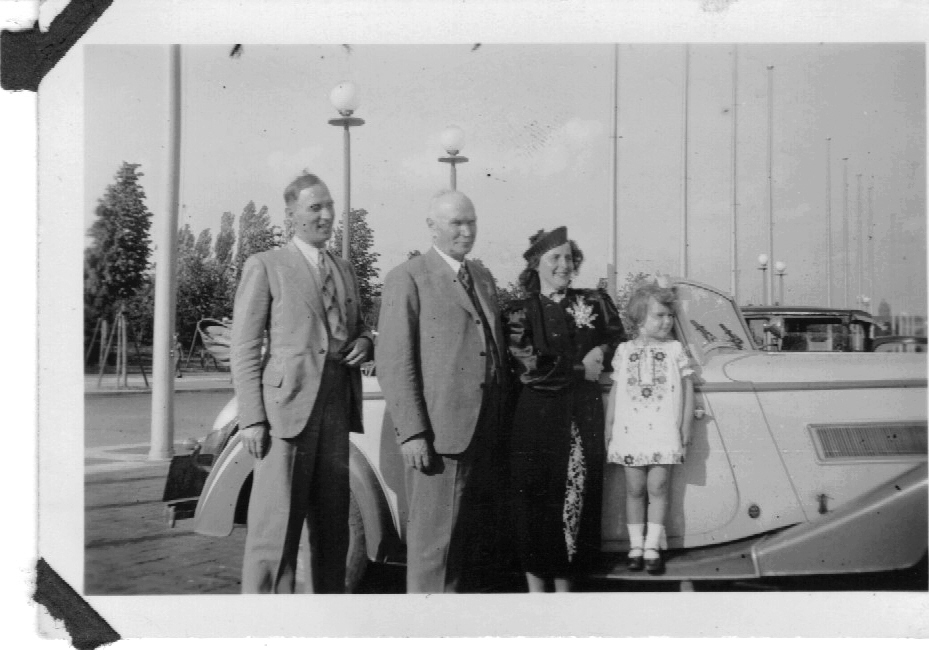
Oleg,Joseph,Ilse,Ute an Schlinkes Wagen

Alexander mit Charlotte und Ilse Graal Mueritz 1940

I copied three more photos, probably all from the 1950s. The first one is Dad in his office, the two others are party photos with Dad and his family. In the last photo are Dad and his three sisters and two brothers. They were probably celebrating someone’s birthday. The Spickermanns liked to come together as a family.
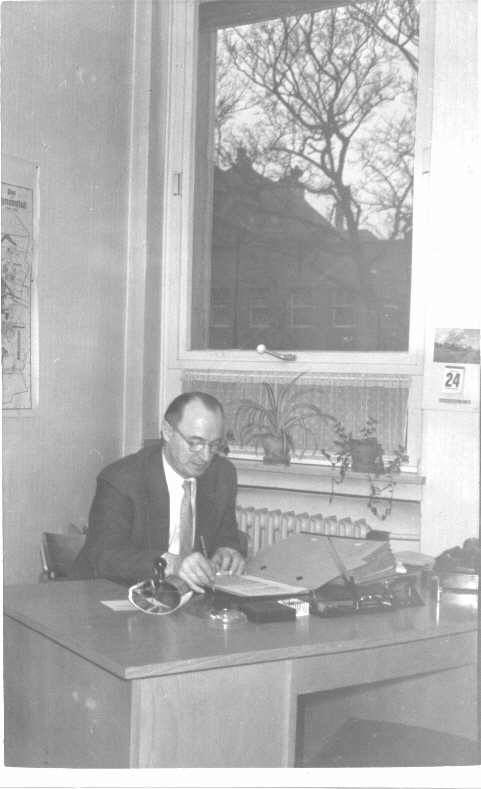
In the Office MNid 1950

Lies, Alfred, Gertrud, Alexander,Ludwig, Horst 13.5.1964

Geschw. Spickermann, Alexander, Ludwig, Jenny, Olga, Lies, Edmund 13.5.1964

I did another copy of this post and published it on the 3rd of June 2020

Peter’s 80th Birthday in 2015 and Pauly the Car

Pauly the Car

This is what Peter wrote on the 19th May 2015:
“Last weekend was my 80th birthday and I had a really good time.”

And he says: “Our son Martin had even flown in from Melbourne for the weekend. He had to fly back on Sunday and we offered to take him back to the airport and take daughter Caroline home to Sydney.

The only way out from Wollongong, which is practically just a few meters above sea level, is up a steep road, Mount Ousley Road, across the Illawarra escarpment. It was only constructed during WWII by the Americans with their “can-do”  attitude.

While going up the steep hill, Caroline was driving,  the car seemed a bit sluggish. With four adult people on board, it did not seem unusual. But, we started to discuss the car’s age and Caroline suggested we could buy another car. Maybe not a new one, but at least a well preserved and reliable second-hand car.

Just seconds after discussing this, and not remembering Ilse’s advice,  the car showed severe signs of illness. It lost power and no amount of gear-shifting would help. Soon enough, belching smoke poured out everywhere and we feared the engine could blow up. Our car looked more like an old steam engine than a 21st Century automobile.  We decided to pull up at the turn-off to the Clive Bissell Drive where there is a convenient parking area. We thought of letting the car cool off and then continue.

Caroline did not trust “Pauly” anymore and rang a friend who lives in a neighbouring suburb. He came  and Martin made it, just in time, to the airport.”

UTA’S DIARY

In my Diary from 19th May 2015 I found the following pictures:

IMG_1561

IMG_0605

IMG_1562

IMG_1565

IMG_1563

IMG_1570

IMG_1571

IMG_1572

IMG_1573

IMG_1575

IMG_0607

IMG_0606

Big Meal for Peter at the German Club.

2015-05-16_19-27-26_919

Veal Schnitzel and dumplings for me.

Everyone could order what they felt like. For entrees there was Rollmops, or baked Camembert cheese or soup.
Most people got German beer from the tap. Ebony left soon after dinner with the two little darlings, our great-grandsons. There were later on 12 people left for the welcome drink, a nice sweet bubbly.

2015-05-16_20-45-10_610

2015-05-16_21-43-19_696

2015-05-16_20-45-26_245

2015-05-16_21-43-50_597

2015-05-16_21-45-15_987

2015-05-16_20-45-47_45

Uta’s Diary from 2014/03/18 about Cataract Operations

On the 18th of March 2014, that is six years ago I published the following:

https://auntyuta.com/2014/03/18/utas-diary-3/

photo 3
photo 1

photo 2

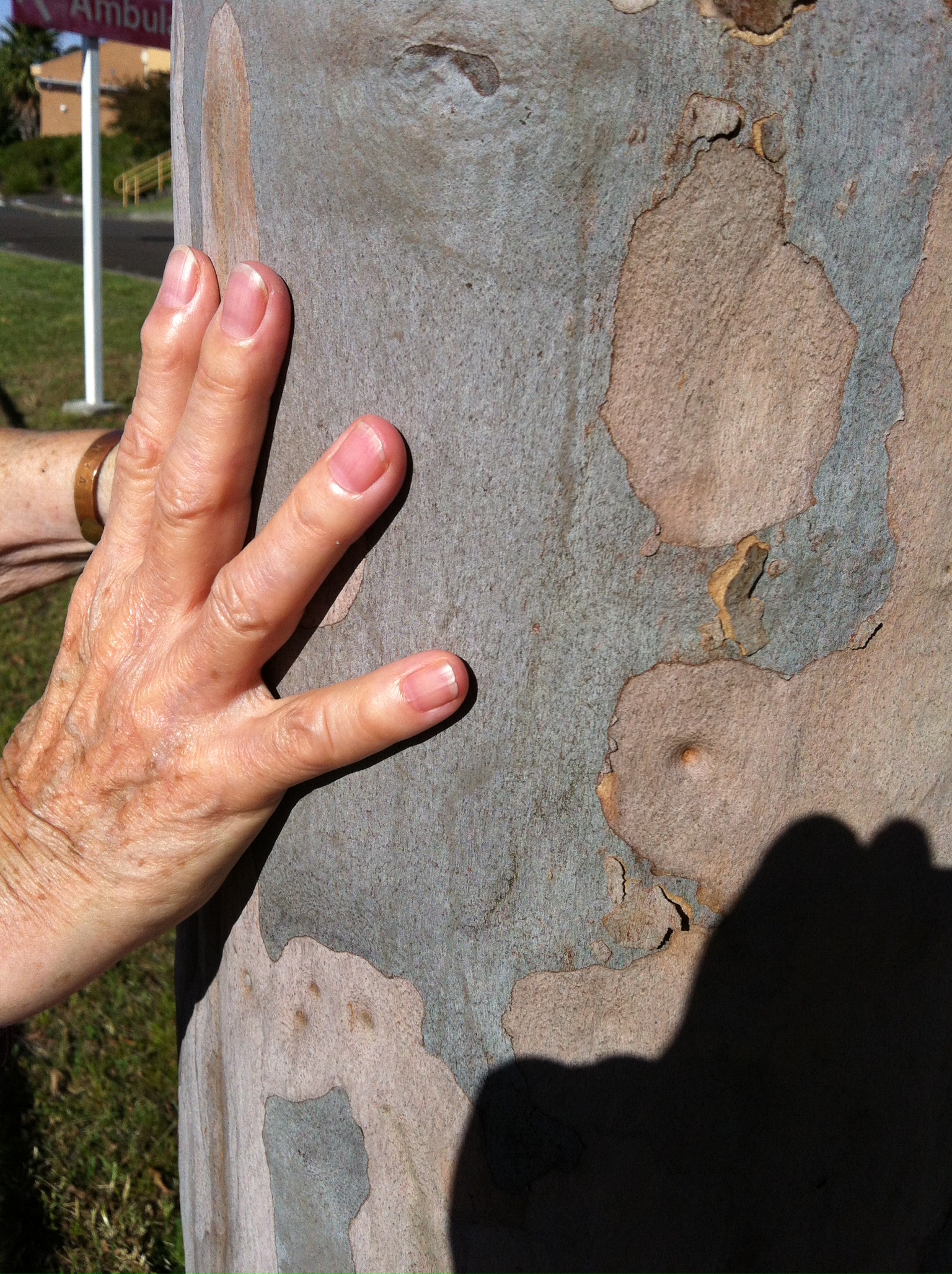
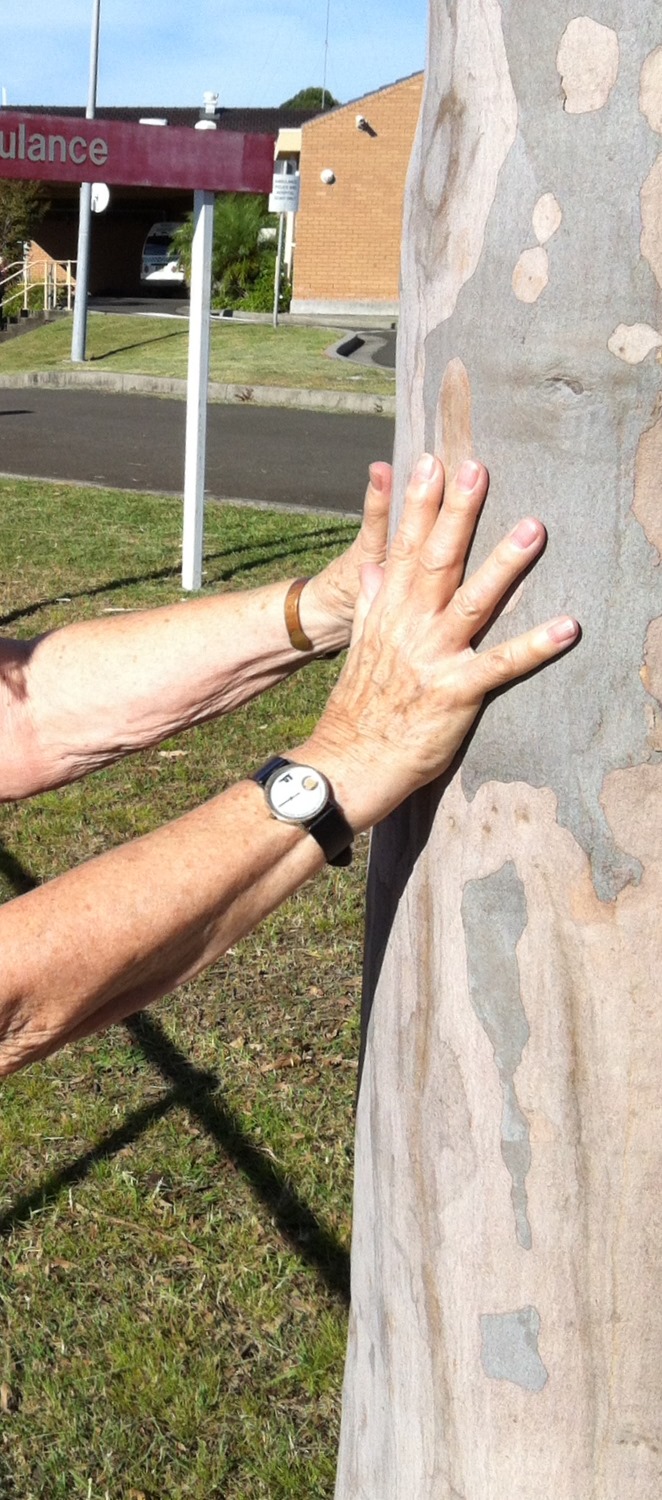
These pictures were taken by daughter Caroline this morning while we were waiting for Peter to come out of surgery. Caroline took the pictures with her phone. I had forgotten my camera. Still, I looked around taking some pictures in my mind. The tree I was touching in the above pictures looked marvellous. It was really smooth to the touch.

Peter’s cataract operation went well. After a couple of hours he was allowed to go home. It was good that Caroline could drive us. Peter has to wear his eye-patch till seven 0’clock tomorrow morning. The patch starts irritating him a lot. He keeps having the feeling that he wants to take it off. At the moment he has been lying down a bit trying to catch up on some sleep.

While we were waiting for Peter, we were able to spend a bit of time in the sun in the hospital grounds. It was a beautiful sunny morning. The older I get the more I love spending time in the sun. I have been reading lately a lot on the benefits of sunshine in connection with the need for Vitamin D. My favourite page on Vitamin D right now is this one:

http://www.vitamindcouncil.org/about-vitamin-d/how-do-i-get-the-vitamin-d-my-body-needs/

On the 24th of March 2014 Peter made the followig comment:

“The operation was on Tuesday. All went smoothly and I have no complain regarding the procedure. Next day when the dressing came off I thought I was in London experiencing the fog there. There was no vision in the eye. Luckily I have the other one. The doctor told me this sometimes happens when the patient has glaucoma (which I have). She gave me some tablets to bring the pressure down in the eye. Come back on Friday. Yesterday after two days of taking the tablets I started to see Daisy Duck. She is hanging on the wall in our toilet making sure people don’t misbehave. I call it now doing the “Daisy Test”. At first I could not see her at all we my brand new reconditioned eye. But yesterday afternoon she appeared, if ever so faint, out of the fog.

Last night I went to bed hoping for a further improvement. But in the morning it was all foggy again and Daisy wasn’t to been seen anywhere. Perhaps I used up my power of vision during my REM periods during sleep when I was able to see colourful flowers and bushes.

This morning it was back to my Ophthalmologist. She was happy with the progress I had made (did I ?) and she smiled with happiness as she reported, the pressure in my eye has gone done to “9”. Her smile and friendliness is so generous that I would forgive her losing my eyesight. But, she said, nothing to worry about, stop taking the tablets, increase one of the drops from one to six times a day and come back in five weeks – unless, of course, my eyesight has not improved by Tuesday then she wants me back next week. On questioning her she assured me, that the operation was a full success only my eye is a bit swollen and she is sure all will return to normal. Meantime I run to to the toilet more often and check whether Daisy Duck is appearing out of the fog.”

I wrote on 22nd of March 2014:

“Because of ‘macular hole’ I had an operation in Jan.2001. I had no vision in my left eye before the operation. Sadly the operation made no difference. Apart from having no clear vision in my left eye, I do have cataracts in it now as well. I was told I could have an operation for the cataracts. So far I declined. I was of the opinion since I cannot see with my left eye anyway, the removal of the cataracts would not make much difference. But I am not quite certain about this. Maybe my side vision could be improved with the operation? This is why I might reconsider.”

Now, six years later, I am doubtful whether I should agree to a cataract operation on my ‘good’ right eye. Of course my left eye is still totally blind. So the cataract on this blind eye does not worry me. But for some time now I have been told, that I should have a cataract operation on my ‘good’ right eye. However with glasses I can still see enough with my right eye! So I am very reluctant to undergo an operation. If this cataract on my right eye actually leads to blindness, I would of course like to have this operation, but I think for as long as I can still see enough, I am very reluctant to have an operation. I am told, there is very little risk that the operation may cause a problem to my eyesight. But even if there is only very little risk, I rather not have the operation, since I have no indication that my eyesight has in any way deteriorated during the last few years. I can still read and write and watch television. With glasses, of course. But isn’t that enough?


I wrote on the 24th of March 2014:

“To constantly have to remember so many different eyedrops to take at different times I would say is quite a struggle for Peter. He puts the bottles in a certain order. If he has forgotten one bottle he can see it for then it  stands in line still. Once he has finished with the eyedrop, he puts the bottle in a different place . . . .”

Morning and night Peter is still being kept busy with all these eyedrops!