Today is the 8th of November. So, Christmas 2022 is coming up soon. For Marianne itis going to be the fourth Christmas without Gunter!
Shortly before Christmas, three years ago, was Gunter’s funeral. Jack came to the funeral with his friend, a woman in her fifties. Jack was happy to have such a friend ten years after his wife had passed away. Jack had had several girl friends over the past ten years, but nothing lasting. Jack was hoping, that the affair with his new friend might become somewhat longer lasting. Jack was relieved that Rose, his friend, had agreed to accompany him to the funeral. Gunter had been Gunter’s longtime business partner. So he could not very well stay away from this Catholic funeral service.Or was it a funeral Mass? He wasn’t sure.
Yes, it turned out, that it was a Mass. And there were some refreshments after Mass. Jack and Rose paid their respects to Marianne and her whole family. This had been the last time, that Jack had seen Marianne in nearly three years! However, after his separation from Rose he had started to write emails to Marianne. So for the last year or so, he had become pretty close to Marianne. He had been thinking for a while, he might pay her a visit! Well, today was the big day. He bought some flowers and a bottle of wine, and went to see her!
I like it, that I did get another very good response to that reblog as well as to the original page about wanting to write some fiction.
So with two good responses from my dear blogger friends I should really feel encouraged enough to start writing my novel, or shall I call it my novella? For I thought to restrict it to maybe 200 pages.
Last week I developed some major tooth problems. Some of it is under control now. But I’m afraid some more dental treatment is still required.
I already had quite a few challenges in my old age. This is another challenge now, that I could do without. But then I can also look at a lot of good things that have come my way recently and throughout my life!
Yes, I feel I’ve had a very rewarding life, and I like writing about it. That I cannot write much about persons in my life, who are alive, is a bummer, for I like to write about things that are autobiographical. But then, you’ll never know, I might get to like fictional writing even more!
Oct 3, 2022You’d be hard pressed to find a novel more embedded in the Australian psyche than ‘Looking For Alibrandi’. Now, Josie’s on the main stage. #ArtWorksABC Subscribe now: https://ab.co/ABCArtsSubscribe Melina Marchetta’s 1990s portrait of an Italian immigrant family has already enjoyed a second life as an iconic Australian film. Now, for its third act, Alibrandi has been adapted for the stage by Vidya Rajan. Art Work’s Lisa Skerrett chats to director Stephen Nicolazzo, and the show’s star Chanella Macri. ————- Hosted by Namila Benson, Art Works is the ABC’s weekly half-hour arts show sharing the most inspiring, surprising, and formative ways that Australian creatives are telling our stories today. https://iview.abc.net.au/show/art-works
I am grateful to YouTube, because of YouTube I can just now listen to Leonard Cohen, on consecutive YouTube videos, one after another. How good is that?
So, we stayed at our holiday ‘camp’ at Sussex Inlet from Friday, 21st of October. to Sunday, the 25th! 🙂
Caroline, my youngest daughter, turns 44 in about six weeks. She was at the holiday ‘camp’ with her whole family right next door to me: A 16 months old baby was one of the family: This was so good! 🙂
I stayed with my daughter Monika and her partner Mark. Monika turns 64 in less than six weeks. The twins, Monika’s sons, stayed in another unit with their families: It was so good, to have Monika’s grandsons around! They are absoluely lovely kids. 🙂
On Saturday, one of Monika’s daughters stayed with her friend in our camp just for the day! So these people were number 16 and 17, and I was number 18! I hugged them all, and they hugged me! A lot of hugging all around. 🙂
Uta with daughter Caroline and grandsons Ryan and Troy (the twins!). It was a wet morning.
This was our first time at Sussex Inlet. Caroline was six and the twins were still five. The rain lasted only for one day. After this we had beautiful summer weather again. When our son Martin came to visit with his wife Elizabeth the Inlet looked gorgeous in lovely sunshine.
It was March 1985 and in July Martin and Elizabeth had their first child, a boy named Tristan. After daughter Monika’s twins, Tristan was to be our third grandchild. The following grandchildren were all girls. Monika’s three girls and Martin’s two girls. So we have eight grandchildren ; the last one of them was born in 1997. In the meantime we are also blessed with three great-grandchildren.
After having experienced Sussex Inlet for the first time in 1985 we went back there lots of times. The children and grandchildren always loved it. Only our first born child, daughter Gabriele was never able to join us at Sussex Inlet because she needed an Iron Lung to sleep in for the night.
We were happy that our youngest daughter had the company of the twins. The three of them did get on very well together. When people saw us with the three of them, they often thought they were triplets! The twins would ring their mum from a public phone near the office of the campsite. The place was still called a ‘camp’ but it had newly built units which could accommodate up to eight people each.
In March 1985 the unit we were in had only just been built. Everything looked brand new. The best thing about Sussex Inlet was that it was very secluded. We called it our little paradise.
This was our first time at Sussex Inlet. Caroline was six and the twins were still five. The rain lasted only for one day. After this we had beautiful summer weather again. When our son Martin came to visit with his wife Elizabeth the Inlet looked gorgeous in lovely sunshine.
It was March 1985 and in July Martin and Elizabeth had their first child, a boy named Tristan. After daughter Monika’s twins, Tristan was to be our third grandchild. The following grandchildren were all girls. Monika’s three girls and Martin’s two girls. So we have eight grandchildren ; the last one of them was born in 1997. In the meantime we are also blessed with three great-grandchildren.
After having experienced Sussex Inlet for the first time in 1985 we went back there lots of times. The children and grandchildren always loved it. Only our first born child, daughter Gabriele was never able to join us at Sussex Inlet because she needed an Iron Lung to sleep in for the night.
We were happy that our youngest daughter had the company of the twins. The three of them did get on very well together. When people saw us with the three of them, they often thought they were triplets! The twins would ring their mum from a public phone near the office of the campsite. The place was still called a ‘camp’ but it had newly built units which could accommodate up to eight people each.
In March 1985 the unit we were in had only just been built. Everything looked brand new. The best thing about Sussex Inlet was that it was very secluded. We called it our little paradise.
Last Weekend, that is from Friday the 21st of October to Sunday, the 23rd , I with a lot of family members, spend some time at Suseex Inlet again! Even though it was raining a lot of the time, all of us still had a very good time. I took lots of pictures. Hopefully, I’ll be able to publish some of these pictures pretty soon! 🙂
Disadvantaged and vulnerable people “bore the brunt” of Australia’s COVID-19 pandemic response, according to a report.
Key points:
The review has found that governments were making decisions in a “fog of uncertainty”
It received submissions from more than 350 people
Many of Australia’s border closures and lockdowns were the result of policy failures in quarantine and contact tracing, the review also found
The privately funded reviewhas condemned Australia’s handling of the COVID-19 pandemic, arguing that government health measures and policies lacked transparency and further entrenched existing inequalities.
“Governments and public servants were making decisions in a fog of uncertainty,” the review said.
“But, looking back, we are persuaded that significant mistakes were made.”
It found disadvantaged or vulnerable groups — such as low socio-economic families, people with disabilities, aged care residents, migrant communities, women and children — were disproportionately impacted by COVID-19 policies.
The review was funded by three philanthropic organisations: Andrew Forrest’s Minderoo Foundation, the Paul Ramsay Foundation and the John and Miriam Wylie Foundation.
It was ledby Western Sydney University Chancellor Peter Shergold, along with businesswoman and former University of Wollongong Chancellor Jillian Broadbent, University of Queensland Chancellor Peter Varghese and 2021 Young Australian of the Year Isobel Marshall.
It received submissions from more than 350 people, including health experts, public servants, economists, business groups and community organisations.
The review was sharply critical of taxpayer-funded economic policies — such as JobKeeper — arguing big businesses were favoured while casual and temporary workers were left without financial support.
“Failing to include a claw-back mechanism for businesses supported by JobKeeper was a design fault,” it said. “It was fiscally irresponsible and unfair when other groups in society were excluded from economic supports.”
It also argued that many of Australia’s border closures and lockdowns were the result of policy failures in quarantine and contact tracing, and could have been avoided.
“Rules were too often formulated and enforced in ways that lacked fairness and compassion,” it said.
“Businesspeople were often allowed to travel across borders whilst those wanting to visit dying loved ones or newborn family members were not afforded a similar opportunity.”
The review argued that schools should have stayed open, particularly once it became clear they were not high-transmission environments.
Disadvantaged and vulnerable people “bore the brunt” of Australia’s COVID-19 pandemic response, according to a report. (News Video)
“For children and parents — particularly women — we failed to get the balance right, between protecting health and imposing long-term costs on education, mental health, the economy and workforce outcomes,” it said.
“The social and economic costs were likely significant.”
It also warned of the “perils of overreach” when it came to implementing and enforcing COVID-19 public health measures.
The review found many Australians — particularly those living under strict and extended lockdowns in Melbourne and Western Sydney — felt they were “being protected by being policed”.
“There were too many instances in which government regulations and their enforcement went beyond what was required to control the virus,” it argued.
“Such overreach undermined public trust and confidence in the institutions that are vital to effective crisis response.”
It claims to be apolitical and states that its terms of reference “were not dictated by a politician”.
The review states its submissions were received voluntarily and participants were given “complete confidentiality so they were able to speak freely”.
For most of us, dancing is a fun way to unwind, or something we do after a few too many drinks on a Saturday night.
But what if dancing can actually help to slow — or in some cases even reverse — the ageing process? The ABC’s Catalyst program wanted to find out.
In his youth, Roderick spent his weekends dancing the night away at rave parties.
“I thought I was a good dancer,” the 67-year-old says.
Roderick had experienced numbness in his legs for years — until he started dancing. (ABC: Catalyst)
But Roderick’s life changed four decades ago when he was diagnosed with HIV.
Since taking antiretroviral medication for his illness, he developed peripheral neuropathy — a condition that causes numbness, weakness and pain in the hands and feet.
The drug that saved Roderick’s life has left him without any feeling in his legs, making it difficult for him to balance — let alone dance.
Recently, Roderick joined eight other participants in a Catalyst experiment that explored how dance can help older people improve their physical and mental wellbeing.
Over 12 weeks, the participants spent four hours each week learning a routine that combined dance and sign language.
Led by Australian choreographer Kelley Abbey, the program culminated in a live performance at the National Institute of Dramatic Art (NIDA) in Sydney.
The participants also took part in seven health-based assessments that measured their physical and cognitive abilities before and after the program.
But after just three rehearsals, Roderick had already made a breakthrough.
After 10 years of living without any feeling in his legs, he says he began to feel a twinge of pain in his calf muscle while doing some stretches.
“It’s pain, but it’s bloody good pain.”
And there was more good news to come.
The big slowdown
Love it or hate it, we are all getting older. When we look in the mirror, we might notice a few more wrinkles or strands of silver hair, but there are also a lot of changes happening on the inside.
For one, we slowly begin to lose muscle mass at around the age of 35, a process that speeds up after we turn 60. This can make us weaker and more susceptible to fatigue, making it tougher to get our bodies moving.
The way we walk also changes. While we may have been able to dart across the street in our youth, we tend to take shorter, slower steps as we get older, leading to unsteadiness on our feet.
So, it’s no surprise that falls are the most common cause of injury-related deaths in people over the age of 75, according to data from NHS Digital in the UK.
“That can be one of the most problematic physical aspects of ageing,” says Rachel Ward, a biomechanical scientist at UNSW Sydney.
“Falls are a huge burden on the public health system.”
Dealing with these physical challenges and the risks that come with them can impact daily life.
Over time, it can become more tempting to take it easy and skip exercise altogether.
On top of that, our cognitive abilities — such as being able to recall names, numbers and do mental calculations on the spot — can take a hit.
But staying fit and mentally sharp go hand in hand — for better or worse, says Emily Cross, a cognitive neuroscientist at the MARCS Institute for Brain, Behaviour and Development at Western Sydney University.
The more you move, the longer you’ll keep your mind and body young.(Getty Images: Flashpop)
If you’re not moving as much, you’re also not giving your brain enough of a workout.
“We hear it again and again — the use it or lose it mantra,” Professor Cross says.
“That’s particularly the case for physical activity and the maintenance of physical circuits in the brain.”
Get your groove on
But it’s not all doom and gloom. While any form of exercise is good for the mind and body, dancing ticks every box in one go.
Almost half of Australians live with a long-term health issue. It’s why the ABC is hosting a national conversation till mid-November focusing on Australia’s health and wellbeing. It’s Your Move.
Unlike doing squats or lifting weights, dancing is like multitasking on steroids.
You’re moving your body through space, remembering sequences of steps, coordinating with other dancers around you — all while moving in time with music (or trying to!).
This gives your body a 360-degree workout, Dr Ward says.
“What’s unique about dance is that you’re not just doing the same movement over and over … you’re learning so much at the same time,” she says.
“All of that provides a constant musculoskeletal and neurological challenge.”
Dancing is particularly good for your heart. One 2016 study on more than 48,000 participantsover the age of 40 found that those who danced had a 46 per cent lower risk of dying from heart disease compared to non-dancers.
Several studies have also linked dancing with improved balance, flexibility, muscle strength and coordination.
Dance is a great way to improve your balance, flexibility and agility. (Supplied: Meg Letton/UNSW)
By the end of the Catalyst experiment, all the participants saw improvements in their fitness, balance and agility.
On the four-square step test — which measured how quickly participants could step between four squares — Roderick improved his time by over 30 per cent.
And while he struggled to balance on one leg at the beginning of the program, he was able to stand on his right leg for 30 seconds after 12 weeks of dancing.
Dancing can be beneficial for people with Parkinson’s, like 72-year-old Anni.(ABC: Catalyst)
Dancing can also help people with conditions like Parkinson’s disease — which affects about one in 100 people over the age of 65.
People with Parkinson’s disease often find it difficult to control their movements.
But dancing to music can help them tap into parts of their brain that aren’t as affected by the disease, helping them to find more flow in their movements, says Natalie Allen, a neurological physiotherapist who specialises in Parkinson’s disease at The University of Sydney.
“The rhythm of the music helps people with Parkinson’s to move more freely and easily,” Dr Allen tells Catalyst.
Anni, 72, was diagnosed with early-stage Parkinson’s disease this year after noticing a tremble in her hands.
Balance can become an issue as Parkinson’s disease progresses, but after taking part in Catalyst’s dance experiment, Anni reduced the wobblein her stance by a whopping two-thirds.
Whether you’re trying to master ballroom dancing or a perfect pirouette, dancing makes your brain light up.
All that learning can also reshape and forge new pathways in your brain.
A 2021 study on 60- to 79-year-olds found that doing a combination of brisk walking and social dancing increased the amount of white matter — neural tissue that enables brain cells to rapidly send and receive messages.
“With dance, we have the whole complement of cognitive and social tasks going on,” Professor Cross tells Catalyst.
“If you want to stave off neurological decline in general, dance is a great way to exercise your brain across multiple domains.”
It’s tricky to study what’s happening in people’s brains while they’re spinning and swaying in a rehearsal room.
But Professor Cross has done the next best thing: taking a peek at what’s happening in people’s brains as they watch a video of their teacher performing a dance routine they’re learning.
“If you’re going to learn to dance, you’re going to learn by watching someone else do it,” she says.
“You have to translate what you’re seeing in other people’s bodies onto your own.”
Our brains contain special cells called mirror neurons, which allow us to learn through watching someone else.
These cells are located in areas of the brain involved in controlling body movements, spatial awareness and attention.
Professor Cross and her team have found that this network of mirror neurons kicks into gear while people are watching and learning — even if they’re just watching a video of someone else performing the routine they’ve learnt.
“These regions are sharpening their responses and are really kind of coming online in a way that helps you bridge that gap between what you see someone else do with their body, and what you do with your body,” Professor Cross says.
The good news is that these same regions switch on in people of all ages, indicating that the brain never loses its ability to learn new things.
“It’s really, really exciting that the learning is kind of shaping these brain circuits,” Professor Cross says.
“It means you can teach an old dog new tricks.”
This cognitive boost was also seen in Catalyst’s dancers.
Shirley, who five years ago was diagnosed with Alzheimer’s disease — the most common form of dementia — had the biggest improvement of all the participants.
Shirley (right) has Alzheimer’s disease, but she noticed her cognition improve after 12 weeks of dancing. (ABC: Catalyst)
In the beginning, Shirley’s performance on the cognitive tests was much poorer than the rest of the group.
But after three months of dancing, her test results were closer to the rest of the participants.
“It’s fantastic, I can’t believe it,” the 75-year-old tells Catalyst.
And while Shirley may not be able to dance away her condition entirely, her results show that the physical, creative and social aspects of dance can be beneficial.
“All these aspects of dance can potentially help slow the progress of dementia,” Professor Cross says.
The ultimate mood booster
One in eight Australians over the age of 65 are socially isolated or experience loneliness, which can lead to low mood and poor mental health.
While going for a walk with friends is one way to stay connected, dancing gets you out of your comfort zone in ways that other types of exercise don’t, Professor Cross says.
“If you’re learning new things and making mistakes, and laughing at yourself and with each other, there’s potential for building social bonds that you might not get if you’re just in a walking group,” she says.
“There’s expressing yourself through your bodily motions, and none of the other physical activities will have that.”
Several studies have shown that dancing for at least 150 minutes a week can reduce depression in older people, while others have found that it can help alleviate anxiety and social isolation.
It’s also a great confidence boost, which Shirley experienced for herself in the Catalyst experiment as she started getting the hang of the dance routine after a few weeks of rehearsals.
“The fact that I can do it and I’m getting my head around it all … I really value that,” she says.
“I feel that I belong and I’m not a burden to others.”
Dancing is a great way to boost mood and connect with others.(Getty Images: Thomas Barwick)
With so many different styles of dance out there, it can be difficult to figure out how to pick just one. But you can’t really go wrong, Dr Ward says.
“I think any form of dance is going to provide a physical, mental and cognitive challenge.”
A good way to narrow down your options is to consider the type of music you’ve always enjoyed and how much you want to move, Dr Ward says.
But ultimately, the most beneficial form of dancing is the one that you enjoy the most.
“When we talk about the best intervention, it’s the one that people want to stick with,” Professor Cross says.
For Roderick the benefits are “life-changing”. By the end of the program, he experienced complete feeling in his legs after 10 years of numbness.
“The joy of actually feeling the sheets on your legs … I can actually differentiate between hot and cold now,” he says.
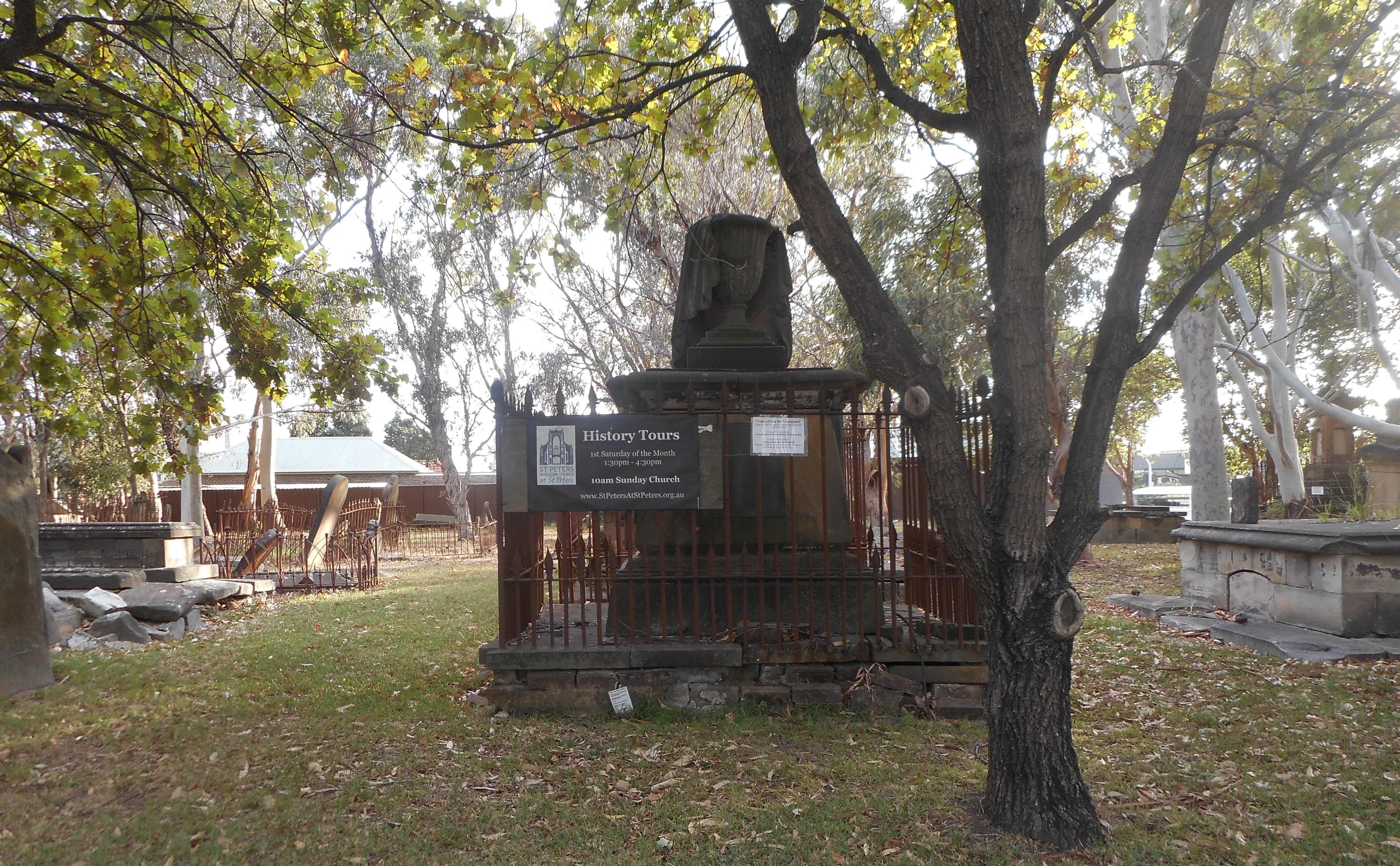
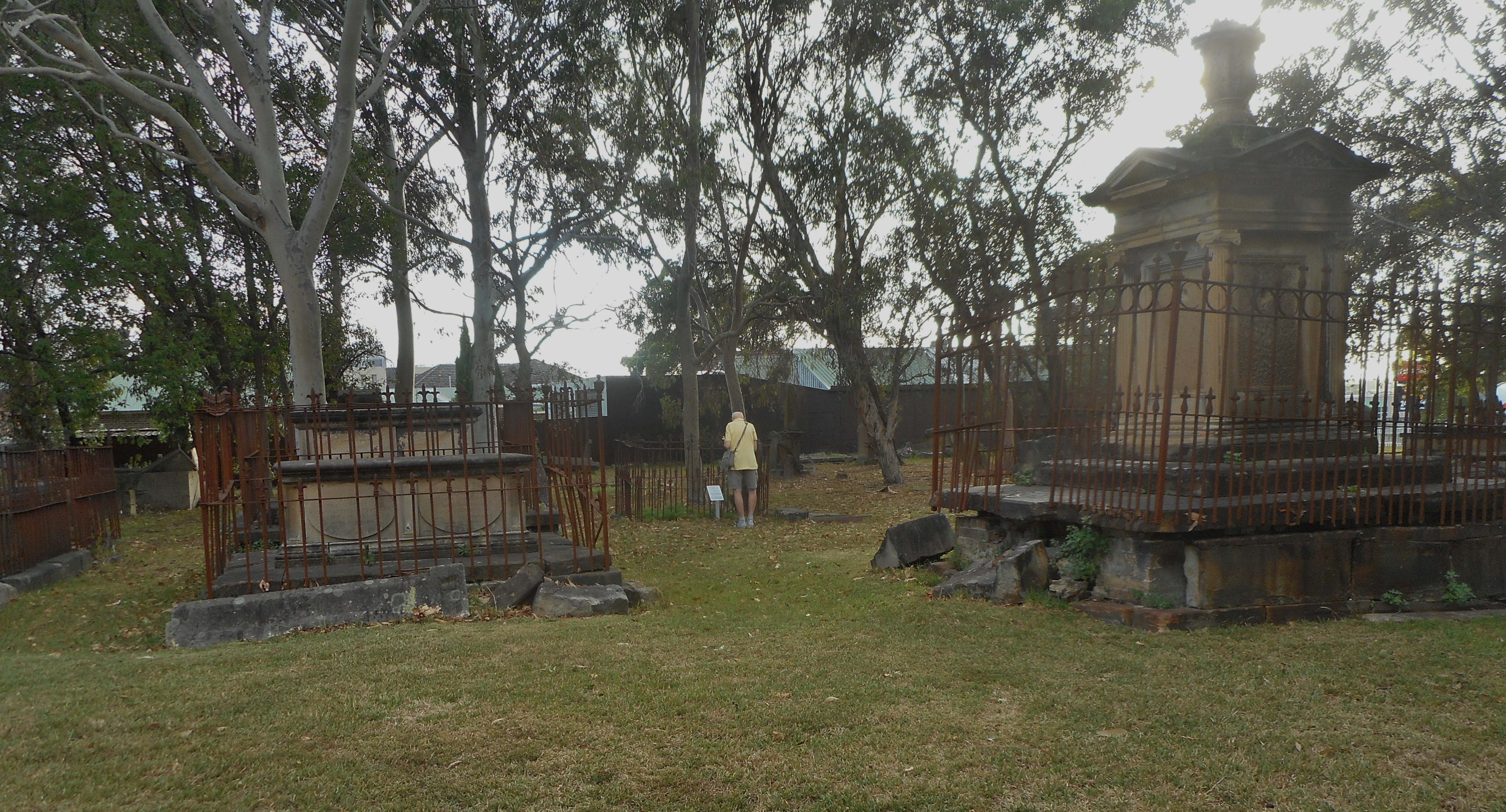
Peter and I thought that this cemetery was a very interesting place to visit. I took a lot of pictures. It is great to be able to read what it says on some of these old gravestones!
OUR STAY IN ST PETERS:
Our daughter’s wedding took place in Sydney on Saturday, the 17th of February 2018. The wedding ceremony was for 2 in the afternoon. We, that is our son Martin, Peter and I, booked into the Ibis Budget Hotel in St Peters for two nights on Friday already. The following day quite a few members of our family booked into the same hotel as well in order to attend the wedding on that Saturday.
Opposite our hotel was the old St Peters Cemetery. Peter and I went there for a walk. This old cemetery is kept in perfect condition. It was a pleasure to walk there among the old grave sites and read some of the stories about graves from the 19th century!
“St Peters Anglican Church, St Peters, 187-209 Princes Highway, St Peters, is one of the oldest churches in the suburbs of Sydney, New South Wales, Australia.[1] Designed by Thomas Bird,[2] the church is sometimes referred to as “St Peters, Cooks River,” as it is located in the Anglican Parish of Cooks River, New South Wales.
The Cooks River, named by James Cook in 1770 when he sailed into Botany Bay, is crossed by the Princes Highway, about 3 kilometres (1.9 mi) to the south of the church. The suburb of St Peters, in which the church is located, was named as a result of the area’s proximity to the church.
The site contains three main buildings (St Peters Church and hall; a former rectory, built in 1906; and the present rectory, built in 1996) and a remnant graveyard.[3] The church building is…






 AuntyUta
