Why to get vaccinated?

I do not want to get vaccinated in the very near future. Now, you may disagree with me, but I want you to tell me why you disagree with me. Before you tell me that it is urgent that I do get any available vaccine as soon as possible, please take the time to read the following and then explain to me why in your opinion I am wrong!

So, my children think, it should be my wish to live many more years. And I have to ask, can they not imagine, how awful the thought is to become more and more dependent on others? And on top of it having nobody to be with most of the time? Sure, one can have friends, and to have friends is a good thing, but without a special friend to share your life with, living becomes very difficult at a very advanced age. So, why should I want to live much, much longer? Is it so difficult to understand that for me it would be far more desirable not to live very much longer? For instance, why shouldn’t I die, when I have a heart attack? Why should I wish to be kept alive?

Yes, living alone can be a very lonely thing. It can happen to men as well as women. I had a very long marriage; 64 years actually! If Peter had lived longer, we would probably still be together. Everybody would think, that it was the right thing, that I still lived with my husband. But, I am a widow now, and I am resigned to it, to have to live on my own. Another marriage relationship is out of the question, isn’t it?

How young does a woman have to be in order to still be able to think of a new relationship? I think in the past most women that were not married yet by age 50 or even already by age 40, were regarded as being too old to find a partner!! So, usually men around that age would have been looking for a much younger woman to marry. Maybe this has changed a bit in modern times. These days a woman at around 40 or 50 would probably still have quite a good chance of finding a partner, she would perhaps even accept a partner that would be maybe 30 or 40 years her senior! I think a man who was 70 or 80 would call himself lucky to have a partner who was only 40 or 50 years old!

Some older widows have the good fortune to find a partner who is younger than she is. I know of an example, namely Peter’s sister. Ilse did not like to live on her own. So about two years after her husband had died, she became friendly with a guy who was in his fifties when she was already well into her sixties. She is 87 now and they are still together, but they each kept their own flats! Usually her partner goes to his nearby flat for a few hours each day, but the rest of the time they are always together.

Now I come back to this issue that my children think, it should be my wish to live many more years. Can they not imagine, how awful the thought is to become more and more dependent on others? And to have actually nobody to be with most of the time?

So, why should it be of the utmost importance to me to get vaccinated? All I can say is, I am really careful, not to get too close to people and and I do wear a mask, even when I am outside in the fresh air, for there might perhaps be a slight chance that accidently somebody might get a bit too close to my breathing space! So I think, it is quite likely that I am not in such a great danger of catching this Delta variant of the virus!

But I would say, that I get adverse reactions to any of these much too new vaccines is a real possibility! Besides, I want to avoid to come into contact with people at any of these places where they do vaccinations. Right now, I do not go into any buildings but stay at all times at home or in the outside area near my home ! I stay at a social distance away from the people that look after me. And I want to avoid travelling in anyone’s car, for the virus loves to stay around in the air of the confined space of a car!

It is a fact that it would be months away to get some fairly good protection from a vaccine like AstraZeneca. And then another booster is required in another few months? No, thank you! I let them work out some better vaccines, and I want indemnity to be assured. The present vaccines have only emergency approval. I can wait for proper approval and some indemnity. If for some reason I die in the meantime, I think I would feel this to be quite natural. Didn’t I have a very long, good life? Would it be so desirable for me to live very much longer? Certainly not. Just think about it!

Yes, I would like my children to think about it. Of course it is only natural that they want me to live rather than die, because they love me. But I want them to understand, that at my age dying in the near future is something that should not be prevented. Well, I can’t help it, but this is how I feel.

Now, if for some reason, I cannot stay at home anymore, and if for some reason I cannot stay away from people any more at all times, well then I guess I’d have to agree to get vaccinated because I’d probably be surrounded by people that need protection from the virus I might be carrying if I am not vaccinated.

So far so good. I want to put off this vaccination for as long as possible. I don’t mind if I die without having been vaccinated. Just don’t try to ‘save’ me when I am at death’s door! Right now, it is of no use trying to get me to see a doctor to talk to me about vaccinations. I don’t want to see a doctor, not at all.

I still have a good life, but of course a more and more lonely life. However a lot of people do lead rather lonely lives. I am so fortunate to own a beautiful home and to have no financial worries. My daughter Monika, who lives in a neighbouring suburb and has a car, supplies me with good, healthy food on a weekly basis. So, I do call myself very lucky. Not everyone is as lucky as I am, I know this.

I love staying in my own home, sitting on my newly established outside deck in the sun or to walk in the nearby park where it is always easy to stay completely by myself. If I had a choice, I would like to die at home rather than in an age care home or a hospital! Yes, I just hope it is possible for me to die at home.
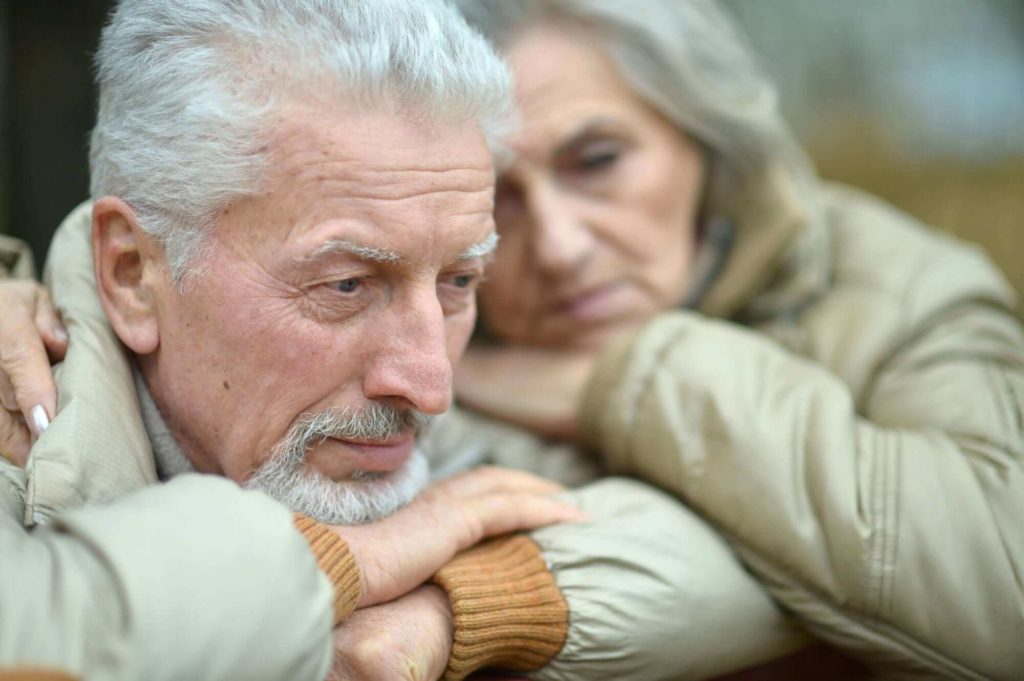
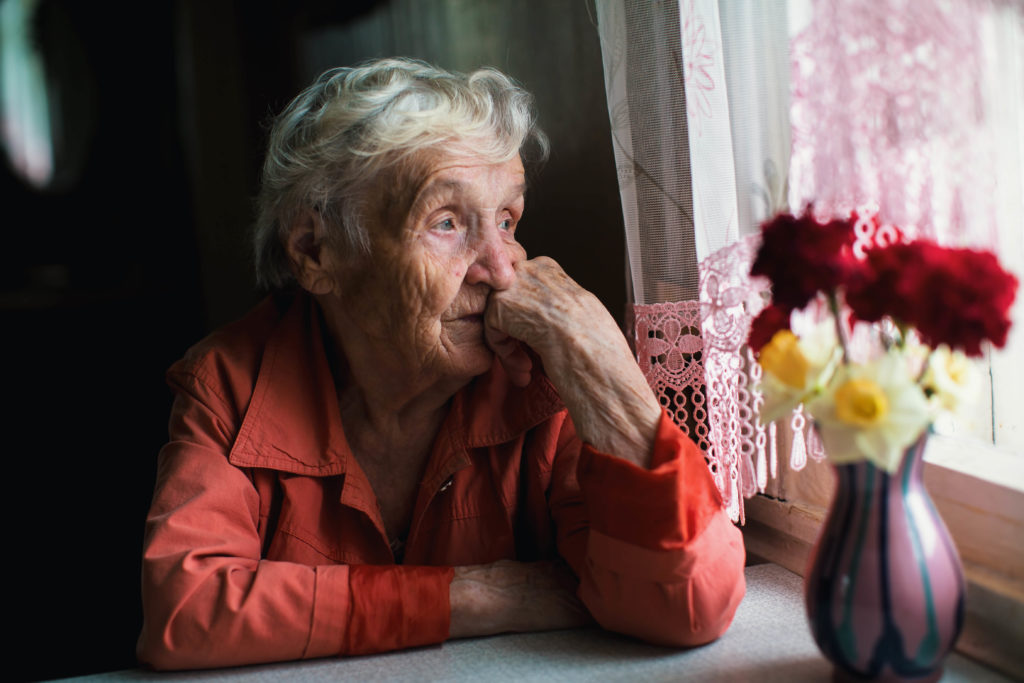
Uta thinking about the Future -with no Lockdowns?

I wrote some of this already on Friday, the 6th of August 2021.

While I was cooking my brunch today, I was mainly thinking about the future, when maybe I could do some travelling again. First of all, I would very much like to pay my son another visit. It would be so nice, if I could do this already some time next month!

To be honest, it does not look like travelling like this will be possible for me some time soon. Well, when then? Maybe towards the end of December? This is just a maybe. However, there is a little bit of hope. When I am in a hopeful mood, I imagine I could catch a train to Benalla, Victoria. Now, wouldn’t that be nice? I could catch the train in the Highlands at Moss Vale. Before catching the train, I might be able to spend a couple of nights in the Highlands. Maybe book a hotel somewhere and meet Gerard! Maybe I could join Gerard for his coffee mornings in Bowral. I would also like to go for a walk in the Lake Alexandra Reserve in Mittagong!

 https://auntyuta.com/2021/07/31/lake-alexandra-reser

A few slow moving, contemplative walks with my rollator would really be something to be looking forward to! Besides, if I do travel to Benalla and stay there with Martin for one or two weeks, I definitely need to have my rollator with me again. Last time I did stay with Martin for two weeks, was in March this year. I was fortunate then, to have my rollator with me. And I was able to make good use of it, even though I did have an infection in my lower legs at the time.

Gerard mentioned this Lake Reserve in a few of his blogs, for instance here:

 https://oosterman.wordpress.com/2021/07/30/love-loss-lockdowns-and-a-possible-buddy/

Yes, if at all possible, I would like to spend some time in the Highlands! Maybe I could choose a time for my trip when daughter Caroline and son-in-law Matthew have a little holiday again. Recently both of them had some leave. But because of the lockdowns they could not travel anywhere. However, Caroline told me, they both felt they needed some time off. And being able to spend this time together in their beautiful home was the next best thing to doing some travelling.

So, I was thinking, whenever they can travel again and also have some time off, they might perhaps want to spend some time at my place in Dapto. I think they would very much like to see all the alterations to my place, especially the beautiful deck at the back of my house! I think the last time they were able to come to my place was on the 16th of May this year celebrating Peter’s birthday in memory of him.

Wednesday Diary – 4th of August 2021

There is something that I do not like, namely how I neglect again and again writing down things that are of importance to me. There are now so many long very lonely hours when I have time to reflect a lot. And I really do reflect a lot, yes very much indeed. Every so often I do contemplate about what I want to write down in my diary. So, why then don’t I write it down straight away? It’s simple, I always find an excuse, why I have to delay it for a while. When I finally open up the computer I check on this and on that. I tell myself, actually I cannot write anything personally right away. There are other things I want to do first on the computer. So, I get distracted, very distracted. Never mind, I tell myself. I can write my own stuff later. Right now, I just don’t feel up to it! Then when I actually think, now I can take time out to write something, I find it too difficult to remember anything I had been wanting to write about. So, I leave it for some other time . . . .

It is strange, how easy it feels at times to write something. I am sure, it’ll come to me soon.

Update about Diary on Coronavirus

I just read a comment here:

https://oosterman.wordpress.com/2021/07/17/no-end-of-covid/#comment-82836

Gerard writes:

“Here is a website giving you the death rate per capita.
As I understand it the Delta virus is very good at spreading. The latest outbreak seems to indicate that within family groupings almost all members of a family become infected from just one contact.”
https://www.worldometers.info/coronavirus/

I replied as follows:

Thank you, Gerard, for the link to the Worldometers Website. There is such a huge amount of information on this website that I could click onto it for hours.
My understanding about the Delta variant of the virus is the same as yours: It is very good at spreading!
And my understanding why this is so, is that this virus is airborn and stays in the air we breathe. So to get fresh air, seems to me to be of the utmost importance. So why do we quarantine people in badly ventilated buildings? And why do a lot of people do their shopping in poorly ventilated buildings? It is beyond me, why so called ‘experts’ do not talk about it more. Just with vaccinations we cannot get on top of the virus. This is how it seems to me. For how long shall this hackling about the ‘cost’ (well ventilated buildings cost money”) for how long shall this hackling go on? Because it costs money, they don’t even want to talk about it. All these vaccinations, do they not cost money too? Someone has to pay for these. And big Pharma is in big, big business! Eventual we do need a good vaccine, this is true. But good vaccines need an awful lot of research as I understand it. But nobody wants us to talk about this. Fair enough, it is an emergency now. What we need is sunshine and fresh air, right?

Diary

https://believeanyway.wordpress.com/2021/07/17/link-arms-at-the-campfire/

Kate is right, “there is always someone in your corner”. She says: “Go to the campfires where the loving people are.” – “Sit beside them. Link arms. Laugh until your sides hurt. Sing with them. Listen.” –

I am waiting for the time when my ‘tribe’ can come to visit and share with me the beautiful deck that very dear young Aaron has crafted at the back of my house. It is a huge deck. I imagine a lot of people can one day use it for a beautiful get-together.

Yes, I believe that these dreams of mine can one day become true. Never mind the Coronavirus with this Delta variant, which is rather scary right now. But we are going to be watchful. So, I do believe, I still have a chance of dying of ‘old age’ rather than of this infectious virus . . . .

How lucky am I really, that the deck and a lot of other improvements could be finished before all these ‘hard’ lockdowns started! And Aaron was able to buy from Bunnings all the material that was needed before the prices went up!

A far as these lockdowns are concerned, well, they cannot last forever, can they now?

I wonder, what Christmas is going to be like this year, the second Christmas without Peter . . . .

David Gulpilil takes centre stage to tell his incredible life story in intimate documentary My Name is Gulpilil

https://www.abc.net.au/news/2021-05-26/david-gulpilil-documentary-my-name-is-gulpilil/100156218

ABC Arts / 

By Annabel Brady-BrownPosted Wed 26 May 2021 at 4:37amWednesday 26 May 2021 at 4:37am, updated Wed 26 May 2021 at 3:42pmWednesday 26 May 2021 at 3:42pm

Actor David Gulpilil, an older Yolngu man in shearling coat taking off his akubra, in the documentary My Name is Gulpilil
The film homes in on Gulpilil’s magnetic performances, from his breakout role in Walkabout to his turns in critically acclaimed films, including Rabbit Proof Fence.(Supplied: ABCG Film)

Share

In early 2017, when the legendary actor David Gulpilil was diagnosed with stage-four lung cancer and advised that he had only months to live, he told filmmakers Molly Reynolds and Rolf de Heer that he wanted to make one more film.

He wasn’t well enough to appear as planned in Stephen Maxwell Johnson’s revisionary western, High Ground — he requested that his role be taken by Yothu Yindi’s Witiyana Marika, who is a close relative.

But the three decided “that the best way we could go forward was to do his life story, right until the end,” Reynolds says.

The result is My Name is Gulpilil, an intimate documentary about the actor squaring with the end of his life.

Actor David Gulpilil, an older Yolngu man standing in a hospital corridoor, in the documentary My Name is Gulpilil
Gulpilil has been living more than 3,000 kilometres from home in Arnhem Land, as he receives treatment for lung cancer and emphysema.(Supplied: ABCG Film)

“This film is about me. This is my story of my story,” he says at the outset.

Moving between hospital visits and scenic excursions through the South Australian landscape, the film interweaves footage of Gulpilil speaking direct-to-camera with news archives and clips from his movies, reliving his astonishing half-century on screen.

“I like to show my face to remember,” he says.

Viewers are taken on a bittersweet journey — from his debut in the 1971 Australian New Wave classic Walkabout, through some of the country’s most popular and critically acclaimed films, including Storm Boy, Mad Dog Morgan, Crocodile Dundee and Rabbit Proof Fence.

Refreshingly, the movie clips are presented without title cards that name the directors, as the documentary instead homes in on Gulpilil’s magnetic performances.

‘I’m an actor, I’m a dancer, I’m a singer and also a painter.’

My Name is Gulpilil is likely the final entry in a fruitful, two-decade collaboration between Gulpilil and the white Australian filmmaker Rolf de Heer and his partner Reynolds, which started with the Yolngu actor’s phenomenal lead role — his first — in The Tracker in 2002.

Play Audio. Duration: 15 minutes 57 seconds
Listen: David Gulpilil and Rolf de Heer

Over the four films they’ve made since then — which are widely held up as examples of best-practice collaborative filmmaking — Gulpilil has increasingly asserted creative control over his story.

He initiated and narrated Ten Canoes (2006) — the first Australian feature entirely in Indigenous language — and co-wrote and starred in the semi-autobiographical drama Charlie’s Country (2013) and the follow-up essay-documentary Another Country (2015).

Actor David Gulpilil, an older Yolngu man in a white singlet out in the forest on 2013 film Charlie's Country
Charlie’s Country won Gulpilil the Best Actor award at Cannes’s Un Certain Regard section and the AACTA Awards in 2015.(Supplied: ABCG Film)

It’s fitting, then, that My Name is Gulpilil sees him occupy centre stage.

“It’s like, ‘Over to you, David,'” says Reynolds, who directed the film. 

“It’s a fabulous progression, for all of us really.”

Reminiscing direct to camera, Gulpilil recounts his youth as a tribal man from the Arafura Swamp region in Central Arnhem Land, and how it was his talent as a ceremonial dancer that led the British director Nicolas Roeg to “discover” him as a teen and cast him in the biblical desert horror Walkabout.

The experience ignited Gulpilil’s love for cinema and his abiding diva-like delight in front of the camera.

As he said in his 2004 one-man stage show, “Acting came natural to me. Piece of piss. I know how to walk across the land in front of a camera, because I belong there.”

Walkabout toured the world, which took the Yolngu teenager out of his ancestral home and catapulted him into the European film world — and Hollywood-level excess.

Actor David Gulpilil, an young Yolngu man in traditional paint dancing, in the 1971 film Walkabout
At the time Gulpilil was cast in Walkabout, non-Indigenous actors were still being cast as Indigenous characters. (Supplied: ABCG Film)

He amusingly relates some of his adventures: dining with the Queen, carousing with Dennis Hopper, partying with Muhammad Ali and getting high for the first time with Bob Marley. It was the start of a lifelong balancing act for Gulpilil — straddling two worlds, Yolngu and Balanda — and the documentary emphasises the great personal toll this took.

He’s sober these days, but he speaks openly about his well-publicised substance abuse and his time living in the long grass in Darwin.

“Drinking all this grog, smoking all this tobacco, smoking all this ganja. I ended up good in prison every day in Darwin,” he says.

The film uses audio clips from news reports that run through his numerous convictions, including one for domestic violence in 2011, after he broke his wife’s arm.

“I forgot about her,” he says. “Because I was a drunken, drunken man.

“I’m a drug and alcoholic.”

‘No one else can do the life of me, it’s only me. I can do the life about me.’

Unlike other biographic treatments, such as Darlene Johnson’s 2002 documentary Gulpilil: One Red Blood, or Derek Rielly’s 2020 book Gulpilil, there are no other interviewees or talking heads.

“People, usually whitefellas, sort of speak for or about David,’ says Reynolds, explaining the reasoning behind the “clear choices” that she and David made about how to present the documentary.

“David is the consummate performer, the consummate artist, actor. I thought, ‘What happens if he just spoke for himself?’

“I knew David’s capacity to deliver. I thought, ‘He can hold the screen,'” she says. 

Filmmaker Molly Reynolds,  a white woman in red hat and glasses, and David Gulpilil, the Yolgnu actor and dancer in an akubra
“The terrific thing was that throughout this project we developed a real affection, love and regard for one another,” says Reynolds.(Supplied: ABCG Film/Bonnie Paku)

“David really embraced that, because there were no intermediaries at all. He could just look straight down the lens, and speak it as he saw it. 

“Having said that, he’s also an actor and he likes having a director to support his work.”

Needing to stay close to doctors and hospitals, and too sick to travel to Arnhem Land, Gulpilil is observed living in a modest house — kitted out with posters of his films — in Murray Bridge, east of Adelaide, with his indefatigable carer Mary Hood.

Before each shooting session, Reynolds and Gulpilil would discuss what he wanted to talk about that day.

“I quickly learned to be a different director to what I’d normally be,” she says, describing her role as “sort of the brains trust who holds the information”.

“I was there to support his performance, even though his performance was really him.”

The interviews would run for hours. 

“Then he’d just conclude somehow so poetically, and ‘boom’, we’ve got it.”

Tying the film together into effectively one long interview, the unhurried monologues allow the viewer to really listen, and to sink into the rhythm of Gulpilil’s storytelling.

‘I like to make a film, it’s a history. I like it because it won’t rub out.’

Gulpilil’s role extended far beyond being the star interviewee.

“One day he called me up,” recounts Reynolds. “‘Molly, Molly,’ he said. ‘What I’d like to do is, I want you to wrap me in our film, in my cemetery box.'”

She had to break the news to him: “David, we’re shooting digital, not 35mm … but I got the image he was evoking, and that was really poetic, so we did end up shooting it,” she says.

The shot shows Gulpilil lying inside a coffin with his eyes closed, resting on a bed of unfurled analogue film – one of several dreamy images that appear in the documentary to suggest he is confronting his own mortality, and which often foreground his connection with the land.

“He’s got a true sense of cinema,” says Reynolds.

Actor David Gulpilil, an older Yolngu man standing on empty train tracks, in the documentary My Name is Gulpilil
The film is in English and Mandhalpingu and was filmed and produced on Ngarrindjeri, Kaurna and Andyamathana Lands.(Supplied: ABCG Film)

The new film sees Gulpilil credited for the first time in his career as a producer — alongside de Heer and his Ten Canoes co-director Peter Djigirr.

Reynolds describes Djigirr as “critical to everything we do with the Yolngu mob up there… He’s been involved in every single film we’ve made in Ramingining.”

Acting as a kind of “pivot point” between the filmmakers and the community, Djigirr also ensured that everything was done in accord with cultural protocols and traditions.

There was another crucial, if sombre, reason for his involvement, says Reynolds: “There was the expectation that David would be dead by the time we finished. So we wanted someone who … would be able to look at the film and determine how David would feel about it.”

That Gulpilil is still alive to see the finished film, walking the red carpet at the Adelaide Festival for the premiere in March, is a surprise twist ending.

“It felt so right that it worked out this way,” says Reynolds.

“One thing that pleases me about the film, for David, is that I think it has cemented his legacy,” she says. 

“It’s the culmination of all that he has done.”

‘This film will remember to generation to generation.’

In 2002, academic and cultural commentator Marcia Langton said: “David has been absolutely critical to both representing Aboriginal people in modern Australia in the cinema … and also, in his own ironic and charismatic way, undermining the stereotypes that were forced on him. He’s a tremendously important person to us culturally.”

Reflecting on this important role, Reynolds says, “I don’t think Australia yet appreciates [David’s contribution] enough.”

“And I really, really do hope that, on behalf of all of us, whitefellas and blackfellas alike, that we do get to that point.

“My Name Is Gulpilil may just be a reference to help us get there.”https://www.youtube.com/embed/vK1DLvEkvtA?feature=oembedYOUTUBEMy Name is Gulpilil trailer

The Coronavirus and Me

In a few weeks I am going to be 87. So, it is very likely, that sooner or later I am going to die anyway, isn’t it? I just hope that I can die at home and not in hospital. And I also hope, that my family can be amply prepared for my death.

I maintain ‘Social Distancing’ with each and everyone. I want to avoid to be vaccinated and hope, that this is possible. I mean, why should a very old person be afraid of dying?

Diary

Monika is on a week’s holiday now. She was able to see me yesterday and take me to the Medical Centre. I already mentioned all the medical procedure that went on yesterday. I have now another appointment to see Dr.Krish again on Monday, the 28th at 12,10pm, so that she can tell me the result of the tests.

Monika and I had a late lunch yesterday. We had Chinese Tea and shared a lunch special: Boiled rice and vegies with a sauce that contained cashews among other things. It was the perfect lunch for us. So many different vegies, a real lot of them, and very tasty! Later on Tashi came, and she volunteered to do my shopping for me at ALDIs. In the meantime Monika took me home. No rest for the wicked! Some Internet Banking had to be done. It took Monika a while to set it up properly. I had to talk to the bank, so that my identity could be established. Then Monika just transferred the money that had to be transferred.

The backyard deck is already finished and paid for now. But a few other things still need doing. It is going to look very good in the end!

Uta’s Diary

I looked up: AND (Allow Natural Death)

https://en.wikipedia.org/wiki/Allow_natural_death

Allow natural death

From Wikipedia, the free encyclopediaJump to navigationJump to search

Allow Natural Death (AND) is a medical term defining the use of life-extending measures such as cardiopulmonary resuscitation (CPR). These orders emphasize patient comfort and pain management instead of life extension.[1] Currently, American medical communities utilize “do not resuscitate,” (DNR) orders to define patients’ medical wishes. Those who propose to replace DNR with AND posit that DNR orders are ambiguous and require complex understanding between several parties, while AND orders are clearer.[1][2]

DNR orders range from solely prohibiting the use of resuscitation to prohibiting any action seen as life extending. Because there are many parties involved in a patient’s end of life care – significant others, family, personal doctors, specialists and nurses – DNR orders are not always completely clear, leaving open possible violation of the patient’s wishes.[1] “DNR orders may lead to conflict, unnecessary suffering, and inappropriate care at the EOL [end of life.]” Those who propose to replace DNR orders with AND orders posit that AND are less ambiguous, clearly instructing medical personnel to not use any artificial, life extending measures. This would be especially helpful in regards to emergency care, when medical personnel who are unfamiliar with the patient must decide what medical practices should be used. Furthermore, proponents of AND claim that because it contains “death” in the title it is more clear to the patient and family exactly what the patient is agreeing to.

Critics of AND claim it is simply the replacement of one ambiguous term with another. Just as DNR particulars vary so too would AND particulars vary. Thus, the change would be ineffective.[3]

See also[edit]

References[edit]

  1. Jump up to:a b c Schlairet, Maura C. “Allow-Natural-Death (AND) Orders: Legal, Ethical, And Practical Considerations”. HEC ForumPMID 22752437.
  2. ^ Venneman, S.S. (2008). “‘Allow Natural Death’ Versus ‘Do Not Resuscitate’: Three Words That Can Change A Life”. Journal of Medical Ethics34 (1): 2–6. doi:10.1136/jme.2006.018317PMID 18156510S2CID 7414134.
  3. ^ Chen, Y-Y (2008). “‘Allow Natural Death’ Is Not Equivalent To ‘Do Not Resuscitate’: A Response”. Journal of Medical Ethics34 (12): 887–888. doi:10.1136/jme.2008.024570PMID 19065754S2CID 26867470.

Categories

Furosemide and Colecalciferol Capsules

Furosemide is used to reduce extra fluid in the body (edema) caused by conditions such as heart failure, liver disease, and kidney disease. This can lessen symptoms such as shortness of breath and swelling in your arms, legs, and abdomen. This drug is also used to treat high blood pressure.

https://www.nhs.uk/medicines/furosemide/

Colecalciferol is a form of vitamin D used in the prevention and treatment of vitamin D deficiency conditions. It may also be prescribed for certain bone conditions, such as thinning of the bone (osteoporosis) when it will be given to you with other medicines.

https://www.medicines.org.uk/emc/product/7247/pil#gref

Yesterday, I had a doctor’s appointment. Since Wednesday, the 16th of June, I think it was the third time that I saw Dr. Krish (Nidja Krishnamurthy). Monika came with me to see the doctor. Monika questioned that I had to have more and more antibiotics.

Dr. Krish then prescribed Furosemide and Colecalciferol Capsules. {See above for information)

She also sent me to two different tests: First a blood test and then a test to check for blood clots in my right leg!

Monika further mentioned that geriatric Counselling might help. I found the following online:

https://www.mywellnesshub.in/blog/online-counselling-for-elderly-people-geriatric-psychotherapy/

Counseling for Elderly people, also called as geriatric counseling, is usually not given much importance. But this is the stage of life, where they need a great support. After having a life full of friends, relatives and well-wishers with whom they would be hanging around till a few years back, this stage of life halts them and has some unwanted gifts like health issues and loneliness. To deal with such unavoidable issues and to get on with the remaining life, accepting what it is like, one needs a word of support. More than any kind of other supports, providing psychological help is the main need. Either the children or the caretakers should extend a psychological supporting shoulder for their mental illness like stress, anxiety, loneliness, depression etc.

Issues like missing the children, a chronic disease or death of the spouse or the demise of a closely-knit family member, suffering a prolonged illness or having the mental illness that occur with age etc. could bother a lot by ceasing their mental peace. Empty nest syndrome could be nerve-wrenching for the elderly people to handle. Leading a miserable life giving up all the peace as if the life itself has been a big burden is a real problem that needs to be attended. Geriatric counseling helps the elderly people to lead a peaceful life, focusing on the positive aspects making them to treat life like a blessing.

Why should you respect Elderly people?

It is an undeniable fact that none can escape old age and death. But being in a circle of self-concern and self-appreciation and self-engagement, the younger generation often neglect the yesterday’s generation. While being full-flown adults, we engage in different works and get socially connected with many around us, wondering how we should behave and what they would think of us, we often forget an underlying truth of the world. “At age 20, we worry about what others think of us. At age 40, we don’t care what they think of us. At age 60, we discover they haven’t been thinking of us at all” surprisingly true!! All the age we spent solving the problems of others or the family and showing love, care and affection towards others, sometimes even forgetting what we really want. We tend to be good to others and think what they would think. But suddenly at an elder age, we realize that we are left alone.

Someone once said, “RESPECT the elderly when you are YOUNG, HELP the weak when you are STRONG, ADMIT your mistakes when you are WRONG. Because one day, when you will grow OLD, become WEAK and expect others to show you some RESPECT.” How true that everyone becomes old. Everyone need to come to that stage of age and can’t escape. Then why not show some concern today?

What they truly need?

People into old age, need an ear to listen. They need someone to spend some time with. They should be felt understood, supported and valued. The losses of aging, increased dependency, anticipation of further deterioration of health or death, other physical illnesses etc. bother them very much and they should get a psychological support to make them feel calm.

They need someone by their side to

  • Restore their self-confidence and self-esteem
  • Help them re-establish the continuity with their positive view of themselves
  • Help them dealing with the loss of their loved ones
  • Help them coping with the loneliness
  • Support and make them feel their worth

When someone who has gone through a lot of psychological turmoil in the past days, try to adjust with the present, they will have numerous issues running in their minds. The feelings of overwhelming anger, humiliation, helplessness, fear of loss of control over body and environment, feelings of vulnerability and fear of abandonment etc. are the ones that won’t let them live peacefully.

Empty Nest Syndrome

Apart from all the other factors, the loneliness is the major factor that affects the elder people a lot. Children having flown to far off places for their careers and settlement, relatives and friends getting restricted to their houses and boundaries, having the spouse left the world, a lonely being in a lone house is the most difficult thing a human being could face. Being in an old age, the fear of sudden and unexpected illness haunts them wanting to be with someone who would care for them. But the walls of self esteem prevent them from being there at the mercy of someone for some food and shelter. Hence they restrict themselves to the four walls of their own house. Fighting with all these, the person gets depressed and mentally ill. Such a state could be termed as Empty nest syndrome.

Some fight this back bravely making themselves an engaging daily routine, like from morning walk to evening meet, creating a nice environment for them with neighbors and new friends. But the people with some physical illness who could not go out on themselves or the ones who are introverts and don’t have much friends, have to face a lot of difficulties.

Other problems of the Elderly

Along with the issues that are most common, elderly people suffer from a lot of physical and psychological issues. Geriatric patients could deny the existence of their problems considering it a shame to their self esteem.

Many of them feel so lost experiencing the issues like

  • Loss of youth and vigor
  • Financial dependency
  • Mobility dependency
  • Chronic illness
  • Disability
  • Hearing impairment
  • Loss/ blur of vision
  • Dementia
  • Delirium
  • Alzheimer’s disease
  • Feelings of anxiety, depression and hopelessness
  • Insomnia
  • Cognitive impairment
  • Being alone
  • Loss of loved ones etc.

Combining with the mental disorders like stress, anxiety, depression and loneliness etc. the physical and psychological issues make the elderly people feebler. Each disorder has its severity. A simple reactive sadness could turn slowly into a deep grief being in depressed state. Such severity could result in the thoughts of ending their lives. Risk of suicidal idealization in elderly people especially in such cases cannot be overlooked. We are recently witnessing many cases of suicides by elderly people who are taking such extreme step in the pain of loneliness.

People who choose suicide want to end their pain, not their lives. It is unfortunate that they select a permanent solution to a temporary problem. From common people to celebrities, everyone has feelings that are to be heard and the problems that are to be solved. Elderly celebrity deaths remind us that no one, no matter how revered or celebrated, is immune to depression and the associated feelings of isolation, emptiness, heartbreak and hopelessness. Life is precious. We should tell people how much they mean to us, all the more so when they are alive.

Need of Counselling

The counsellor does not diagnose or label the client, but does his or her best to listen to the client and work with the client to find the best ways to understand and resolve the client’s problem. The counseling or psychotherapy makes them heard, express all the feelings and receive that validation of all the pressures and problems they had faced in their life time. Counselors should be able to understand the client’s feelings without rupturing their self esteem and by restoring a positive sense of self.

Counselling services are offered by psychologists and psychiatrists. They are certified and trained professionals to provide such sessions as they have experience in using the different methods of counselling for specific problems of clients. A counsellor possesses the unique qualities of enjoying helping others and being non-judgmental. In addition, the counsellor has good communication skills, can build rapport, accept, empathize, solve problems and enhance the self-awareness of the people seeking help. In short, the counsellor is trained to help people make decisions and clarify their feelings in order to solve problems.

Counselling is for anyone who needs help with their problems. All of us must have experienced the benefits of counseling in the form of advice and suggestions given by family members and friends when we had to resolve our problems. In fact, we may even have experienced a sense of relief that there is somebody just to listen to us.  However, at times we feel that objective analyses and feedback is necessary and this is provided by professional counsellor.

Professional counseling, on the other hand, works on a higher level since the counselor is trained to help people cope with stress, anxiety, depression, grief, panic attacks and other relationship related issues. Counselling is for people who want more joy, peace of mind, marital harmony and improved work performance

Online Counseling for Elderly people

We at Wellness Hub provide all the help needed for such elderly people suffering any sort of mental issue. There’s no need to come down all the way for an expert help. Online counseling has been a boon for such help seekers who can connect from any place around the globe to seek a solution. Online counseling for elderly people is a real gift, you could offer at this golden phase of life.