The Australian book to read next: My Father’s Moon by Elizabeth Jolley

For Carrie Tiffany, reading the 1989 novel once wasn’t enough. She wanted to carry its narrator inside her as long as she could

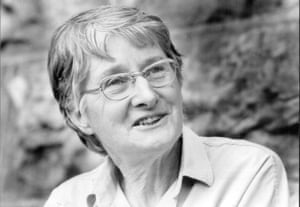
Elizabeth Jolley.
 Elizabeth Jolley received 39 rejections in one year alone. In My Father’s Moon she created a protagonist you’ll want to keep alive forever. Photograph: Fairfax Media Archives/Fairfax Media/Getty Images

It is proof of a fine novel when its characters enter your spirit as you are reading and take up residence there. The experience is akin to falling in love. You are vividly enveloped by thoughts of another. They are alive inside you, perceiving the world with you, breath by breath. It is the most intimate of feelings. Film can’t achieve this, or theatre, or visual art; perhaps music gets closest. It’s only the novel that can show you the grain of another’s soul.

Vera Wright narrates Elizabeth Jolley’s 1989 novel My Father’s Moon.

The streets of suburban Melbourne are silent. I live alone. But here I am with the young nurse Vera in cold, mean London during the second world war, as she clanks around the wards of a training hospital with her ration jars of jam and butter hanging from her belt.

Vera cloaks me as I walk along the railway line at dusk watching the brightly lit carriages slide by on their return from the city – empty, empty, empty, empty. We stand in front of the bare supermarket shelves that have been freshly ransacked by anxious lock-downers. How insubstantial the world feels without its goods.

I read the novel quickly. As soon as I finish it, I begin again. It is told in reverse order in a series of jagged, impressionistic short stories. I think I’m trying to keep Vera alive for as long as possible, but also to enhance her narrative with this circular reading. If the dire events at the beginning of the novel (the result of all of the miss-steps and cruelties that come later) can be recast, perhaps there is a better life for Vera Wright?

I carry Vera around inside me. I want her to be free and to be loved. I want her to be sensually and sexually alive. The borders are closed but I dream of taking her to Queensland and laying her down in a warm green sea, feeding her a pineapple, showing her the whitest and purest of moons. Of course, I want these things for myself too.

The relationship between us isn’t smooth. Vera is meek, naive and loveless. She is also bitter and forlorn. She lies. She is bullied and she bullies others. Happiness must be grasped at and stolen, never shared. Vera is unable to see the world around her outside the narrow punishing hierarchies of the boarding school and the hospital. I love Vera, although at times I would gladly strangle her. She invites her entrapment not just with waywardness, but wilfully.

The young nurse Vera Wright is an aspiring writer. She is engaged in that dual impulse I know so well, to conceal and reveal. Vera’s mother tells her she is too young to be a writer, she has no experience yet. This is from the pen of Elizabeth Jolley who wrote for years without success. In one year alone Jolley received 39 rejections for her writing. She was in her fifties when her work finally found favour.

Read Elizabeth Jolley’s My Father’s Moon. You may want to go on and read the Vera Wright trilogy. You may want to go on and read and re-read Elizabeth Jolley, as I do, and as I will continue to do.

The huge Easter moon, as if within arm’s length, as if it can be reached simply by stretching out both hands to take it and hold it, is low down in the sky, serene and full, lighting the night so that it looks as if everything is snow covered, and the deep shadows lie across pale, moon-whitened lawns. This moon is the same moon that my father will have seen. He always told me when I had to leave for school, every term when I wept when I did not want to leave, he told me that if I looked at the moon, wherever I was, I was seeing the same moon that he was looking at. ‘And because of this,’ he said, ‘you must know that I am not very far away. You must never feel lonely,’ he said. He said the moon would never be extinguished. Sometimes, he said, it was not possible to see the moon, but it was always there. He said he liked to think of it as his.

– Elizabeth Jolley, My Father’s Moon, Penguin, Australia, 1989. p. 26.

Elizabeth Jolley

From Wikipedia, the free encyclopedia

Jump to navigationJump to search

Elizabeth Jolley
Elizabeth Jolley.gif

Professor Elizabeth Jolley
Born
Monica Elizabeth Knight

4 July 1923

Birmingham, England
Died 13 February 2007 (aged 83)

Occupation Novelist, professor of creative writing
Spouse(s) Leonard Jolley
Children 3

Monica Elizabeth Jolley AO (4 June 1923 – 13 February 2007) was an English-born Australian writer who settled in Western Australia in the late 1950s and forged an illustrious literary career there. She was 53 when her first book was published, and she went on to publish fifteen novels (including an autobiographical trilogy), four short story collections and three non-fiction books, publishing well into her 70s and achieving significant critical acclaim. She was also a pioneer of creative writing teaching in Australia, counting many well-known writers such as Tim Winton among her students at Curtin University.[1]

Her novels explore “alienated characters and the nature of loneliness and entrapment.”[2]

Life[edit]

Elizabeth Jolley and (younger) sister Madelaine Winifred reading, ca. 1927

Jolley was born in Birmingham, England as Monica Elizabeth Knight, to an English father and Austrian-born mother who was the daughter of a high ranking Railways official.[3] She grew up in the Black Country in the English industrial Midlands. She was educated privately until age 11, when she was sent to Sibford School, a Quaker boarding school near Banbury in Oxfordshire which she attended from 1934 to 1940.

At 17 she began training as an orthopaedic nurse in London and later in Surrey. She began an affair with one of her patients, Leonard Jolley (1914–1994), and subsequently became pregnant. Leonard Jolley was already married to Joyce Jolley, who was also pregnant. Elizabeth moved in with the Jolleys, and her daughter Sarah was born five weeks before the birth of Susan Jolley, the child of Leonard and Joyce.[4][5]

Elizabeth and Leonard subsequently emigrated to Australia in 1959 after they had married. They eventually had three children and Leonard was appointed chief librarian at the Reid Library at the University of Western Australia, a job he held from 1960–1979. Leonard told his family in England that it was Joyce and Susan with whom he had moved to Australia. For several years, Elizabeth wrote letters purportedly from Joyce and Susan to Leonard’s British relatives. Leonard eventually asked his former wife to tell their daughter Susan that he had died.[4]

Elizabeth and Leonard lived in the riverside Perth suburb of Claremont. In 1970 they also bought a small orchard in Wooroloo, a town in the Darling Ranges approximately 60 kilometres inland from Perth.[6]

Elizabeth Jolley worked at a variety of jobs including nursing, cleaning, door-to-door sales and running a small poultry farm, and throughout this time she also wrote works of fiction including short stories, plays and novels. Her first book was published in 1976, when she was 53.

From the late 1970s, she taught writing at the Western Australian Institute of Technology, later Curtin University, and one of her students was another Australian novelist, Tim Winton.[7] Her students have won many prizes including “several Australian/Vogel Awards (for a first novel), several different Premier’s Awards, the Commonwealth Poetry Prize and the Miles Franklin Award”.[1]

She developed dementia in 2000, and died in a nursing home in Perth in 2007. Her death prompted many tributes in newspapers across Australia, and in The Guardian in the United Kingdom. Her diaries, stored at the Mitchell Library in Sydney, will be closed until after the deaths of her children or 25 years after her death.[8]

Andrew Riemer, the Sydney Morning Herald’s chief book reviewer, wrote in his obituary for her, “Jolley could assume any one of several personas – the little old lady, the Central European intellectual, the nurse, the orchardist, the humble wife, the university teacher, the door-to-door salesperson – at the drop of a hat, usually choosing one that would disconcert her listeners, but hold them in fascination as well”.[9]

On 16 November 2007, the performance of Johannes Brahms‘s A German Requiem by the West Australian Symphony Orchestra, chorus and soloists, under conductor Lothar Zagrosek, was dedicated to Jolley, for whom the Requiem had been a great source of joy and inspiration.[10]

Literary career[edit]

Jolley began writing early in her twenties, but was not recognised until much later. She had many rejections by publishers, 39 in one year alone. Delys Bird suggests that it was the post-modern features of her writing – “motifs repeated within and between novels and short stories, self-reflexivity and open-endedness”[11] – that made it hard for them to be published at that time. She suggests that her eventual success owes a little to “the 1980s awareness of ‘women’s writing'”, which had been catapulted to the mainstream after the success of other Australian female writers such as Helen Garner and Germaine Greer.[11]

In the 1960s some of her stories were accepted by the BBC World Service and Australian journals, but her first book Five Acre Virgin was not published until 1976. Soon following were Woman in a Lampshade and Palomino, but it would not be until much later that these books would receive either positive reviews or high circulation.

She lapsed in her writing, discouraged by earlier failures, and was only to be published again in 1983 with Miss Peabody’s Inheritance and Mr Scobie’s Riddle. The latter won The Age Book of the Year and high acclaim, especially in Australia and the United States. A year later, Milk and Honey was awarded Christina Stead Prize for fiction in the New South Wales Premier’s Literary Awards. In 1986, The Well won the top Australian literary prize – the Miles Franklin AwardThe Sugar Mother was, as Riemer writes, “her characteristically idiosyncratic way of fulfilling a commission to write a novel commemorating the bicentenary of 1988”.[12]

Later in her career she wrote an autobiographical fiction trilogy, “My Father’s Moon” (1989), “Cabin Fever” (1990) and ‘The George’s Wife” (1993). In an article in The Age newspaper, 20 February 2007, written after her death, literary critic Peter Craven, was reported as saying, “She was a master of black comedy and she went on to write a wholly different form of autobiographical fiction that was lucid, luminous and calm”.[13]

Lovesong, her third last novel, is, Riemer suggests, “the riskiest book she wrote”.[12] It deals with the subject of paedophilia and demonstrates “an admirable refusal to be deflected from what she must have seen as the demands of her art and vocation”.[12]

In 1993, a diary she kept before her novels were published which recorded the experience of buying a hobby farm was published as Diary of a Weekend Farmer. A partly autobiographical collection of pieces, Central Mischief, appeared in 1992. She also wrote numerous radio plays broadcast by the Australian Broadcasting Corporation, and several of her poetic works were published in journals and anthologies during the 1980s and 1990s.

Jolley was made a Professor of Creative Writing at Curtin University in 1998.

On 8 February 2008, Curtin University Library launched the online Elizabeth Jolley Research Collection, a virtual research centre for scholars interested in studying her and her work.

Awards and nominations[edit]

Literary works[edit]

Novels[edit]

Short stories and plays[edit]

Non-fiction[edit]

Some Copies of what I published in December 2011

Christmas

Following is something I wrote in November 2007. It sounds like I could have written this today, only now I am four years older!

Time is running out . . . .

At age seventy-three, how much time do I have left? With every year time seems to be getting more precious. Whatever I still want to do in life, I should be doing it soon, very soon. There is no need to panic. It is just this feeling in me that I ought not to waste time; in other words, I should make the best use of it I possibly can. Making time for reflections as I do right now, I do not regard this as a waste of time. It nourishes my soul, it makes me look forward to spend the day in a productive way. There are the Christmas preparations to consider. How can I keep them to a minimum with that special Christmas Spirit in mind? Some spiritual songs usually help me along to get into the mood. Even in shopping centres the odd Christmas song can bring about temporary elation, a feeling of peace and comfort in a buzzing shopping centre! And even if this sort of mood happens only for brief moments while doing the shopping , it is still appreciated and helps to cope with the mad commercialism that surrounds us everywhere.

The special food at Christmas I like very much. On the other hand I hate it, if food is being wasted. I rather have not too much food of everything. How awful, if food has to be thrown out because we cannot keep it fresh enough in the Australian heat once it leaves the fridge. There may be one and a half dozen people at our family gathering. People bring food along. I would like to keep the food that I am going to provide to a strict minimum. Unfortunately I know already that this is an impossibility at Christmas time! I suppose I’ll just have to grin and bear it. I am determined to make the most of the Christmas Spirit where-ever I may come across it and enjoy the closeness of family and friends. Indeed I am looking forward to a Joyful and Happy Christmas. I did not always feel joyful and happy at Christmas time: There are some happy memories about Christmas, but there are also some very unhappy ones . . . . May the truly happy hours at Christmas time be plentiful and greatly outnumber the sad and lonely hours! This is what I wish for everyone.

Memories

Daddy’s Anger

My husband and I lived with our two babies at my father’s place. Our application to migrate to Australia had been successful and we were looking forward to soon be leaving old Germany. Since our fare to Australia was being paid for partly by the German government and partly by the Australian government, we had to pay only a minimal amount for the voyage. Even that was hard to come up with since we had absolutely no savings. So my father volunteered to help us out a bit.

As a matter of preparing for our departure, we were trying to get rid of a few things which we could not take along to Australia. We put an ad in the paper, thinking, if we could sell the baby cots and pram, it would mean an extra bit of money for us.

I had not anticipated my father’s reaction to this. My usually so placid and relaxed father blew his head, when he saw the ad. ‘Why didn’t you tell me, you needed more money?’ he screamed. ‘I would have given you more!’

‘Do you have no consideration at all for what people might think, when they realise, that my own daughter needs to sell things in order to acquire a bit of money? Don’t you think people might wonder why on earth I do not provide for my daughter? Have you thought about my reputation at all?’

‘People in my position normally hand those things over to charity. How dare you ask for money for anything like that!’ He just went on and on about it and got more and more excited. I started to get anxious the poor man might get a heart attack. My timid apologies did stay totally unnoticed until he had calmed down a bit. But once he had calmed down, the matter was forgotten. He never mentioned it again. And we never did sell any of the items. We just left everything behind in my father’s storeroom in the basement of the building where he lived.

Out of last Year’s Files

The following is an edited version of what I wrote about a year ago. I was reflecting on what Mum was like during my early childhood years. I was also reflecting on the way women and men communicate with each other.


MY MOTHER

Mum doted on me. I was her first born child. I am sure I got a lot of attention during the first years of my life, and not just from Mum, but also from her sister Ilse, who had no children of her own. Later on I realised that my mother would very much have loved to have a daughter in her image. What a disappointment it must have been for her that I was in a lot of ways the exact opposite of her! Maybe I did not like to be a girl. I think I wished very much to have been a boy. Girlish things just did not interest me one bit!

On the ninth of June 1938, when I was not quite four yet, I was very excited about the arrival of a baby brother. In August 1939 Mum left us children in the care of our live-in home-help. Why did Mum leave? I remember a phone-call from Mum’s sister who was holidaying in Westerland on the Island of Sylt. I imagine Aunty would have said something like this:

‘Please join me, I am so lonely on that island here, I don’t like to have to spend all the time with that pretentious mother-in-law. She watches me like a hawk! Please, please, come, spend some time with me. It would be so good to have you around here! We can have such a lovely time together. And listen, I’m going to pay for your airfare. You can stay in my room with me. Mother-in-law is in the connecting room.’

Mum promised her sister, she’d fly to Westerland the same day. She was quite excited about this. In her excitement she forgot to ring Dad’s office to let him know about her plans. Or did she deliberately not ring him because she sensed that he would have objections to her leaving. I remember when Dad came home he was furious when he found out that Mum had taken off to join her sister and left us children in the care of an eighteen year old home-help! I believe Mum stayed in Westerland for a whole week. When she returned, she talked excitedly about how she had been spending time with her sister in Westerland.  Come night-time they waited till Auntie’s mother-in-law was fast asleep, pretending they were going to sleep too. However as soon as they thought the old lady was fast asleep, they escaped through their bedroom window and went dancing. I remember seeing pictures of them that were taken on the dance-floor. They had already acquired a nice brown tan from having spent time on the beach. I remember looking at the photos and seeing how very brown their faces looked in sharp contrast to their white dresses. Two young marine officers, smartly dressed in their uniforms, could be seen with them. Later I found out, that one of the officers was Helmut Lorenz who six years later became Aunty’s second husband after her divorce from the first one. And the other officer was no other than Max Tomscick, who after the war became Mum’s friend and whom she would call ‘Bambie’.

I cannot recall that having to stay without Mum for a week did cause us any hardship. So the young home-help must have coped quite adequately. When Baby Brother was about a year old he developed a skin condition called ‘Milch-Schorf’. He was not allowed to drink milk then. When he was a bit older, he could drink milk again.

Mum’s third child, also a boy, was born during the war in October 1941. We had a Polish maid at the time, who soon cared for the new baby as though he was her own. She became his ‘Dada’. She was the main contact person for the first three years of his life. This second brother became a very happy and contented child, whereas the first brother was always highly sensitive and suffering from Asthma through most of his childhood. In lots of ways Mum was a tremendously caring mother. I remember her being always very concerned when Bodo had his Asthma attacks. He outgrew his Asthma eventually, but maybe he never had a close relationship with any of the various live in home-helps we used to have. I think he had a close relationship with me, his older sister, for the first few years of his life and later on with Peter Uwe, his younger brother. My father, when he was around, would pay a lot of attention to us children. But I suspect, Bodo, being very sensitive, noticed that he did not get as much attention as I did or later on Peter Uwe, the new baby in the family. Bodo failed to establish a long lasting relationship with a woman later on in life.


TALKING TO WOMEN AND TALKING TO MEN

Women talking to women is easy, uncomplicated; there is no pretence. The women are just being themselves. Unless of course one woman in the group happens to be very dominant with an abundance of male hormones. When there are several such women in the group, there may be constant fighting for dominant positions. As soon as a male person enters a women’s group, the mood in the group tends to change . . . .

My experience is, that I get on very well with women if the talk centres on womanly things. Of course women tend to discuss also certain male issues from a woman’s point of view. Which is fine with me, and I enjoy participating.

However I ask myself, why is it, that subjects, on which I have formed my own opinions, which are not necessarily mainstream, I rather discuss with a sympathetic man than with a woman? Somehow I get the feeling, it is easier to discuss such a subject with a man, if the man happens to be  interested in such a subject. I often get a better response to my ideas if I open up to a man.

Naturally the number of men who are interested in discussions about philosophical questions is limited. It would be a bliss for me, if I had opportunities to meet such men on a regular basis.

https://auntyuta.com/2011/12/05/2nd-sunday-of-advent-2011/

https://auntyuta.com/2011/12/05/afternoon-of-2nd-of-advent-2011/

https://auntyuta.com/2011/12/04/handels-messiah/

I wrote on the 4th of December 2011:

Yesterday,  Handel’s MESSIAH was performed in the Wollongong Town Hall.  We went there with Caroline and Matthew. The Soprano was Siobhan Patrick, Caroline’s friend, who has been performing professionally for 20 years.

Peter is not religious. But he loves music like this. The text to the music is taken from the bible. It starts with:

THE PEOPLE OF GOD AWAIT THE COMING OF THE MESSIAH, THE REDEEMER IS BORN, CHRIST BEGINS HIS MINISTRY

In Part 2 comes:

CHRIST SUFFERS FOR HIS PEOPLE

I felt weepy when they sang:

He was despised (Alto) . . . .

All that see him laugh him to scorn (Tenor)

Later on:

THE GOSPEL IS PREACHED,  DISCORD ENSUES,  BUT THE LORD GOD REIGNS OVER ALL

The Soprano sang in a very lovely voice: How beautiful are the feet of those . . . .

Then the Bass: Why do the nations so furiously rage together?

And after that the Hallelujah Chorus

Part 3  . . . . THE FAITHFUL SING PRAISE TO THE REDEEMER

I know that my redeemer liveth – Soprano

Since by man came death – Chorus

Behold, I tell you a mystery – Bass

The trumpet shall sound – Bass

Then shall be brought to pass – Alto

O death, where is thy sting? – Alto and Tenor

If God be for us – Soprano

Worthy is the Lamb that was slain. Amen – Chorus


It was a truely memorable performance!


Today is the Twins’ Birthday!

Twin's Birthday 2011
Troy with Grandma
And this is Ryan with Grandma

Today, 27th June, 2020, is the twins’ birthday! Happy Birthday Troy and Ryan! 🙂
HUGS from Grandma and Grandpa 🙂

These pictures were taken on the twins birthday in June of 2011.

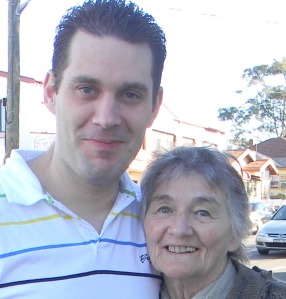
The twins’ birthday pics were taken just a few days before I started blogging. My profile pic that I still use, was cropped from that birthday pic where you can see me with Troy.”

When the boys were kids they were often together with our daughter Caroline. So Caroline is in these pictures here too. The boys loved to call her “aunty Caroline” just for fun. But she really is their aunty. Unbelievable! Sometimes people thought the three of them were triplets. However we had to explain then, that Caroline is more than six months older!

T one

T three

T four

T five

So the above pictures are of Troy, Ryan and Caroline when they were kids!

Here is a link to my blog from 2013:

The Twin’s Birthday this Month


Laurie Baymarrwangga – Senior Australian of the Year 2012

In the nine decades since her birth on the island of Murrungga, Laurie Baymarrwangga has seen the arrival of missionaries, exploitation by Japanese and European fishermen, war and tumultuous change. Undaunted, she has almost single-handedly nurtured the inter-generational transmission of local ecological knowledge through a lifelong commitment to caring for kin, culture and country. In the 1960s Laurie established a housing project on her homelands that has benefitted generations of kin. Speaking no English, with no access to funding, resources or expertise she initiated the Yan-nhangu dictionary project. Her cultural maintenance projects include the Crocodile Islands Rangers, a junior rangers group and an online Yan-nhangu dictionary for school children. In 2010, after a struggle stretching back to 1945, Laurie finally received back payments for rents owed to her as the land and sea owner of her father’s estate. She donated it all, around $400,000, to improve education and employment opportunities on the island and to establish a 1,000 square kilometre turtle sanctuary on her marine estate. In the face of many obstacles, this great, great grandmother has shown extraordinary leadership and courage in caring for the cultural and biological integrity of her beloved Crocodile Islands.

‘Our prosperity must be compromised because it is killing us’

https://www.dw.com/en/our-prosperity-must-be-compromised-because-it-is-killing-us/a-53741670

I copied the following interview from the above link!

“Coronavirus has forced the global economy to shrink. Is this what a more sustainable world without growth could look like? DW spoke to environmental economist Niko Paech about his ideas for a post-growth society.”


“As countries around the world slowly emerge from lockdown, many are crawling into a reality characterized by economic crisis and soaring levels of unemployment. According to the World Bank, the global economy is set to shrink by 5.2% this year, rendering this the deepest recession since World War II.

But even this historic contraction doesn’t go far enough for environmental economist and degrowth proponent Niko Paech. He argues that we need to transition permanently to a post-growth economy if we want to ensure our survival on this planet.”

DW spoke to Paech for the new series of the environmental podcast On the Green Fence.

DW: You would like us to switch to a post-growth economy because you say it’s the only way for us to survive on this planet. How do we reduce production and consumption without jeopardizing our prosperity?

Professor Niko Paech: Our prosperity must be compromised because it is killing us. It must be reduced, especially since there is no right to this prosperity. The same applies to other consumer democracies whose prosperity is the result of decades of blatant plundering. This means that by reducing prosperity we are not relinquishing something, but rather giving back the booty that we in our insolence have presumed to claim as ours.

On the Green Fence: Degrowth – is less really more?

DW: What would people have to relinquish if your concept of a post-growth economy were to be implemented?

Paech: Your question is all wrong from the outset. It’s not about relinquishing. How can you relinquish something that you’ve never been entitled to in the first place?

DW: But isnt that a question of perception? Many would argue they are entitled to this…

Paech: Hang on! I can’t just rob a bank and say I am entitled to this booty and the two dead people lying on the floor are simply collateral damage. It’s the same with the ecologic side effects of my air travel or consumption. Or let’s say you go to the doctor tomorrow and the doctor says: “You have a huge malignant tumor on your back. I’ll have to cut it away for you to survive.” Of course I’m not going to make a fuss and say: “Oh God, how can I do without this tumor?” No! It’s a relief to get rid of it. I wouldn’t mix up relief and renunciation. That is way I don’t talk about renunciation, but prefer the more neutral terms of reduction or self-limitation.

Read more: Can a minimalist mindset help save the planet?

DW: So what would this self-limitation entail for us in concrete terms? What would change?

Paech: First off, the vast majority of holiday travel by plane, cruise ship or car is simply no longer tenable in the twenty-first century. Next it’s crucial to dismantle digitalization. We will not survive in a digital world. Then of course there is consumption. We must learn to use durable goods in a way that their useful life is at least doubled, if not tripled. And we will need a major change in the agricultural sector. Meat consumption must be cut by at least two thirds. Creating more living space is also off the cards. But above all, we will need to share more at a local or regional level, for instance with neighbors sharing a lawnmower or car.

This will not only save a lot of ecological resources, but will also reduce our dependence on money and consumption. And that in turn will create greater resilience, including socio-political resilience. This means that people are no longer so dependent on their current jobs or transfer payments from the state. Instead, they become more adept at providing for themselves in networks in a more collaborative manner. But having a big clear out also means we need to dismantle things without replacing them. This is crucial.

Three sit-on lawnmowersHow much is too much?

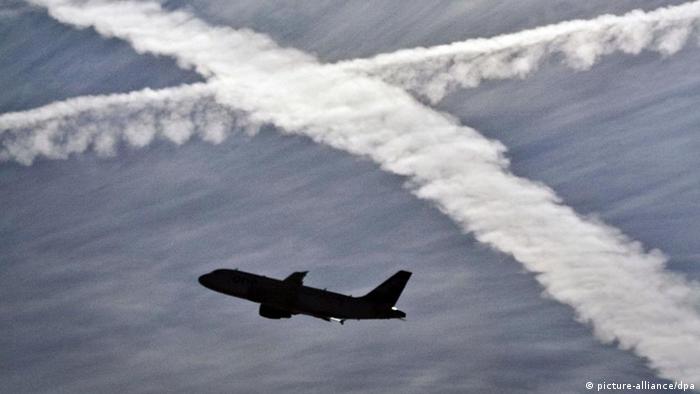
condensation trails cross in the skyCan frequent fliers be moved to stay on the ground?

DW: Dont you think you are overburdening people here? Do you really believe this can be achieved by consensus?

Paech: No. Of course this won’t be achieved by consensus. This can only be achieved if people rise and act together by forming alliances within social niches and by creating counter-cultures with a post-growth lifestyle that challenges society as a whole. It’s never an attack on democracy to simply say no. No to air travel, no to meat, no to smartphones, no to home ownership or to some absurd new acquisition. No one can take that right away from you in a democracy.

DW: But to actually stop people from flying or driving cars, youd need very strict measures and lots of bans, or not?

Paech: There are all sorts of bans in a democracy. In Germany you can’t drive through red lights for instance. Nobody would consider this dictatorial. People often pretend that bans are not democratic. We currently don’t have a majority for this anyway. But there will come a point when people will revolt and then they will confront those are still behaving like ecological vandals at the expense of others.

Read more: ‘The time has come for humanity to go through its next evolution’

DW: Aren‘t you worried that a sustained shrinking of the economy would wreak havoc with our social systems?

Paech: Our social systems will have to be restructured, of course. We would even, in the sense of socio-political autonomy, make people more resilient. So instead of feeding the factors that people are fighting over all the time anyway, wouldn’t it make more sense to make people more independent and reduce the rivalry? The resilience I’m talking about simply means being less dependent on consumption.

DW: A lot of the change you‘d like to see would probably be hard to accept for most people right now. If you tried to give it a positive spin, what could people look forward to in a post-growth society? 

Paech: We’ve never been so free. We’ve never been so educated. We’ve never been so rich. We’ve never been so eager to assert our moral superiority at every opportunity. And at the same time, we’ve never lived in such an ecologically ruinous way. And this contradiction is eating away at us. Mental illness is on the rise. We are in the midst of a rampant identity crisis. It’s clear that the quality of life needs to be improved. We also need to reduce our fears about the future. No one can have a good life if they are constantly afraid of what the future might hold.

Read more: Welcome back greed and stress, we’ve missed you!

We also need to become more independent of markets, of technology, of money, of the state, of companies. Achieving that is perhaps the highest degree of freedom. We are not free today. In fact, ultimately, we are all puppets of a consumer dictatorship. If all supermarkets in Germany were to close for four weeks, we would become extinct, because as we grew richer we also lost our ability to satisfy our most basic needs.

Computers for sale in an electronics store
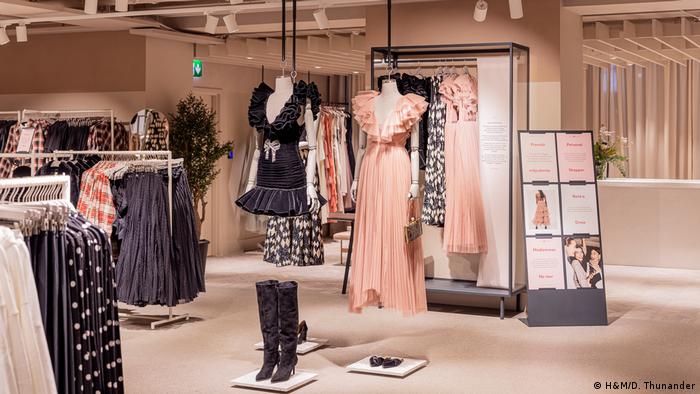
Clothing on display in a shopAre we addicted to our consumer lifestyle?

DW: Youre not just critical of consumerism and economic growth but also of green growth in particular. Why?

Paech: We have established a new religion. It’s what I would call the Church of Progress. Our faith in technology is helping us create completely new alibis and excuses. We argue that it is not really our lifestyle that is the problem but rather the fact that we still haven’t achieved the necessary technological progress. Take Germany’s energy revolution for example – it’s the perfect alibi. I can fly to the Caribbean as long as I buy green electricity. It’s all a bit reminiscent of the Catholic trade in indulgences. One could say that the air traveler’s guilty conscience is drowned in organic lemonade.

And this technological compensation logic is fueling a green economy which is setting new records everywhere, not only in Germany. But the ecologically harmful things are also setting new records everywhere at the same time. And that is no coincidence, but rather the systemic connection between eco-vandalism on the one hand and a new ecological indulgence trade.

DW: Do you have an explanation why its so hard for us to slow down, consume less, and produce less?

Paech: As long as people haven’t practiced how to reduce things they won’t be able to do it even if they have long understood that it is necessary. And we are not practiced in reducing things, on the contrary we have been collectively trained in the logic of growth. But if a society really wants to practice reduction, somebody must set an example. We need pioneers. But we simply don’t have any role models for a sustainable life.

Read more: Life after coronavirus: ‘We can shape a totally different world’

DW: Were running out of time over the climate crisis and we need a global solution. If we look to the developing or emerging countries, how realistic is your post-growth model there? Surely we cant just tell them: Dont make the same mistakes as we made! Dont grow! You mustnt reach our standard of living or the world will have a problem.

Paech: Until a country of the global North actually implements a post-growth society, there is absolutely no chance to inspire so-called emerging and emerging countries to follow suit. I believe that there is a moral duty on the part of the North, which has caused so much damage through colonialism and the subsequent industrial plundering of this planet, to take the lead. Especially since the very people who are suffering most have not contributed to the damage at all. We need to implement this as a blueprint for others. And the rest is fate. The rest depends on how crises impact on us, like corona for instance.

Environmental economist Niko Paech is one of Germany’s leading sustainability researchers and growth critics. He’s a professor at Siegen University. Paech believes that transitioning to a post-growth economy is the only way for mankind to avoid global environmental catastrophe.

Paech was interviewed by Neil King and Gabriel Borrud for the DW podcast, On the Green Fence. The interview has been edited for clarity and length.


DW RECOMMENDS

AUDIOS AND VIDEOS ON THE TOPIC


This is a copy of an article about the environmental cost of air travel

Here is the link to the original article by DW:

https://www.dw.com/en/to-fly-or-not-to-fly-the-environmental-cost-of-air-travel/a-42090155

Though air travel is more popular than ever, the vast majority of people in the world have never been on a plane. As that dynamic slowly changes, the environment stands to suffer. Is flying less the only solution?

    
An airplane flies with contrails in its wake

When was the last time you traveled by plane? Various researchers say as little as between 5 and 10 percent of the global population fly in a given year.

But things are changing. According to International Civil Aviation Organization (ICAO) estimates, there were 3.7 billion global air passengers in 2016 — and every year since 2009 has been a new record-breaker.

By 2035, the International Air Transport Association (IATA) predicts a rise to 7.2 billion. Like the planes themselves, the numbers just keep going up. And given the damage flying does to the planet, that is food for thought.

Not just the CO2

Many estimates put aviation’s share of global CO2 emissions at just above 2 percent. That’s the figure the industry itself generally accepts.

But according to Stefan Gössling, a professor at Sweden’s Lund and Linnaeus universities and co-editor of the book Climate Change and Aviation: Issues, Challenges and Solutions, “That’s only half the truth.”

Other aviation emissions such as nitrogen oxides (NOx), water vapor, particulates, contrails and cirrus changes have additional warming effects.

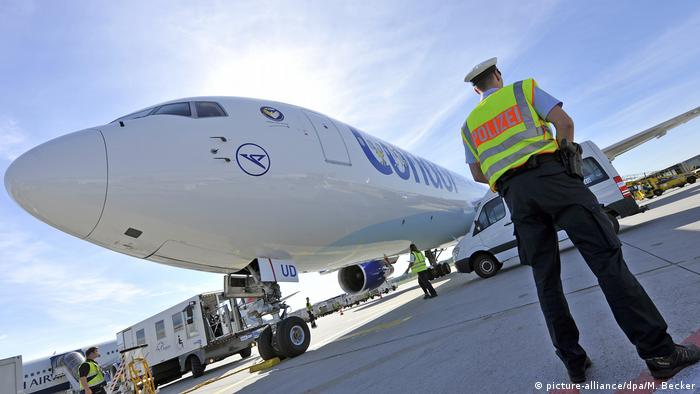
A Boeing 747 jet being assembledBeyond emissions made solely in flight, manufacturing effects within the aviation industry add considerably to its overall footprint

“The sector makes a contribution to global warming that is at least twice the effect of CO2 alone,” Gössling told DW, settling on an overall contribution of 5 percent “at minimum.”

But IATA spokesperson Chris Goater told DW the science behind this so-called ‘radiative forcing’ is “unproven”.

Even if we accept the 2 percent emissions figure as final, if only 3 percent of the world’s population flew last year, that relatively small group still accounted for a disproportionate chunk of global emissions.

A few years ago, environmental group Germanwatch estimated that a single person taking one roundtrip flight from Germany to the Caribbean produces the same amount of damaging emissions as 80 average residents of Tanzania do in an entire year: around four metric tons of CO2.

“On an individual level, there is no other human activity that emits as much over such a short period of time as aviation, because it is so energy-intensive,” Gössling explains.

The WWF carbon footprint calculator is instructive in this regard. Even a serious environmentalist who eats vegan, heats using solar power and rides a bike to work, but who still take the occassional flight, wouldn’t look very green at all.

Just two hypothetical short-haul return flights and one long-haul round-trip in a given year would outweigh otherwise exemplary behavior.

Infografik persöhnliche Klimafußabdruck reduzieren ENG

New tech can’t solve everything

As awareness of the need to reduce our individual and collective carbon footprints in order to prevent climate catastrophe grows, several industries have come under sustained pressure to find clean solutions.

The aviation sector made its own promises — in October 2016, 191 nations agreed a UN accord which aims to cut global aviation carbon emissions to 2020 levels by 2035. Another ambitious target of that agreement is for the aviation industry to achieve a 50 percent carbon emission reduction by 2050, compared to 2005 levels.

Goater says there are four ways in which the aviation industry intends to achieve these things: through carbon offsetting in the short-term, the continued development of more efficient planes, deeper investment in sustainable fuels — such as biofuels — and through better route efficiency.

“Basically air traffic control is very inefficient,” he explains. “It creates unnecessary fuel burns and more efficient use would create a 10 percent reduction in emissions.”

He also highlights the fact that a number – albeit very few – of commercial flights are now powered with sustainable fuels every day, despite the fact that the first such flight took off less than a decade ago.

“That was something that happened much faster than anyone was expecting,” he says. The key now, in his view, is for the industry to prioritise investment in the area and for governments to commit in the same way they have to e-mobility in the automobile sector.

But Gössling and many of his peers remain unconvinced.

There were 3.6 billion individual passenger flights in 2016 — the number is expected to double by 2035A plane launches in front of two contrails in the sky.

“I think that essentially we need price hikes,” he says. “We did interviews with industry leaders a few months ago and many of them agreed, secretly — they were anonymous interviews — that if we don’t have a major price hike for fossil fuels, then there is no way alternative fuels could ever make it.”

Daniel Mittler, political director of environmental NGO Greenpeace, agrees that fossil fuels need to be more expensive. “The first step is to end all fossil fuel subsidies, including those going to aviation and to properly tax the aviation industry,” he told DW.

For Goater, that is not realistic. “Fuel is already a significant proportion of an airline’s costs,” he says. “Believe me, if we could fly without oil we would.”

The hard truth?

So what’s to be done? Gössling, who has devoted more than 20 years of research to the subject, sees only one solution.

“Do we really need to fly as much as we do, or is the amount we fly induced by the industry?” he asks. In addition to artificially low airplane ticket prices, the industry also promotes a lifestyle, he argues.

“Airline campaigns project an image where you can become part of a group of people who are young, urban frequent flyers, visiting another city every few weeks for very low costs,” he says.

Yet for Goater, the idea of dictating who can fly and when is as unrealistic as it is outdated.

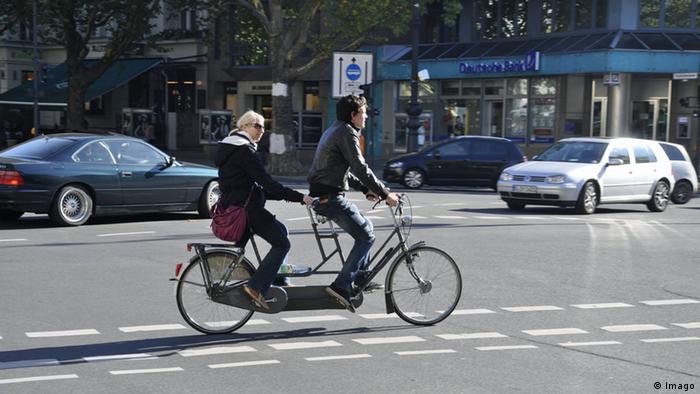
Two passengers ride a tandem bicycle in Berlin, GermanyCan we look toward simpler methods of transport than jet-fueled airplanes?

“Reducing emissions needs to be balanced with allowing people the opportunity to fly — I believe that’s a settled consensus amongst the mainstream for many years,” he says. “It’s not up to people in one part of the world to take it on themselves to deny people in other parts of the world those opportunities.”

For Mittler, it comes down to individual choice as much as anything else and he believes that while efficiency gains are vital, the first step is to reduce the amount we fly.

“We need to move towards a more sharing and caring way of living on this planet,” he says, adding that doing without the weekend shop in New York might be one of the least painful ways of contributing to that.

“We need a prosperity that is based on community and based on real wealth of collective vision, rather than one that is based on relentless consumption. Aviation is a symbol of the kind of consumption that we need to leave behind.”

This article was updated on January 24, 2020. A previous estimate of 3% for the percentage of people who fly in a given year has been updated to a figure of 5-10%, based on a wider range of estimates from various sources.

Another Sunday Diary

Four weeks ago was Peter’s 85th birthday. I wrote about it here:

https://auntyuta.com/2020/05/24/sunday-diary/

In that post three weeks ago I was also contemplating about what it is like for Peter and me to stay in our home and managing to do everything by ourselves. I thought about it that staying at home there are still many things we can enjoy if only we can make the time for it: Sitting in the sun. reading, writing, playing games, watching TV,  going out for a meal or catch up with family! We also love just listening to music. So far, Peter is still able to drive a car. To go to places in our own car is a good thing because of the Coronavirus. Before the epidemy we always liked to use public transport when at all possible. We still try social distancing!


We also want to (or have to!) stay active as much as possible. But somehow we are always running out of time! I ask myself, why is this so? . . . .

These are the things we try to do: Looking after personal hygiene, walking in the open air, shopping for essentials, doing the most necessary housework and gardening. But it usually does not take long and we are so exhausted that we urgently need to rest for a while! This means each day we can do only a very limited amount of work. Each and every day we have to cut back on something that we would have liked to have done. If we decide to do something that we had been neglected to do for very long, something else that might be just as important, cannot be done by us on that day. We feel, that every day we have a bit less time. How is that possible? The question is, what is really most important to us that we still want to be able to do?

Another thing is medical appointments:

At times medical appointments do keep us very busy too!

I should have called this post RUNNING OUT OF TIME!

Diary: What should I drink?

https://www.rdhmag.com/patient-care/patient-education/article/14033922/hidden-fluoride-in-tea-and-other-foods-and-beverages

Effects of excessive fluoride

“. . . .  Now consider the effects of a heavy tea-drinking habit on fluoride accumulation in body tissues. We know that dental fluorosis caused by excess fluoride is a risk only in childhood, since fluorosis occurs during tooth formation. Children probably aren’t likely to drink tea in large amounts, so dental fluorosis from that source isn’t common. There have, however, been documented cases of skeletal fluorosis linked to tea. This type of fluorosis, caused by chronic consumption of fluoride, can be a crippling condition in which bones become weak and joints are stiff and painful. Deformities are seen in severe cases. There can also be neurological complications.9

A 2011 study in the Journal of Clinical Endocrinology and Metabolism concluded that skeletal fluorosis “can result from chronic consumption of large volumes of brewed tea” and that “daily consumption of 1-2 gallons of instant tea can lead to skeletal fluorosis.”10

. . . .”

My Joints are “stiff and painful”, very much so!! And this seems to be getting worth. Is it possible that this is not just due to old age?

I never buy tootpaste with fluoride in it, but of course I use a lot of our fluoridated town water. I heard before that excessive black tea drinking can be bad, This article in an RDH magazine now tells me all about the dangers of drinking too much black tea!

Do I drink perhaps a bit too much black tea? Should I perhaps drink only green tea and herbal teas? I wonder. If I totally gave up drinking black tea, would I then have a chance to reduce the painfulness in my joints? I do think now it could probably help, and that I should give it some more thought!


Why would a married woman with children want to have a full-time outside job if it did not pay enough for some home help?

Referring to some Observations in the recent Uta Diaries

In my diary post one week ago I wrote the following:

“I always had this opinion when in a family with several children both father and mother have outside well paying jobs, the wife’s salary should in the first place be used to employ some home help. Why else would a woman want to have an outside job if it did not pay enough for some home help? Now, I would very much like my readers’ thoughts on this. Please, do not hesitate to make a comment, when you do not agree with my opinion on this.”

Now, is there anyone, please, who would like to comment on it?

Really, what are your ideas about women’s work?

I would love to hear from you!