On the 6th of October I published a post with the following message:
“Some followers keep asking, how is Peter. I am afraid to say, that Peter is very disabled now in that most days he can hardly move at all. Today, he is about to undergo some bone scans. It is very difficult for Peter to move in a way that it does not hurt too much. The painkilling tablets that he has been given so far, do not seem to help much at all. Peter has a lot of kidney trouble. A lot of water stays in the body and causes much swelling, especially in the feet and legs.”
The nuclear bone scans showed that Peter’s bone cancer has spread!
Because of some very nasty constipation Peter was admitted to hospital on the following day, Wednesday, 7th of October. On Monday, the 19th of October, he could finally come back home. A lot of alterations were being done to our home to make Peter more comfortable. We are very happy that he did not have to stay in hospital, for now it is possible that a lot of family can visit him. Our son, Martin, who lives in regional Victoria, hopefully may be allowed pretty soon to come to NSW to stay with his Dad. Martin is already extremely distressed that so far he was not allowed to travel to Dapto, not even for compassionate reasons! In a letter written by
Senior Staff Specialist Oncology & Radiotherapy, Wollongong Hospital Senior Lecturer, Graduate School of Medicine, University of Wollongong
the following was stated about Peter’s condition:
Diagnosis: metastatic carcinoma of bladder: hepatic and skeletal metastases
It says: I am writing this letter in support of Mr Hannemann who is a patient of mine suffering from terminal cancer. . . .
Today I republished some pictures that I took exactly six years ago. In 2014 Peter and I had a lovely walk on that 31st of October:
Today is the last day of October – HALLOWEEN! Some years ago there would always some children come to the door to “trick or treat”. They do not come any more. Why? I suppose they did grow up over the years. But why have not any other children taken their place?
These Irises looked beautiful when they were fresh.
berlioz1935EditIt is interesting that she passed away on the night of our wedding anniversary. A wedding she had originally not liked taking place. In later years she changed her tune and we were good friends. When we saw her last before she suffered her stroke she suffered severely from dementia. She actually did not know who we were. But I must say she was at that stage a very easy going lovely old lady. I think, without her memory her real good self became dominant.She was immortalised in the film about the Olympic Games in 1936 when the camera, probably scanning the crowd, caught her image. I made this into a fictional story and published it in a blog of my own.http://berlioz1935.wordpress.com/2011/09/19/the-woman-who-jumped-up-for-jesse-owens/Reply
auntyutaEditThanks for the comment and for the link, Berlioz. Actually I reblogged the Jesse Owens story. Maybe this way a few more people are becoming aware of it. If it is true – and we cannot be 100% sure about this – it would say a lot about my mother. Peter Uwe, as I remember, refused to believe that Charlotte jumped up for Jesse Owens, when we showed him the documentary. But who knows? It might very well be true. This picture from the Leni Riefenstahl documentary for sure shows a great likeness, This is what I think.
Above is a link to my blog from February 2014 where I mentioned how my mother died and where her ashes got buried.
Catterel wrote a story about dementia and this led me to make the following comment:
‘I actually saw my mum only for a few weeks at the end of 1994 just before she had a stroke and died within a few days after that. So I had esperienced her dementia only for a very short time during our Berlin visit in 1994. My mother was 83 at the time. I wrote about it here:
In a comment to my blog from February 2014 Peter, my husband wrote:
“. . . When we saw her last before she suffered her stroke she suffered severely from dementia. She actually did not know who we were. But I must say she was at that stage a very easy going lovely old lady. I think, without her memory her real good self became dominant. . .”
I think Peter is right, for all the difficult times that she had experienced during her life, probably did not bother her anymore, and she probably forgot about people that she felt did offend her and that she did hold a grudge against. I had the impression she did not hold a grudge against anyone anymore. And she was even able to retrieve some beautiful memories about her travels that she had been able to do before she retired. She showed me Photos about these travels. I am sure these travels she was still able to remember!!’
In the above post from the 10th of this month I wrote the following about my paternal grandmother:
‘At the time grandmother was still doing a lot of cooking for her whole extended family. As I remember it, she would spend a real lot of time in the kitchen where she was being helped by two young Polish girls. This brings me to the subject of home help. I want to write about this another time. Actually, I think about this constantly, why on earth the average elderly woman in our society is these days not in a position to have some home help, usually not until she is very feeble and can hardly do anything herself anyway.’
And I said, that at the time (about 1940) grandmother would have been close to 68. From 1945 on as a refugee in Germany she lived a very impoverished life until she died in 1950, lovingly cared for by Elisabeth (Lies), her youngest daughter. Now, my maternal grandmother, Olga, never had any home help as far as I know. But for most of her life she had sombody close living with her.
My mother-in-law, Frieda, was born in 1900. Her working life at the Post Office lasted for 40 years. She retired at 60 and then lived another 27 years. The last few years of her life she needed a lot of home help, which was provided by her younger daughter Ilse. My mother, Charlotte, born in 1911, also needed a lot of help the last few years of her life. Charlotte was helped by granddaughter Corinna. Both Ilse and Corinna received a small amount of payment for their efforts. Frieda as well as Charlotte were able to provide this payment out of their pensions.
I was born in September of 1934. As I remember it, during my growing up years, we had always some live-in home help (called ‘Mädchen’). This ended only in January of 1945, close to the end of WW Two in Germany. Even during war time my mother was allowed to have home help because she had three children, and she also was not required to accept a job, whereas women without any children had to go to work fot the war effort!
I guess in the past any home help would have been paid substantially less than what is the going rate these days. That means, a lot of elderly people are not in a position to adequately pay for home help. This is where in our society we expect the government to chip in. Alas, government funds for social services somehow do not seem to be able to cover every needy elderly person. And families these days do not live close enough any more, to be able to be of help on a permament basis. Besides, most younger family members are usually in full time employment and also are inclined to help younger family members with raising children where that is possible because they live close enough, and when they can spare enough time away from work.
So, societies have changed. Social conditions are verty different from what they used to be. Still, a lot of people do have no job security and can be out of work any time. Some people offer to become ‘volunteers’, meaning they work for very little pay. But then, the people who have enough resources to function as volunteers seem to become pretty rare. Maybe in future more and more people are going to become very needy in old age? Or just wont live that long any more? So, is it going to sort itself out in the end? I don’t know.
Mein Urenkel, Lucas, wurde in diesem Juli acht Jahre alt. Er ist ein stattlicher Bursche, der uns viel Freude bereitet. Er und sein Bruder wachsen in einer Zeit und in einem Land auf, dass nicht unterschiedlicher sein kann von der Zeit und Umgebung in der ich als Achtjähriger aufwuchs.
Lucas an einem Strand von NSW, Australien
Und als ich ihn während der Woche sah, machte ich mir Gedanken darüber wie es war als ich acht Jahre alt war.
Ich lebte damals in Berlin und der Krieg war allgegenwärtig. Die Zeitungen und die Wochenschauen berichteten ständig über das Geschehen an den Fronten. In den Nächten raubte die RAF uns mit ihren Luftangriffen um unseren Schlaf.
Ich laß damals täglich zwei Zeitungen. Morgens die Berliner Morgenpost und Nachmittags die BZ am Mittag. Letztere wurde im Februar eingestellt. Die Radio Nachrichten wurden vom Wehrmachtsbericht des OKW beherrscht. Ich konnte mir damals nicht vorstellen, was es wohl in Friedenszeiten zu berichten gab. Wir hörten oder lasen nie einen Wetterbericht, denn das war ein Kriegsgeheimnis.
Wir Kinder wurden angehalten, Lumpen und Altpapier zu sammel um unsere Soldaten an den Fronten, überall in Europa, zu unterstützen. Dazu sangen wir: „Lumpen, Knochen, Eisen und Papier, ja, ja, ja das sammeln wir…“ . Hier muss ich ein Geständnis machen. Unter dem gesammelten Papier befanden sich viele Bücher. Wir, meine Schwestern und ich, schauten uns die Bücher genau an und so manche behielten wir zum Lesen. So wurde ich zum Wehrkaftzerzetzer ohne es zu ahnen.
Das Jahr fing für uns Deutsche mit der militärischen Katastrophe von Stalingrad an. Die sechste Armee hatte eine Stärke die größer war als die heutige gesamte Bundeswehr. 150,000 Soldaten „starben durch Kampfhandlungen, verhungerten oder erfroren. 108,000 gingen in die Gefangenschaft, Von ihnen kehrten nur 6,000 nach dem Krieg zurück (Wikipedia)“. Am 18. Februar ruft dann Joseph Goebbels im Sportpalast den „Totalen Krieg“ aus.
Mein Geburtstag fiel 1943 auf einen Sonntag, aber schon am Samstag davor lud mich meine Mutter ein, nach der Schule zu ihrer Arbeitsstelle, in der Hedemannstraße, zu kommen um mir ein Geburtstagsgeschenk abzuholen. Es war nicht ungewöhnlich das ich allein mit der U-Bahn zu ihr ins Büro fuhr. Bei ihr angekommen überraschte sie mich mit einem Modell eines Rennautos. Es war blau und etwa 30cm lang. Wie freute ich mich! Als der Zug auf der Rückfahrt ankam, öffnete ich die Wagentür schon vor dem Halt und sprang aus dem noch fahrenden Zug. Ich hatte das schon öfters getan aber diesmal hatte ich die Geschwindigkeit des Zuges unterschätzt. Ich fiel auf die Platform und der Rennwagen befreite sich von meinem Griff und raste von mir fort. Er knallte mit voller Wucht an die erste Stufe der Treppe zum Ausgang. Außer ein paar Schrammen am Knie war mir nichts passiert.
Die Verhältnismäßige Ruhe in 1942 ging dann mit der Verschärfung des Luftkrieges im Juli 1943 zu Ende. Zuerst kam es zu einem verheerenden Angriff auf Hamburg (24. und 25 Juli). Ich kann mich noch gut an die Bilder aus Hamburg erinnern. Es war grauenvoll.
Das ließ nichts Gutes ahnen. Die Evakuierung von Schulen mit Kindern und Lehrern wurde für Berlin angeordnet. Frauen die nicht arbeiteten sollten auch die Stadt verlassen.
Am 10. Juli landeten die ersten Truppen der westlichen Alliierten auf Sizilien. In der Wochenschau zeigten sie uns wie die Luftlandetruppen massenweise aus den Flugzeugen sprangen. Mein Vater, der bisher in Lodz war, wurde nach Italien versetzt und dort al LKW Fahrer eingesetzt.
Am 23. August wurden meine beiden Schwestern nach Ostpreußen verschickt. In der folgenden Nacht gab es den bisher schwersten Luftangriff.
Die Luftangriffe bestimmten den Rhythmus unseres Lebens. Kaum eine Nacht konnten wir durchschlafen. Am 22. November, am Abend bis in die Nacht, kam dann der schwerste Angriff. Meine Mutter war ins Theater gegangen. Meine Tante weigerte sich mit mir in den Keller zu gehen. Ich machte mir große Sorgen um meine Mutter. Die Bomben fielen ohne Unterbrechung. Bevor sie explodierten konnte man das Heulen hören, dann Stille und dann ein gewaltiger Knall. Die Erschütterungen ließen das ganze Haus wackeln. Das elektrische Licht flackerte, aber es hielt. Später hörten wir, dass der Zoo schwer getroffen wurde und das viele Tiere, soweit sie nicht getötet wurden, entkommen waren. Es war genau die Gegend wo meine Mutter war. Auch sie überlebte. Ein neues Wort wurde 1943 geprägt, „Heimatfront“. So fühlte es sich auch an. Uns allen war klar, jeder Tag konnte der letzte Tag unseres Lebens sein. Nach den Angriffen brannte es überall in der Stadt und der Himmel färbte sich blutrot.
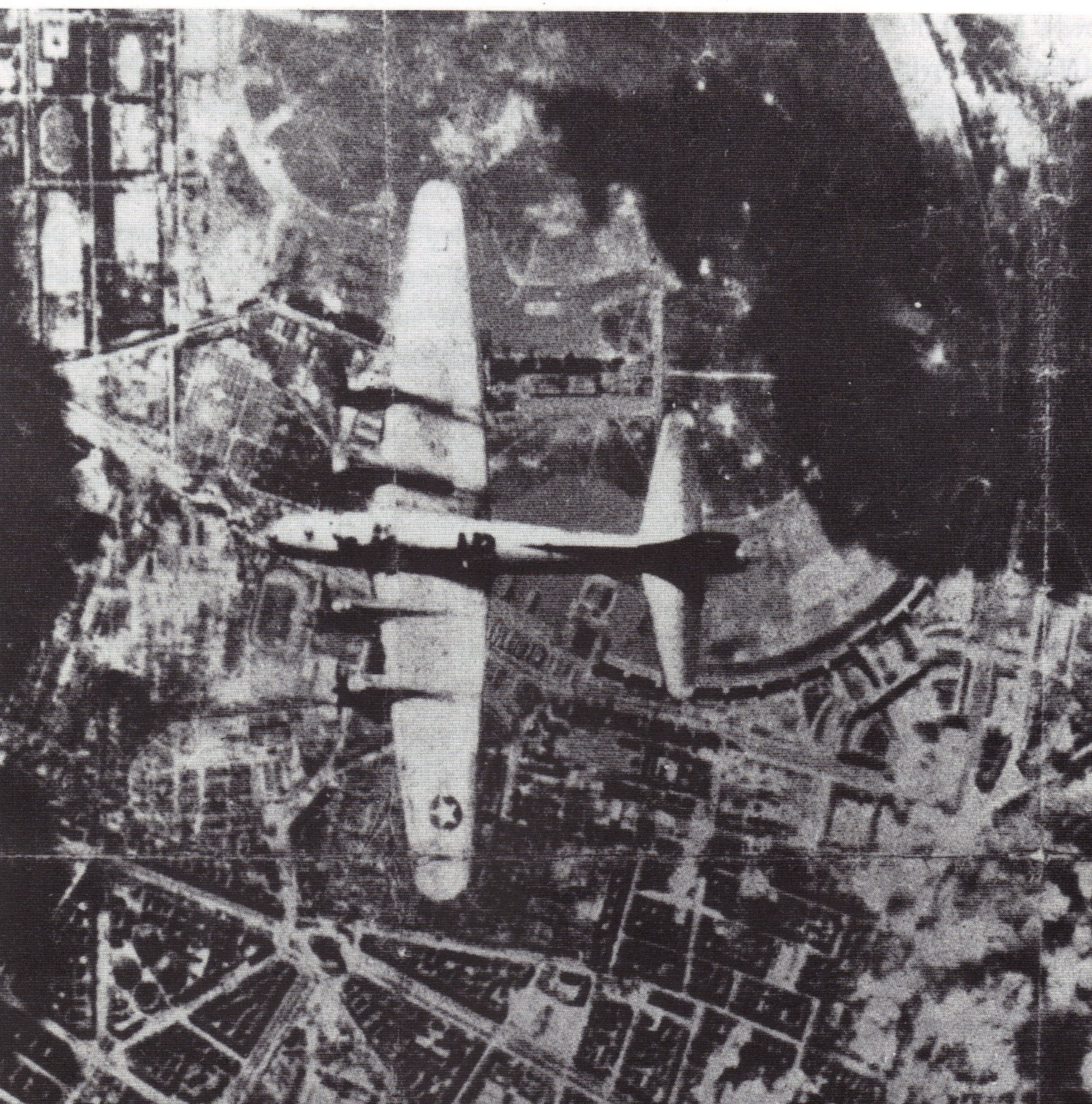
Eine amerikanische B 17, Super Festung über unserer Wohngegend. An der Spitze des linken Tragflügels ist der Südstern zu erkennen.
Etwa zwei Wochen später kam mein Vater plötzlich auf Heimaturlaub. Am Abend zuvor schickte mich meine Mutter zum Gemüseladen um Senf für ihn zu kaufen. Ich rannte vor Freude und Erwartung und stolperte dann an der Eingangsstufe zum Geschäft und fiel zu Boden. Das leere Glas, das ich trug, zerschellte und ein Splitter durchschnitt eine Ader an meinem rechten Handgelenk. Es blutete sehr, es war aber nicht die Pulsader. Meine Mutter brachte mich sofort zu unserem Hausarzt der dann die Wunde nähte. Am nächsten Tag konnte ich dann den Verband stolz meinem Vater zeigen.
Er blieb nicht lange da meine Eltern zu Weihnachten nach Ostpreußen fuhren um dort meine Schwestern zu besuchen. Am Heiligen Abend blieb ich bei meiner Tante die in der Wohnung über uns wohnte. Es war ein sehr einsamer Heilig Abend, kein gemütliches Beisammensein mit der Familie und auch kein Weihnachtsbaum. Es war schon spät als die Tante mich dann in unsere Wohnung brachte und siehe da, in der Stube auf dem Tisch standen etwa ein Dutzend Spielzeugsoldaten in der Uniform aus den Zeiten Friedrich des Großen. Der Weihnachtsmann hatte mich also nicht vergessen.
Noch vor dem Neuen Jahr kehrte meine Mutter zurück und brachte einen Topf voll Königsberger Klopse mit. Meinen Vater habe ich erst nach dem Krieg im Mai 1946 wieder gesehen. So ging das fünfte Kriegsjahr zu Ende. Es hatte große Veränderungen gebracht. Die Krieg war näher gekommen und niemand war mehr siegessicher.
PS. In der ersten Woche im Januar 1944 wurde auch ich verschickt und trat meine Reise nach Oberschlesien an. Für Berlin wurde es ein schlimmes Jahr mit Tages- und Nachtangriffen.
We arrived at 10,30 am at Martin Place station to meet Angie and Roy at 11 am. We walked along Macquarie Street to their hotel and Peter took some pictures along the way. When we arrived at the hotel they offered us refreshments straightaway. And we soon got into talking amiably.
Later on we had Japanese lunch with them at the Opera House. The sky had cleared for the day. In beautiful sunshine we walked up to the Opera House. Peter took some pictures. When my lunch arrived Peter took a picture of that too. I had ordered a vegetarian roll. It looked beautiful with the avocado on top and cut up in small pieces. Somehow I managed to eat all this with chopsticks! I spiced every piece with soy sauce, horseradish and ginger. Delicious! The others had ordered something with fish. They all commented that my dish looked much more colourful.
After lunch we walked through the Botanical Gardens and Peter took some more pictures. By 2 pm we were back in Macquarie Street where Angie and Roy were staying at the InterContinental.They had tickets for a concert for later in the afternoon at the Opera House. So it worked out well that they could have a little rest before going out again. Peter and I wanted to catch our train back home from Martin Place. We had had a lovely day with two people we had never met before. But some of Angie’s family are known to us. They all were emailed some photos of yesterday’s meeting. One of Angie’s sisters, who lives in England, already emailed back saying she and her husband were planning to travel to Melbourne next year to see their two sons there and meet other family members. It’s such a small world! Peter worked out that a lot of the descendents of his paternal grandparents already live in Australia.
Angie and Roy travel today, Monday, to South Australia and to the Barossa Valley. They stay in Australia for two weeks only. During this time they also plan to fly to Alice Springs (to see ULURU), as well as to Cairns and from there back home to America. I think in Sydney they had had only three days.
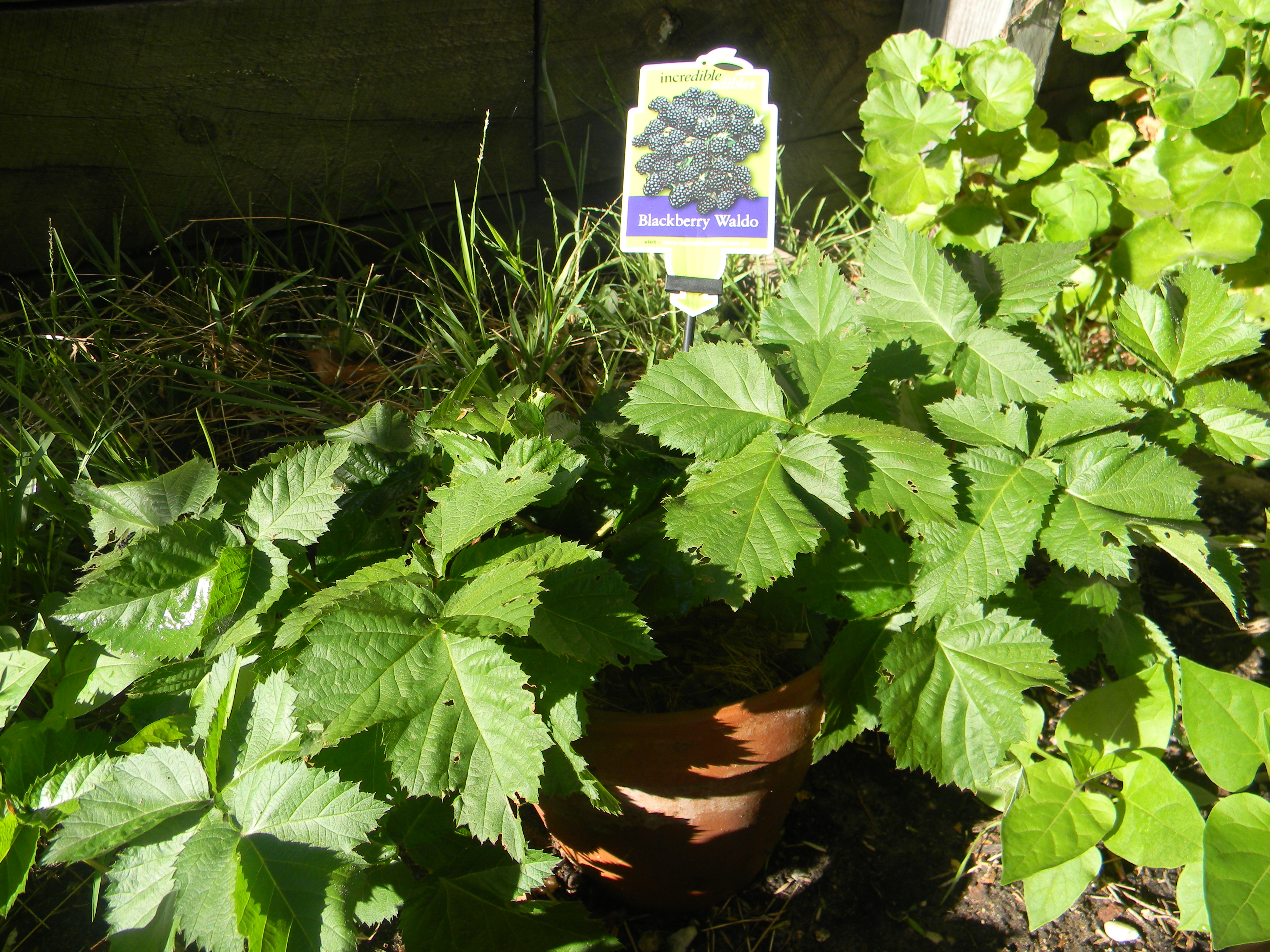
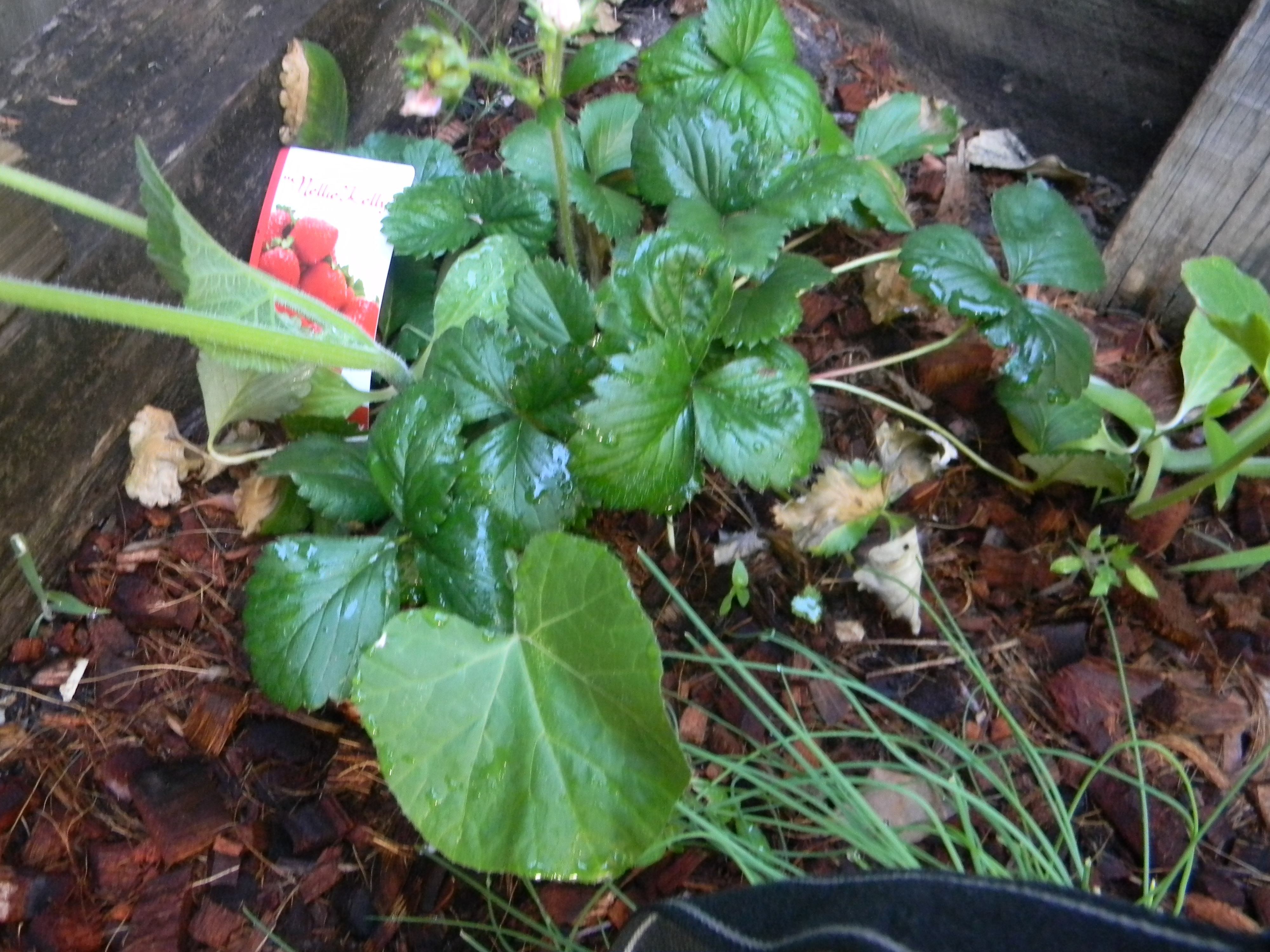
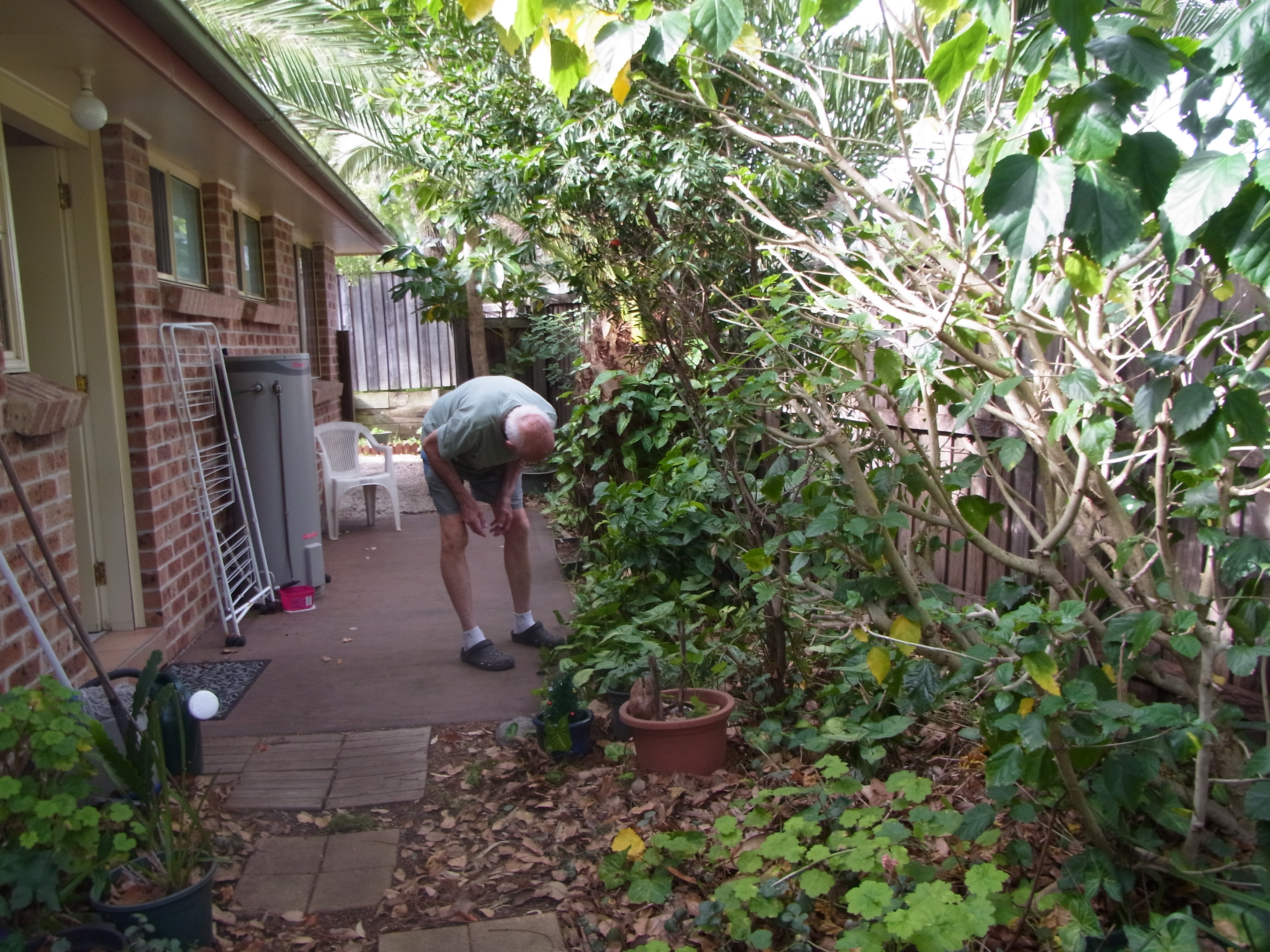
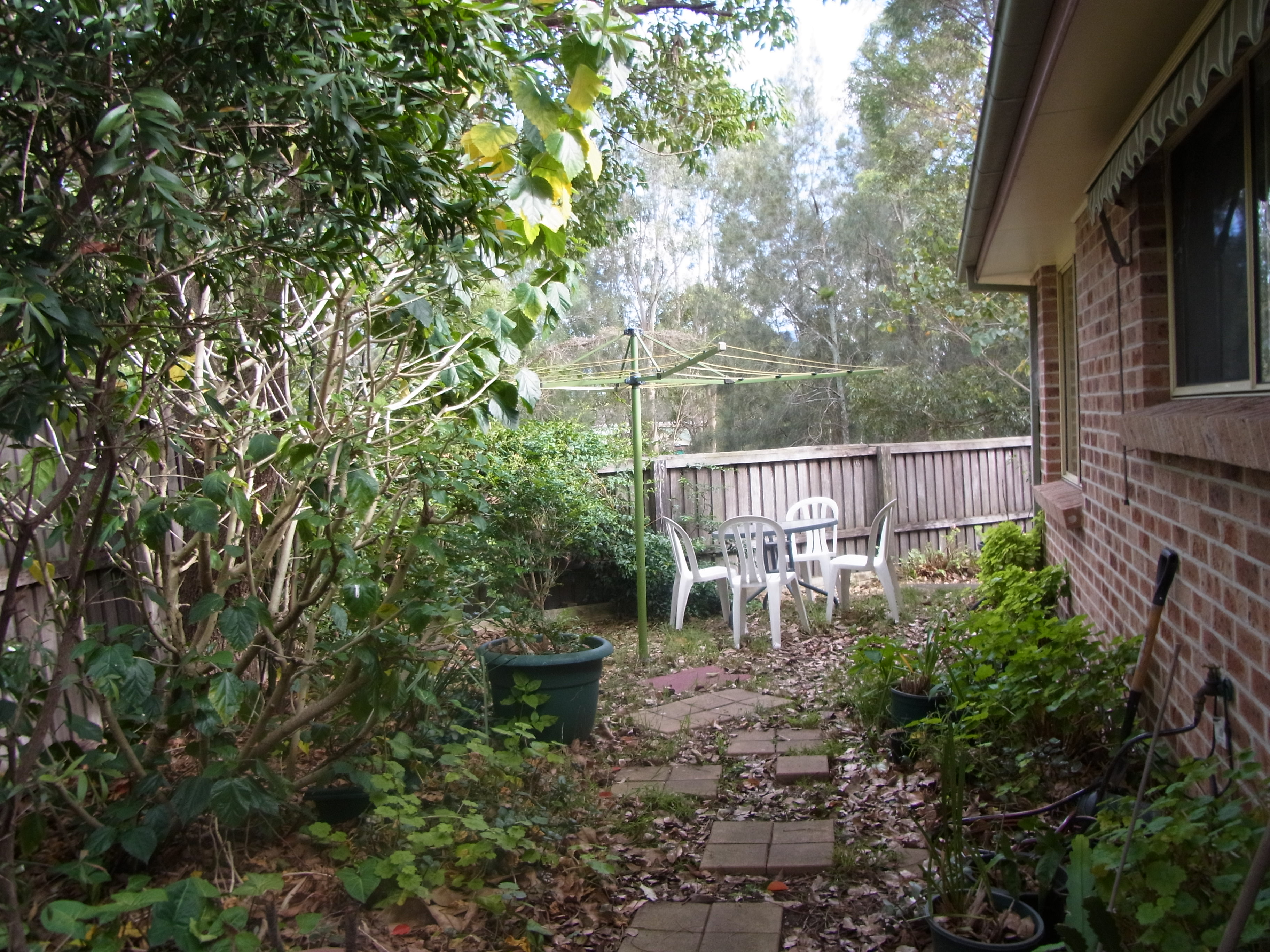
Just before Christmas we planted something new at the side of our house which belongs to our private backyard. Now, after less than one month, we took some new pictures of our plants who amazingly survived pretty well the 41 C heat last Tuesday. When you compare the picture of the plants when they were little with the pictures what they look like now, you can see the growth that has occurred is very remarkable.
This is a trial post for inserting new pictures. I was finally able to upgrade my post. My VISA debit card wasn’t accepted. Peter helped me out with PayPal. This worked all right. It’s a great feeling to be able to publish some new pictures!
Following is something I wrote in November 2007. It sounds like I could have written this today, only now I am four years older!
Time is running out . . . .
At age seventy-three, how much time do I have left? With every year time seems to be getting more precious. Whatever I still want to do in life, I should be doing it soon, very soon. There is no need to panic. It is just this feeling in me that I ought not to waste time; in other words, I should make the best use of it I possibly can. Making time for reflections as I do right now, I do not regard this as a waste of time. It nourishes my soul, it makes me look forward to spend the day in a productive way. There are the Christmas preparations to consider. How can I keep them to a minimum with that special Christmas Spirit in mind? Some spiritual songs usually help me along to get into the mood. Even in shopping centres the odd Christmas song can bring about temporary elation, a feeling of peace and comfort in a buzzing shopping centre! And even if this sort of mood happens only for brief moments while doing the shopping , it is still appreciated and helps to cope with the mad commercialism that surrounds us everywhere.
The special food at Christmas I like very much. On the other hand I hate it, if food is being wasted. I rather have not too much food of everything. How awful, if food has to be thrown out because we cannot keep it fresh enough in the Australian heat once it leaves the fridge. There may be one and a half dozen people at our family gathering. People bring food along. I would like to keep the food that I am going to provide to a strict minimum. Unfortunately I know already that this is an impossibility at Christmas time! I suppose I’ll just have to grin and bear it. I am determined to make the most of the Christmas Spirit where-ever I may come across it and enjoy the closeness of family and friends. Indeed I am looking forward to a Joyful and Happy Christmas. I did not always feel joyful and happy at Christmas time: There are some happy memories about Christmas, but there are also some very unhappy ones . . . . May the truly happy hours at Christmas time be plentiful and greatly outnumber the sad and lonely hours! This is what I wish for everyone.
My husband and I lived with our two babies at my father’s place. Our application to migrate to Australia had been successful and we were looking forward to soon be leaving old Germany. Since our fare to Australia was being paid for partly by the German government and partly by the Australian government, we had to pay only a minimal amount for the voyage. Even that was hard to come up with since we had absolutely no savings. So my father volunteered to help us out a bit.
As a matter of preparing for our departure, we were trying to get rid of a few things which we could not take along to Australia. We put an ad in the paper, thinking, if we could sell the baby cots and pram, it would mean an extra bit of money for us.
I had not anticipated my father’s reaction to this. My usually so placid and relaxed father blew his head, when he saw the ad. ‘Why didn’t you tell me, you needed more money?’ he screamed. ‘I would have given you more!’
‘Do you have no consideration at all for what people might think, when they realise, that my own daughter needs to sell things in order to acquire a bit of money? Don’t you think people might wonder why on earth I do not provide for my daughter? Have you thought about my reputation at all?’
‘People in my position normally hand those things over to charity. How dare you ask for money for anything like that!’ He just went on and on about it and got more and more excited. I started to get anxious the poor man might get a heart attack. My timid apologies did stay totally unnoticed until he had calmed down a bit. But once he had calmed down, the matter was forgotten. He never mentioned it again. And we never did sell any of the items. We just left everything behind in my father’s storeroom in the basement of the building where he lived.
The following is an edited version of what I wrote about a year ago. I was reflecting on what Mum was like during my early childhood years. I was also reflecting on the way women and men communicate with each other.
MY MOTHER
Mum doted on me. I was her first born child. I am sure I got a lot of attention during the first years of my life, and not just from Mum, but also from her sister Ilse, who had no children of her own. Later on I realised that my mother would very much have loved to have a daughter in her image. What a disappointment it must have been for her that I was in a lot of ways the exact opposite of her! Maybe I did not like to be a girl. I think I wished very much to have been a boy. Girlish things just did not interest me one bit!
On the ninth of June 1938, when I was not quite four yet, I was very excited about the arrival of a baby brother. In August 1939 Mum left us children in the care of our live-in home-help. Why did Mum leave? I remember a phone-call from Mum’s sister who was holidaying in Westerland on the Island of Sylt. I imagine Aunty would have said something like this:
‘Please join me, I am so lonely on that island here, I don’t like to have to spend all the time with that pretentious mother-in-law. She watches me like a hawk! Please, please, come, spend some time with me. It would be so good to have you around here! We can have such a lovely time together. And listen, I’m going to pay for your airfare. You can stay in my room with me. Mother-in-law is in the connecting room.’
Mum promised her sister, she’d fly to Westerland the same day. She was quite excited about this. In her excitement she forgot to ring Dad’s office to let him know about her plans. Or did she deliberately not ring him because she sensed that he would have objections to her leaving. I remember when Dad came home he was furious when he found out that Mum had taken off to join her sister and left us children in the care of an eighteen year old home-help! I believe Mum stayed in Westerland for a whole week. When she returned, she talked excitedly about how she had been spending time with her sister in Westerland. Come night-time they waited till Auntie’s mother-in-law was fast asleep, pretending they were going to sleep too. However as soon as they thought the old lady was fast asleep, they escaped through their bedroom window and went dancing. I remember seeing pictures of them that were taken on the dance-floor. They had already acquired a nice brown tan from having spent time on the beach. I remember looking at the photos and seeing how very brown their faces looked in sharp contrast to their white dresses. Two young marine officers, smartly dressed in their uniforms, could be seen with them. Later I found out, that one of the officers was Helmut Lorenz who six years later became Aunty’s second husband after her divorce from the first one. And the other officer was no other than Max Tomscick, who after the war became Mum’s friend and whom she would call ‘Bambie’.
I cannot recall that having to stay without Mum for a week did cause us any hardship. So the young home-help must have coped quite adequately. When Baby Brother was about a year old he developed a skin condition called ‘Milch-Schorf’. He was not allowed to drink milk then. When he was a bit older, he could drink milk again.
Mum’s third child, also a boy, was born during the war in October 1941. We had a Polish maid at the time, who soon cared for the new baby as though he was her own. She became his ‘Dada’. She was the main contact person for the first three years of his life. This second brother became a very happy and contented child, whereas the first brother was always highly sensitive and suffering from Asthma through most of his childhood. In lots of ways Mum was a tremendously caring mother. I remember her being always very concerned when Bodo had his Asthma attacks. He outgrew his Asthma eventually, but maybe he never had a close relationship with any of the various live in home-helps we used to have. I think he had a close relationship with me, his older sister, for the first few years of his life and later on with Peter Uwe, his younger brother. My father, when he was around, would pay a lot of attention to us children. But I suspect, Bodo, being very sensitive, noticed that he did not get as much attention as I did or later on Peter Uwe, the new baby in the family. Bodo failed to establish a long lasting relationship with a woman later on in life.
TALKING TO WOMEN AND TALKING TO MEN
Women talking to women is easy, uncomplicated; there is no pretence. The women are just being themselves. Unless of course one woman in the group happens to be very dominant with an abundance of male hormones. When there are several such women in the group, there may be constant fighting for dominant positions. As soon as a male person enters a women’s group, the mood in the group tends to change . . . .
My experience is, that I get on very well with women if the talk centres on womanly things. Of course women tend to discuss also certain male issues from a woman’s point of view. Which is fine with me, and I enjoy participating.
However I ask myself, why is it, that subjects, on which I have formed my own opinions, which are not necessarily mainstream, I rather discuss with a sympathetic man than with a woman? Somehow I get the feeling, it is easier to discuss such a subject with a man, if the man happens to be interested in such a subject. I often get a better response to my ideas if I open up to a man.
Naturally the number of men who are interested in discussions about philosophical questions is limited. It would be a bliss for me, if I had opportunities to meet such men on a regular basis.
Yesterday, Handel’s MESSIAH was performed in the Wollongong Town Hall. We went there with Caroline and Matthew. The Soprano was Siobhan Patrick, Caroline’s friend, who has been performing professionally for 20 years.
Peter is not religious. But he loves music like this. The text to the music is taken from the bible. It starts with:
THE PEOPLE OF GOD AWAIT THE COMING OF THE MESSIAH, THE REDEEMER IS BORN, CHRIST BEGINS HIS MINISTRY
In Part 2 comes:
CHRIST SUFFERS FOR HIS PEOPLE
I felt weepy when they sang:
He was despised (Alto) . . . .
All that see him laugh him to scorn (Tenor)
Later on:
THE GOSPEL IS PREACHED, DISCORD ENSUES, BUT THE LORD GOD REIGNS OVER ALL
The Soprano sang in a very lovely voice: How beautiful are the feet of those . . . .
Then the Bass: Why do the nations so furiously rage together?
And after that the Hallelujah Chorus
Part 3 . . . . THE FAITHFUL SING PRAISE TO THE REDEEMER
I am still on the subject of cleaning and home help. This morning I mentioned in my diary how Peter’s mother and my mother managed in old age. This is what I wrote:
Both Peter’s father as well as my father did not live to a very old age. So age care was not an issue. Both our mothers though did live into their eighties. How were they cared for? Well, my mother paid her granddaughter to come in on a regular basis and do some work for her, and Peter’s mother paid one of her daughters to do some work for her. Both mothers lived in a very small apartment when they were at an advanced age.
Peter’s mother was actually towards the end of her life in a care home. She had one room in that place. She did not like to eat anything except for cake. I think she was 87 when she died. My mum ended up in a hospital after a severe stroke when she was ‘only’ 83 and she very soon passed away then.
Peter’s mother trained to work as a child carer after leaving school early. Probably when she was only 14. But soon after her training she joined the postal service, where she retired from with an adequate pension after 40 years service. Since she had three children, she was lucky that her aunt, Tante Mietze, offered to stay with the family. So there was always somebody there for the children when Peter’s parents were out working. Peter says, his father would have preferred his wife staying home and not going out to work. But since Peter’s parents separated and divorced after the war, the mother was only too glad that she had never given up her job and that she still had Tante Mietze to look after the family.
My mum had in the 1930s and until the end of the war in 1945 always some live-in home help. The home help was called ‘Dienstmädchen’. These girls were rather young when they were employed. During the war we had Maria, who was Polish from the city of Lodz. Before the war we had every year another girl, all of them German girls from the country. I think I wrote a lot about Maria in my ‘Childhood Memories’. It seems to me she was extremely intelligent and efficient. Even my very demanding mum could not find any fault with her.
By the way as far as I know, Tante Mietze was from the country. At age 14 she moved to Berlin to be employed by a prosperous Jewish family as one of their home helps. This was before World War One!
Now I want to mention my father’s parents. They were German citizens who lived in Lodz. The Germans in Polen at the time were going back several generations! The grandparents had six children, and all of them married and had children. Grandfather was a ‘Tischlermeister’ (joinery master) and all his life self employed. At some stage he had a lot of people working under him. I am not sure what sort of home help grandmother may have had when she had all these children. I am sure the older children would have helped with some of the younger ones. Anyhow when I knew the grandparents. grandmother always used to have two very young Polish girls to help her in the house. However, in January of 1945 the grandparents as well as all the family, that was still residing in Lodz, had to flee the city, for the Russian army was getting very close. Nearly all of them made it to Germany. They were on the road in freezing temperatures. My uncle Ludwig, who was the grandparents’ younger son, had married late. I think he was in his forties and therefore not required to be in the army. As far as I know he was right to the last still doing his best filling army orders in grandfather’s furniture factory. Anyhow, Ludwig was married to Hilde and they had a young daughter and a new born son, who did not survive the escape from Lodz. I think it was so cold on the way that babies’ nappies did get frozen to their bodies! I think this casualty of the little guy was the only casualty the family had to suffer during the whole war!
So the family had to settle somewhere in Germany as very poor refugees. Grandfather did not survive this life of a refugee for very long. He died in Leipzig in March 1947 being aged 77. Everybody thought he did reach a very good old age. Here I wrote about his gravesite and about our visit to Leipzig:



















 AuntyUta