It was once better understood that both politics and economics are downstream from culture. Whether the values and passions of a society are tuned to the Good, the Beautiful and the Just or whether they are tempered by the opposites of those virtues will say alot about the aesthetic practices and creative work of the artists that a society values and by which that society is in turn shaped.
In the following Rising Tide Foundation symposium extending from Jan. 15 to March 12, various expressions of art will be explored ranging from literature, poetry, painting, music and drama with a look to examples that increase the depth of our own self-awareness, and improve upon our power to unite the personal passions of each soul with the demands of reason, duty and conscience. This expression of the soul’s journey to maturity is a precondition for any viable nation state or citizenry.
To register for this symposium, write to info@risingtidefoundation.net
Date: Sunday January 15, 2023 (2pm Eastern Time) Lessing’s Nathan the Wise and a Harmony of Cultures Lecturer: Cynthia Chung Bio: Cynthia is Editor-in-Chief and co-founder of the Rising Tide Foundation. She has lectured on the topics of Schiller’s aesthetics, Shakespeare’s tragedies, Roman history, the Florentine Renaissance among other subjects. She is a writer for Strategic Culture Foundation, and is a contributing author to the book series “The Clash of the Two Americas.” In 2022, she authored ‘The Empire on Which the Black Sun Never Set: The Birth of International Fascism and Anglo-American Foreign Policy’
Date: Sunday January 22, 2023 (2pm Eastern Time) ‘Mending Wall’ – Robert Frost and the Good Neighbor Poetry Lecturer: Gerald Therrien Bio: Gerald Therrien is a historian and author of a four volume series on Canadian History entitled Canadian History Unveiled and has lectured on topics ranging from poetry, ancient Athenian culture, the renaissance and the Haitian Revolution. He is an advisor for the Rising Tide Foundation.
Date: Sunday January 29, 2023 (2pm Eastern Time) The Secret of Thomas Cole’s Stages of Empire series Lecturer: Matthew Ehret Bio: Matthew is a co-founder of the Rising Tide Foundation, Editor-in-Chief of the Canadian Patriot Review and Senior Fellow of the American University in Moscow. He is the author of The Untold History of Canada, and Clash of the Two Americas series.
Date: Sunday February 5 (2pm Eastern Time) From the Ode to Oranges to the Night Banquet : depictions of an aristocratic soul & a plutocratic soul Lecturer: Dr. Quan Le Bio: Dr. Le is a practicing psychiatrist and geopolitical analyst with a focus on Asian history, culture and world religions. He is an advisor to the Rising Tide Foundation.
Date: Sunday February 12 (2pm Eastern Time) Sergei Rachmaninoff: Cross Rhythms of the Soul Lecturer: Dr. Valeria Nollan Bio: Dr. Nollan is professor emerita of Russian studies at Rhodes College. She was born in Hamburg, West Germany. Her books and articles on Russian literature, religion, and nationalism have established her as an authority on topics relating to modern Russia. Between 1985-present she has made twenty-six extended research trips to Europe, the Soviet Union, and Russia. She has given lectures and poetry readings at major institutions of higher learning in Moscow and St. Petersburg, Russia; Havana, Cuba; Rome, Italy; San Juan, Puerto Rico; and London, UK, among other cities. Her first poetry bookIn Search of Rachmaninoffwas published by the Rachmaninoff Society in Amsterdam in 2004. Her second poetry collection Holocaust of the Noble Beastswas published by Goldfish Press in 2020 and in November 2022, her new book Sergei Rachmaninoff: Cross Rhythms of the Soul was published by Lexington Press.
Date: Sunday February 19, 2023 (2pm Eastern Time) A New Look at Goya’s ‘Black Paintings’ Lecturer: Adam Sedia Bio: Adam Sedia is a poet, essayist, translator, and classical composer. He has published three volumes of poetry Visions Beyond, Inquietude and The Spring’s Autumn, and his poems and essays have appeared in publications including The Chained Muse, The Society of Classical Poets’ journal, and Indiana Voice Journal. His music can be heard on his YouTube channel. He lives in his native Northwest Indiana with his wife and children, where he practices law as a civil and appellate litigator.
Date: Sunday February 26, 2023 (2pm Eastern Time) Schiller’s “Four Ages of the World” Lecturer: David B. Gosselin Bio: David B. Gosselin is a poet, translator, and linguist based in Montreal. He is the founder of The Chained Muse poetry website, New Lyre quarterly and the founder of the New Lyre Podcast. His new collection of poems is entitled Modern Dreams.
Date: Sunday March 5, 2023 (2pm Eastern Time) Lecturer: Pascal Chevrier Bio: Pascal is a teacher who has worked in Canada’s Arctic. He has lectured on topics ranging from cultural warfare, literature and history.
Date: Sunday March 12 (2pm Eastern Time) Lecturer: Declan Kennedy Bio: Declan is a student, researcher and member of the Rising Tide Foundation community. He regularly publishes on the Substack ‘Where is John Fisher’ found here.
To register for this symposium, write to info@risingtidefoundation.net
The book of Ecclesiastes records King Solomon’s intense search to find meaning and fulfillment in life. In this flight, we discover some significant truths—namely, that all worldly things are empty and that life’s pursuits only lead to frustration. After tasting all that this world has to offer, Solomon ultimately concluded that life without God is meaningless.
Political commentator Kim Iversen reviewed the top news stories in 2022 that she said the mainstream media spun as conspiracy theories “simply for saying something that went against the establishment liberal orthodoxy.”
In a recent episode of “The Kim Iversen Show,” political commentator Kim Iversen reviewed the top 10 stories in 2022 that she said the mainstream media spun as “conspiracy theories” — but turned out to be true after all.
Iversen said the conspiracy theorist label was usually given “simply for saying something that went against the establishment liberal orthodoxy — not because it was quackery rooted in falsehoods.”
“The reality is, so many that they [the mainstream media] claim to be ‘conspiracy theories’ are actually true,” Iversen said, adding:
“Anytime someone’s labeled as a conspiracy theorist, it might just mean it’s time to actually investigate and look a little deeper into whatever…
Peter.my husband, had liked steam trains very much. Here in NSW we have still a few steam trains going for special axcursions!
For the last twenty years or so of his working life, Peter did jobs as a station master for the NSW Railway.
I’ve been thinking about trains a lot in the last couple of days. Not sure if it’s because of the ongoing strikes and pay disputes or something deeper, but that, along with watching a TV programme last night on how train carriages and the driver’s cabs are created, has put me in mind of the famous poem by W H Auden, “Night Mail”.
My dad has always been fascinated by steam trains, and as children, he would often take me and my brothers to places like Dinting, where we could feast our eyes – and noses – on the sights and smells of a proper steam railway.
When I got married, I was fortunate enough to marry a man who loved steam trains just as much as my Dad, and so it was no surprise that our children developed (or inherited) a love of them too. I remember one holiday…
(Boy meets girl. They fall in love. They encounter some obstacles along the way. But they stick it out. And they live happily ever after. You know the drill, right? But no, this story’s a whole lot different. And it’s certainly one for the movies.)
It was a few years after the big war of the 40s, in a far-off island of Bohol, in Central Philippines. There lived a middle-aged lady who had been widowed during the war. Fiercely determined to bring up her 3 young kids in the best way she could, Charing steeled her nerves and stood out among the predominantly-male business crowd in the then-sleepy town of Tagbilaran.
With her hard-earned savings and a little help from her relatives, Charing was able to build a 3-story building in a town eager to rebuild after the hard life brought by the war. She took pride in having built…
In January 1945, I was on my longest railway journey, ever. It was not a journey to a holiday destination or in any way meant to be pleasurable. I was, along with many other boys, a refugee on the run from the fast-approaching Red Army.
We all knew the Second World War was reaching its conclusion.
All throughout 1944, I was in a boy’s home in the small town of Friedland in Upper-Silesia (now Korfantów), Towards the end of 1944, we knew that the front was coming closer and closer. Shortly after Christmas, we noticed that something was going to happen.
Just after Christmas, columns of prisoners were shuffling, rather than walking, on the country road that passed the home. We rushed outside to see who they were. They were people in striped uniforms. We were told by the staff that they were criminals. But by the look of it, they were not. Criminals were tough looking people, so we thought. Those here in front of us were poor people who could hardly walk. We had no idea who they really were. Those columns walked past us for hours. It was a terrible sight. That was when I heard the word Concentration Camp for the first time.
A few days after that we, boys of the ages eight to fourteen were told one evening to get ready for a long walk to a village nearby. Still today I have no idea what its purpose was. It was bitter cold and dark. Had it anything to do with the war? As we walked for many kilometres we could see what seemed to be the flickering lights of an electrical storm. In winter? There was a constant rumbling in the air and we realised that was no thunder either. One of the staff told us in response to our questioning,
‘This is the artillery in a big battle and the Russians are not far away.”
The purpose of being in the home was so we would be away from the air raids in the cities. We were supposed to be safe, but now the war was coming to us. Soon came the instruction to return to the home, which we did. The whole episode remains a mystery to me even today. Our days in Friedland, the name of the small town, meaning Land of Peace, came to a sudden end.
Only a couple of days into January, one late afternoon, we were told to get ready to go back to Berlin. The Berliner children would go back home and the children from Silesia would go to Moravia. On a neighbouring blog of land near our home, there was also a girl’s home. Sometimes we had outings together with them or they performed a play for us. The girls were older than we boys and they seemed almost adults to us.
In no time a couple of buses arrived to take us to a railway junction at Neisse(Nysa now). We Berliner children got into one and the others into another. Some of the staff would follow in a car. We had no time to think. We clutched our few belongings to our bodies.
The Silesian boys were so different from us Berliners but we had become all friends with a common destiny. It was a sad moment in our lives.
As the bus rumbled through the dark country site the bigger girls started to sing, mostly hiking songs and the mood in the bus turned and we were all happy till they started to sing Lehar’s song from the brave soldier who kept watch on the River Volga for his fatherland. It was ironic because he was Russian and we, the Germans, had invaded Russia in this war. I loved this haunting song as I knew it from home because my mother loved it too and the girls of the home had sung it in one of their concerts. It is the ultimate anti-war song of the lonely soldier who asked God to send him an angel to save him.
Suddenly, the bus turned off the country road and we were in front of the railway station where a Red Cross train under full steam was waiting for us kids.
‘Out, out – quick, quick!’ came the order from the sister in charge. The girls got off first and I never saw them again.
‘Schnell, Schnell – hop on. We have no time to waste,’ someone said. We climbed quickly onto the train. Inside the carriage, it was dark but for some dim blue light. Red Cross nurses were rushing about. I heard babies crying but could see nothing. On both sides of the carriage were triple story bunk beds and we were told to get one each.
I climbed on a top bunk and tried to catch my breath. Slowly my sight adjusted to the darkness in the carriage. On the other side were the babies. Four across to each bunk. Forty-eight babies in all and some of them were crying all the time. The nurses had all their hands full and demanded from us absolute obedience or we would be thrown off the train. No running around in the carriage, only the walk to the toilet would be allowed. Unknown to us this would be our world for the next three weeks.
And what a world it was. During the day we could not see throw the frosted windowpanes. During the night only a dim, bluish light made recognising anything barely possible.
The radio was on almost all the time. Every hour we heard the news from the army. The bulletin always started with, “The Supreme Command of the Army announces (Das Oberkomando der Wehrmacht gibt bekannt!)“. WE knew we were in Silesia but not much else. On the way to the toilette, we saw that there was snow everywhere. The train moved for a couple of hours and then stopped for a while. We heard other trains going past, probably taken supplies to the front. But where was the front? According to the news bulletins, we were going parallel to the front. The Red Army was not only chasing us up from the South-East but they also came from the East. Breslau (now Wroclaw) was declared a fortress and was to be defended at all costs.
Then I heard the news that Litzmannstadt (now Lodz) had fallen. My father was stationed there for a few years before he was transferred to Italy. Now the Red Army has pushed past it.
We boys were not sure whether our train could be attacked by ground attack planes or were we safe because we were a hospital train and clearly marked so.
Sometimes the train went backwards for long times. While the front seemed to collapse everywhere the nurses on our train were busy looking after the babies. We had no idea why they were on the train. The mothers did not seem to be on the train as the babies were not taken out of the carriage.
Funnily, I can not remember what we had for our meals. Did we have warm meals or not? I can only remember getting slices of bread with jam. What I did not eat I put under the cushion with the result that I had soiled my cushion with jam. Horrible!
For entertainment, we climbed into the other boy’s bunks and played cards or just talked, about the war and the Russians and we were speculating about the babies on the train. We lost track of time and dates. We had no changes of clothes eighter. When would the train ride end? Hopefully in Berlin.
Then, one day, late afternoon, the train stopped at a large station. Again we heard, “Schnell, Schnell!” We ran across the platform to another waiting train. It was a passenger train consisting of very old fashion carriages. I had time to read the station name on a large sign. It said, “Görlitz“.
Someone said it was the 30th of January an important date in the Nazi calendar. It was the 12th anniversary of the day the Nazis came to power. We had no time to think about it. We rushed over to the train and took whatever seat we could find. The carriage was full of soldiers and their luggage. Those soldiers were exhausted and they were manly asleep for the rest of the rail journey to Berlin.
So far, we had been on the hospital train for more than three weeks not across Europe or even Germany, but for a journey of about just 300 km. A trip that should have taken not more than three hours. We did not know that could happen, but we were looking forward to seeing Berlin and our families again. What would happen next?
Soon after the train set in motion, it became dark and the train hurtled during the darkness to our destination. We went right through a blizzard with snowflakes as large as butterflies. I wished every snowflake would turn into a German soldier to hold back the onslaught of the Red Army.
There was a short halt a Spremberg and on we went. It did not take long and I recognised our train going through Königswusterhausen, not far South-East from Berlin. We were heading for Berlin. What a relief.
When the train finally stopped I found myself at the same railway station I set off from in January 1944 on my very first railway journey, Görlitzer Bahnhof.
If I hoped to see my mother I would have been disappointed. We could not even leave the station as Berlin had a preliminary air raid alarm. But this is another story.
auntyuta on said:Peter, it is quite amazing how much you do remember of that time. All this happened 75 years ago, and you were not even ten yet!Reply ↓
berlioz1935on said:I tried to keep my eyes open. I think in those times we lived more intensely.Reply ↓
freefall852 on said:Crikey….when things fall apart . . . While all eyes are on the front, things behind the scenes are just as dramatic.Reply ↓
gerard oosterman on said:As children our memories are jolted even by the smallest things. I remember things that my mother reckoned I was not even three years old when they happened. A gripping story, Peter, well told. They say a movie named 1917 is very good and the cinema goers are promised they will live, as convincingly as possible, within the trenches during the length of this movie, but no more war movies for me, no matter how good.Reply ↓
Sharmishtha Basu on said:You have a great memory, I will agree with aunt Uta, I dont remember much of my childhood, they seem so vague now! This is a heart-breaking story, so sad to even think that you and so many of you had to go through this hell! human beings cause others so much suffering without any reason or provocation!Reply ↓
berlioz1935on said:Thanks for commenting, Sharmishtha. This memory doesn’t cause me any anguish now. Now I worry what happens to other like those millions of people in India heading home, walking hundreds of kilometres because of the Coronavirus. Nobody looks after them. We will never know how may people will die in India because of it because nobody is counting. I hope you are alright.Reply ↓
Sharmishtha Basuon said:I too think about them and when I do my blood starts boiling! These people have been thrown into hell’s pyre by incompetent, callous, cold governments, who, if sincere might have stopped this from happening! But who cares if mutes die!
Sharmishtha Basu on said:waiting for your memoirs in a book form. hope all is well at your end.Take care of yourself and stay safe!Reply ↓
Annelie Engelmann on said:Thank you for sharing. When will people ever learn that nothing good comes from war?Reply ↓
Sharmishtha Basu on said:Hey Peter, did you leave blogging? You once asked me to share my views in Indian platforms, I did that lately, here are the results First gear published my second article on 3rd October, after giving it a nice title [at my request]. Check it out and share your views. You will enjoy the extremely funny comments left by a bunch of ostriches who bluntly deny reality.Its a wordpress blog, you can comment from wordpress. https://firstgear.in/2020/10/03/defying-deification-in-indian-politics/The previous article will share even more hilarious comments from extremely learned folks!https://firstgear.in/2020/08/18/1801/Reply ↓
Annelie Engelmann on said:An close Ukrainian friend talked often about his time during the war. He and his family ended up as workers for the Reich. I never understood how this actually came about but your explanation clears my question up. The family was happy to become workers as they knew their fate would have been very bleak with and in Russia. His family were farmers near the border of Russia and as you have said, the Russian took all their produce away. They were left starving. His father was so petrified of Russia he never returned to his country even for a visit.Reply ↓
berlioz1935on said:I think, Annelie, you are commenting on a another post about Oleg the Ukrainian. But you are right. Some Ukrainian hate the the Russians. Oleg is a fictional character based on several people I knew. The events are real in the historical sense. The Ukraine is a deeply divided nation. It is probably the most fertile land on Earth. The irony is, that it also the birthplace of Russia. Thank you for commenting.
This picture was taken on Monday, 11th May 2015, near Sydney University when we went to a court hearing in Glebe.
On the 11th and on the 12th of May we went to the Coroner’s court hearing about the circumstances of our daughter’s death.
State Coroner’s Court of New South Wales
The State Coroner ensures that all deaths are properly investigated. If necessary, an inquest into the death is held. Coroners can also recommend measures to prevent future deaths.
An inquest is a court hearing where the Coroner considers evidence to determine the identity of the deceased and the date, place, manner and cause of death of the deceased.Read more about the steps involved in an inquest.
According to Wagner PMC, no less than 27 Ukrainian brigades are involved at several echelons in the defense of Bakhmut, are regularly rotating on first line and replenished with fresh cannon fodder after huge casualties
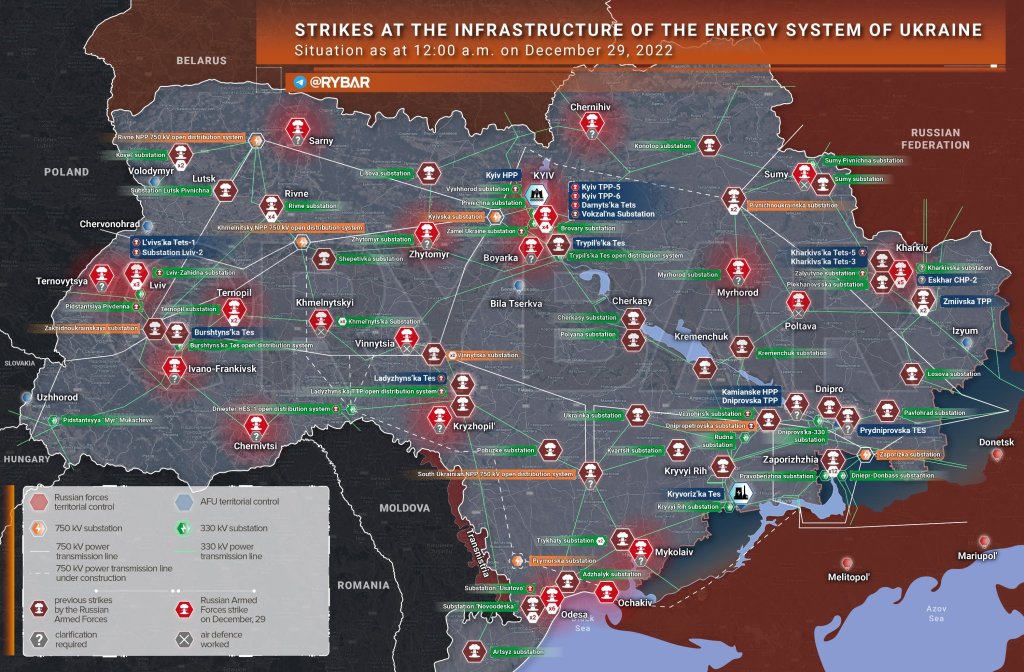
On December 29, 2022, a new Russian air offensive strikes all over Ukraine, 69 cruise missiles, according to the Ukrainian authorities, against the usual strategic targets and also air defense systems, according to witnesses on the ground. In Ukraine far west, the mayor of Lviv states in the afternoon that 90% of the city is without electricity
The Atlanticist authorities claim that a Russian missile has hit a house in Ivano Frankivsk, more than 500 km from the sea or the Russian lines. But the photos are showing once more the debris of a specific surface to air missile. Its range…
These pictures were taken on the twins birthday in June of 2011.
Two months ago I published the above pics and in one reply to a comment I said these grandsons looked like little angels when they were kids. And Munira said that she can’t imagine them as kids. Ha, ha! So I replied:
“All right, Munira, as soon as I can scan pics again, I’ll show you how they looked when they were little! The twin’s birthday pics were taken just a few days before I started blogging. My profile pic that I still use, was cropped from that birthday pic where you can see me with Troy.”
Well, their birthday is coming up next week. So here I am publishing what they looked like as kids. I went through all our photo albums this morning and unfortunately I could not find this special picture of the twins where they really look like little angels.
It’s very frustrating after looking for hours for one particular picture it still is nowhere to be found! We just have too many pictures. Well, the pictures of the twins that I can publish today are all more than thirty years old or at least close to thirty years. The twins are going to be thirty-four years old in one week. When they were kids they were often together with our daughter Caroline. So Caroline is in these pictures here too. The boys loved to call her “aunty Caroline” just for fun. But she really is their aunty. Unbelievable! Sometimes people thought the three of them were triplets. However we had to explain then that Caroline is more than six months older.





 Annelie Engelmann on





 AuntyUta