We have some pictures to prove that we were at Bowral in 1982 and also in 1983. In 1982 we were in Bowral with our friends and their daughter Ellen who was a good companion for our daughter Caroline who was four at the time. I remember that in 1982 we were not only at Corbett Gardens in Bowral, but we had also tickets to visit a number of private display garden. We enjoyed very much looking at all the gardens.
Caroline and Ellen with Dutch Girls at the Bowral Tulip Festival in 1982
Bowral 1982: Caroline with us, her parents, also Ellen with her parents
For the following pictures it says in our album “Bowral Oct.83” During that visit Caroline was not quite five yet. The Tulip Festival was on again in the Corbett Gardens, the same as every year. Since Caroline is to be seen in the picture with some Dutch girls from the Festival, I think that the Tulip Festival must still have been on, even though it was already October.
Sunday morning I was up early again, early enough to walk to the early Mass at the Catholic Church in Dapto. Our Vietnamese priest is still on vacation, however the old priest who is taking his place for the time being, is a dear old man with a wonderful singing voice. Gee, I love the way he sings his hymns so enthusiastically! On my walk to the church I had touched my ZEN stone a lot. The fingers of my right hand had not been able to make a fist for over a month. However the painkilling tablets and exercising the fingers with this stone and sometimes also with some Chinese Iron Balls made my hand much better now. It was so comforting to say some prayers during mass. I came to realise once more how important my Catholic faith really is to me.
As I said we had to do a lot more shopping on Sunday. We also bought some lovely flowers. For afternoon tea we used our red teacups. We took pictures of our afternoon tea with the newly bought flowers on the table as well.
Today, Monday, we had another beautiful sunny day. Peter and I drove to the lake and took quite a few pictures there. I am going to show these in another post.
I had taken the painkilling tablets the doctor had prescribed for me. I was supposed to take three times two tablets per day, however not more than six a day with intervals of at of at least six hours. For three days I took the six tablets per day. On Friday I already felt much better. I walked a lot in the sun. The right hand didn’t feel as painful any more. There was still some feeling of pins and needles, but I was able to do a lot more house-work than during the past few weeks. Friday afternoon Irene and Marion came to my place. We played a game of scrabble as we always do when we meet on a Friday afternoon. Then we had our coffee break. And after coffee and cake it was time for some games of Rummy. Irene said she’d have to leave early for her son was to come to have dinner with them. She went home just before five. We had had three hours of togetherness. For me three hours was plenty. I honestly felt very, very tired and was glad when Marion decided to go home too. Maybe she would have liked to stay a bit longer. I don’t know. However I did not hold back and proclaimed that I felt dead tired and desperately needed a bit of a rest. I did lie down on the sofa in the living-room.
Peter had been doing his things all afternoon but he agreed that he would cook dinner. He cooked some lovely cauliflower with breadcrumbs in plenty of butter. I needed only a short rest. Soon I got up again to have dinner with Peter. I felt very grateful that Peter had undertaken kitchen duties. This bit of a rest was so good for me. Before Peter started cooking he took my blood pressure. It was extremely low, however the pulse rate was very high. Peter gave me a glass of water. When he took my blood pressure again after about half an hour, the pulse rate had normalised and the blood pressure seemed pretty normal overall. It’s amazing what a difference a bit of rest can make!
On Saturday morning I got up very early because I had gone to sleep early the night before. My right arm and hand felt like it was improving a lot. I took a shower and continuously did exercises with arms and hands. Since I felt so much better and it promised to be a calm sunny morning, I had the idea to be walking to the pool. I very much longed for the solar heated water of the pool. Just the perfect morning to stretch out in the water for a few minute, I thought.
I had breakfast with Peter. I planned to arrive at the pool towards ten o’clock. There was some time to do a few things around the house and in the kitchen. Ten thirty am is the time when we like to watch the German News Program from Berlin. At the same time we usually have a cup of morning tea. When I told Peter I would be walking to the pool he reminded me I would not be able to watch the German News then. My response was that if he picked me up from the pool by twenty minutes past ten we could both be sitting in front of the TV by half past ten. Peter agreed that he would pick me up at the set time.
So I walked to the pool. It was a very pleasant walk. I did not have to walk too fast. Very cheerfully I arrived at the pool and talked to some attendants at the entrance. I soon noticed there was a class of women in the deep end of the pool. The instructress stood at the edge of the pool and gave instructions to some lively music. I was happy to stay at the shallow end of the pool. I had the whole area to myself. The water was flooded with beautiful sunshine. Doing my movements I felt very invigorated. I loved to have this bit of music from the top end. It helped me with moving about rather enthusiastically. I thanked God for such a wonderful morning.
After a few minutes all the women from the class did get out of the pool and assembled in the shower room. I soon followed. I was ready on time for Peter to pick me up. A bit after eleven we got ready to go to Dapto Shopping Centre. It took us nearly an hour to finish our shopping there. We bought some very good food and felt very happy with our purchases. However on our list were a lot more things to buy at another place. This would have taken us another hour. We decided to buy the other things on the following day, which was a Sunday. We wanted to go home and get lunch ready.
Saturday night I did fall asleep in front of the TV. When I woke up I noticed the TV had been turned off and Peter was in the other room talking to his sister Ilse on Skype. Ilse lives in Berlin where they have a great heat wave at the moment. I could hear every word Peter was saying and also every word Ilse was saying. After a while Peter came looking whether I was awake. He suggested I come over and talk to Ilse for a bit too. I love having a conversation with Ilse. I went to talk to her. There is always something to talk about with Ilse. This talk with Ilse cheered me up a lot.
Today is the4thSunday after Peter died/On th 8th of November, that is just a few weeks ago, when Peter was still alive and able to visit the local doctor (with Olivia’s help that is), yes on the 8th of November I republished one of the posts from November 2011.
Now, I assume that most of my readers would not like to go to the trouble of looking up all these posts. However, for me it was most interesting to read through all of them again. It helps to give some kind of substance to what I do remember about the past nine years or so. These posts show me, that already nine years ago I could not help myself thinking about what would happen when Peter and I would come into our eighties. Well, Peter made it to 85 without any significant changes in our surroundings. I am 86 already. I must admit I am not at all used to organising some trades people to do any necessary repairs. Peter always did this. He always pointed out to me: “You can do it if you like!” But did he really want me to do it? I don’t think so. Whenever he was supposed to show me something, he soon got impatient and took over, doing whatever needed to be done rather himself. I must admit, I am a rather slow learner and always got scared I would not learn fast enough or forget soon again, how to do certain things. This also went very much so with work on the computer too. Whenever something went wrong on the computer he would take over totally, yes, maybe showing me a few things but without making sure that I had understood it properly. And it was very hard for me to ask for repeat instructions. He would just say: “But I showed you already!” and leave it at that.
In a lot of ways I am now totally dependent on the help of my children. I am extremely lucky to have three capable and loving children. But it is difficult for me to accept that I may have to disrupt their lives too much. I would like to have a certain type of independence where I feel that I am still capable of making my own decisions in every way and where I have not to told by anyone how to live my life!
One of my concerns at the moment is the ever increasing need for an overhaul of my backyard. When I look at that post from 22nd of August 2016 about the loss of three of our big trees, I am astounded how this backyard has changed again over the last four years or so!
Dear Peter died on Saturday, the 12th of December 2020.
This year his anniversary is coming up on the 3rd Sunday of Advent!
Peter’s and my daughters were born on the following dates:
Monika, 5th of December 1958 in Düsseldorf, Germany
Caroline, 9th of December 1978 in Wollongong Hospital, NSW, Australia
We often celebrate Monika’s and Caroline’s birthdays together, choosing a date close to both birthdays. This year we have chosen to come together at my place on Sunday, the 12th of December! So several family members are going to come to my place for afternoon tea/coffee and some birthday cake next Sunday! 🙂 I am very much looking forward to this!
It is our tradition, to celebrate Christmas with all the family on Christmas Eve! So, all my family want to come this year to my place again! 🙂 We are usually more than 16 people for this kind of get-togethers! This is including four of my great-grandchildren aged 2, 5, 7 and 9! 🙂 I have two more great-grandchildren in Victoria. Unfortunately I have not seen these for quite a while. – – – Sadly, it is going to be the second Christmas without Peter. – – –
Secret Santa will be coming again this year. So, everyone gets only one present! However, I am sure there is going to be some very special nice food provided once more due to the combined effort of several women. I am probably going to make some potato salad again. A lot of people do like my salad! 🙂 And of course people bring along beer, wine and maybe some liquor as well as a variety of soft drinks. 🙂 (Mark is in the habit of drinking only Coca Cola when he knows, that he has to be driving home again.)
Our other custom at Christmas time is to make ‘Bunte Teller’ with Pfefferkuchen (gingerbread), nuts, special fruit and some sweets like for instance marzipan sweets and chocolates. 🙂
I hope the weather is going to be fine, so that we can stay outside a lot and make good use of the new deck and to be outside in the open a lot of the time. 🙂
Maybe some people are going to stay overnight again, that would mean, we could be able to cheer with plenty of nice drinks! 🙂
All the outside area on the three different sections of the house have been made usable recently. So there is plenty of room for people to spread out a bit. There are even two ramps for my rollator! Colourful electric lights have been installed, and there are also about half a dozen solar lights spread out over the ground as well as some new electric flash lights! 🙂
I hope, my son Martin will be able to come from Victoria, and that this time the borders are going to stay open. Martin told me, that he can stay only for a couple of nights, but that I am welcome to go back with him and his dog Millie to his place in Benalla. 🙂
I am looking forward to spend some great holidays in Benalla! 🙂
Today is daughter Monika’s birthday. Happy birthday, love!
Daughter Caroline’s birthday is in four days. We are going to celebrate both birthdays at my place on Saturday, the 12th of December. The 12th of December happens to be the anniversary of Peter’s death in 2020, that is one year ago . . . .
Peter’s funeral last year was on the 21st of December. This happened to be our 64th Wedding Anniversary!
I just had a look at what I published in December two years ago in 2019, and I decided to copy it all. Here it is:
Max presents a gorgeous selection of greatest hits from his last gold- and platinum-selling albums in new arrangements for the Palast Orchester. This very special concert was recorded live at Admiralspalast in Berlin-Friedrichstraße – a perfect setting which lives and breathes the flair and panache of Berlin during the 20s and early 30s For more information please see: http://www.deutschegrammophon.com/cat… For more information about the artist please see: http://www.deutschegrammophon.com/art… _______________ Max Raabe Eine Nacht in Berlin Recorded live at Admiralspalast in Berlin-Friedrichstraße Palast Orchester _______________
Mit einer besonderen Mischung aus eleganter Steifheit, Charisma und leiser Ironie begeistern sie ihr Publikum. Im Berliner Admiralspalast präsentieren Max Raabe und das Palast Orchester ihr Programm “Eine Nacht in Berlin”. Eine gelungene Mischung aus wiederentdeckten Klassikern und modernen Neukompositionen. Das Konzert wurde im Mai 2014 im Berliner Admiralspalast aufgezeichnet.Berlin ist seit vielen Jahren die Heimatstadt von Max Raabe und dem Palast Orchester. Hier begannen sie ihre Karriere, und hier wurden nicht nur die neuen, sondern auch ein Großteil der alten Stücke ihres Konzertrepertoires erstmals aufgeführt. Im Berliner Admiralspalast präsentieren sie nun die Höhepunkte ihres aktuellen Bühnenprogramms. „Eine Nacht in Berlin“ ist eine gelungene Mischung aus wiederentdeckten Klassikern und modernen Neukompositionen, vom renommierten Videoregisseur Daniel Lwowski außergewöhnlich bildstark und abwechslungsreich in Szene gesetzt. Auf dem Programm stehen unter anderem die Titel “Für Frauen ist das kein Problem”, “Mir kann nichts passieren” und “Du passt auf mich auf”, die Max Raabe in den letzten Jahren zusammen mit Annette Humpe und Christoph Israel komponiert hat. Und natürlich spielen Max Raabe und das Palast Orchester auch viele Klassiker aus den 20er und 30er Jahren, mit denen unter anderem schon die Comedian Harmonists vor fast 90 Jahren das Publikum in Berlin begeistern konnten und die im Programm des Palast Orchesters ihren festen Platz haben. Das Konzert wurde am 23. und 24. Mai 2014 im Berliner Admiralspalast für ARTE aufgezeichnet.
When Esther was a teenager she was voraciously curious about human behaviour.
She thought she’d become a journalist or a translator, but instead she grew up to become the world’s most famous contemporary psychotherapist.
Esther became known around the world after the release of her podcast “Where Should We Begin?” in which she counsels real-life couples who are on the brink of marital breakdown.
In her sessions she’s often exploring the tension between the need for security in a relationship, and the need for some distance and a sense of adventure, to keep the spark alive.
Esther says when you choose a partner you choose a story, and by doing so, you’re often recruited for a part you never expected to play.
Further information
The State of Affairs: Rethinking Infidelity is published by Yellow Kite Books
Some December Writing Challenge/ Prompts: Today I chose Day 17 and Day 22!
Day 17 Home: Tell us about what home meant to you this year. Are you a homebody? Did you do a renovation? Move? Redecorate?
Day 22 A picture is worth a 1,000 words. Share a photo which sums up a significant event from the past year, or give us 1,000 words about a pivotal moment in 2019.
Peter took the above pictures about a month ago. TheJacaranda was in full bloom at that time of the year!
For the Writing Challenge I copy now a blog with pictures I published a month ago. These pictures show that we had some plantagen shutters installed: I think they do contribute to some improvement in our house!
Some of the pictures show how a new back fence was installed on our property, which is another improvement!
Speaking about a significant event from the past year. I would say it was the event of the marriage of Troy and Nina. It means, now all three of our grandsons have been married! Our three great-grandsons, aged 7, 5 and 3, were at the wedding and had a good time together. Our newest great-granddaughter, Baby Evie, was at the wedding too. Evie is the baby sister of 3 year old Carter. 7 year old Lucas and his 5 year old brother Alexander are cousins of Carter and Evie. The three boys love each others company very much!
This picture of afternoon tea with my friends was already taken towards the End of September.This must have been a Friday for it looks that we are about to play our game of Scrabble!
This is a favourite bin of ours in Corrimal. It is great to be able to recycle things!
In October we did get plantagen shutters installed in several rooms.
Carter with his baby sister on the day of Nina and Troy’s weddingNext to Peter are Caroline and Matthew
Part of our back fence had to be replaced because of storm damage. It took quite a long time from when the contractors took the old fence down and the new fence was finally completed.
The finishing touches of getting a new fence! Actually the work still has not been totally finished!
Peter one month ago on his morning walk
Pictures I took in the morning, also one month ago:
Directed by : Hirokazu Kore-eda Produced by : 3B Productions, M.I. Movies Genre: Fiction – Runtime: 1 h 47 min French release: 25/12/2019 Production year: 2019 Fabienne is a star – a star of French cinema. She reigns amongst men who love and admire her. When she publishes her memoirs, her daughter Lumir returns from New York to Paris with her husband and young child. The reunion between mother and daughter will quickly turn to confrontation: truths will be told, accounts settled, loves and resentments confessed.auntyutaLife in Australia3 Comments 1 MinuteEdit”The Truth / La Vérité (2019)”
“People might not protest for overtly political or social causes, but when they can’t feed themselves and their family, they will take to the streets.” ~ Marcus Samuelsson[1].
The U.S. faces a number of critical challenges but perhaps the most threatening is the breakdown of political compromise resulting in the possibility of an elected political leader attempting to impose a totalitarian governance supposedly for the “good” of the nation. Though most people consider the possibility highly improbable, that also was widely believed in Chile, the German Weimar Republic, and other nations until after it had actually occurred.
The primary risk is in one political party gaining sufficient power to stack the courts with sympathetic judges, manipulate voter registration, using the courts to challenge election outcomes, and, finally, invoking “law-enforcement” to use the police, National Guard, army reserve, or army to suppress political…
I turned 10 in 1944. My father returned from the war already in 1945, namely as soon as the war had ended. We stayed at grandmother’s place in Leipzig at the time. The time in Leipzig was for us children a good time with mum, dad and also grandmother and a cousin of ours.
However mum wanted to return to Berlin as soon as possible. So she left us just before I turned 11. She went to Berlin on her own to look after our apartment where she had only one room to herself. All the other rooms where occupied by people who had no where else to live.
April 1946 was the time when we children and dad moved to Berlin to stay with mum. By that time we had the apartment to ourselves. All the other lodgers had left. I had hopes then, April 1946 would be the start of a new family life for all of us. But this was not what was eventuating. My mother insisted that my father had to move away from Berlin. It was just not the right place for him, so she said. He moved to West Germany, and he wanted all of us to move too. But my mother refused to leave Berlin. She refused to give up the Berlin apartment. I did not like it at all that my parents separated.
The next few years I hardly ever saw my father. My father corresponded with me. However there was always tension, for my mother did not like my father to write to me. Father was seriously sick a lot of the time. For many years he was not able to get proper employment. His extended family supported him as much as possible. They had a hard time themselves, for they were refugees and living in extremely cramped conditions.
I think I still felt socially fairly content up to age 13 since everybody else had to catch up too after the war. I did not feel inferior to my friends. We were all in the same boat. Come to think of it, all this changed during my later teen years. They were not exactly happy ones. I think I missed some sort of family life. My thoughts were, I just had to put up with it until I was old enough to leave home, which only happened when I was 21! My parents never lived together again. When I was 16, mum did get a divorce from Dad. I think for a long time during my growing up years I worried about both my parents.
I remember distinctly, that I believed at the time that World War Two had been the war to end all wars. That there would never be another war, this was a strong belief in me and made me look hopefully into the future. Except then came the ‘Cold War’. This, together with the nuclear threat, made me feel pretty concerned about the future. And this concern has multiplied now with increasing climate change . . .
Berlioz, my husband, published today a blog about what children worry about and especially what he experienced between the ages of 10 to 13. His blog prompted me to publish a bit about my growing up years after World War Two. Here is the link to the blog of Berlioz:
As I said in the previous post we left Mildura before sunrise and were soon on the Calder Highway heading towards Melbourne. This was on Saturday, 13th April 2013.
As the sun showed itself above the horizon we had already left Mildura well behind. Melbourne here we come!After a couple of hours this sign caught our attention.We parked our car.Looking forward to getting coffee and a piece of the famous vanilla slice.This break after two hours driving is quite welcome!We are about to go inside for our coffee and vanilla slice when we notice . . .. . . this sign next door. Anyone for a meat pie? No, thanks, not this morning. We stick with coffee and cake for now.You can really get a good feed at malleedeli.We are quite happy with our decision. The vanilla slice turns out to be just heavenly! No wonder it has become famous.Apparently truckies can get a good feed here and they can rest in the Truckies Lounge.After this nice coffee break we keep going. Melbourne is getting closer. 442 km to go.We drive through rather desolate country.We pass Mt Wycheproof.And then we reach the LIZARD ROADHOUSE. Looks good for another break.We buy cold drinks, Hamburger and Hot Chips. And we eat some of our own food as well.
And on we go. We pass Melbourne Airport in the early afternoon and soon after reach Essendon where Martin, our son, is very happy to see us. He is surprised that we made it in such good time. Yes, we had a good run. No problems whatsoever. Martin straight away offers us tea and something to eat. In the evening he is going to drive to the airport to pick up daughter Lauren who’s on school holidays and going to stay with her Dad for one week.
Peter and I are very glad we’ll be able to stay with our son and granddaughter Lauren for one week. We haven’t seen Lauren for more than a year except for photos on facebook. She looks very beautiful. Soon she’s going to be fifteen. She’s our youngest granddaughter. But then we also have great-grandchildren already. Two of them we are going to see during our stay in Melbourne. The plan is, that we are going to see them on the following day, a Sunday. We are very much looking forward to this. We know that Lauren is also looking forward to see her two little nieces.
P.S. In another post I mentioned already our visit to Warburton where we saw Tristan, our grandson, his wife Stephanie and their two little daughters, our great-granddaughters. Today’s post about our trip from Mildura to Melbourne is an afterthought because I hadn’t published yet the pictures from that trip and I thought it would be nice to be able to share them. I really enjoyed this trip because everything went so smoothly and the trip didn’t take too long. When we travelled back home a week later from Melbourne to Dapto everything went smoothly too but that trip of course took much longer because it was a greater distance we had to cover within one day.auntyutaLife in Australia, Memories, Old Age, Uncategorized1 Comment 3 MinutesEdit”On the Calder Highway from Mildura to Melbourne in April 2013″
Today Dr. William Moomaw one of the 5 co-authors of the World Scientists’ Warning of a Climate Emergency explains the nature of the emergency, what we MUST be doing about it and the encouragement for *diversified forest management* instead of mono cropping single species that we intend to burn. Burning wood for biomass has a bigger carbon footprint than burning an equivalent amount of coal for energy! Here’s a link to the original paper of which Dr. Moomaw speaks…https://www.youtube.com/embed/yYCx8ikCzlk?version=3&rel=1&showsearch=0&showinfo=1&iv_load_policy=1&fs=1&hl=en&autohide=2&wmode=transparenthttps://www.youtube.com/embed/2Pg4R1WKN8I?version=3&rel=1&showsearch=0&showinfo=1&iv_load_policy=1&fs=1&hl=en&autohide=2&start=522&wmode=transparenthttps://www.youtube.com/embed/cjf_Z3A1-pI?version=3&rel=1&showsearch=0&showinfo=1&iv_load_policy=1&fs=1&hl=en&autohide=2&wmode=transparent
Last Sunday we had some lunch at Bulli Beach, where it was pretty windy and no sun. But there were quite a lot of people at the Ruby’s Cafe. Many people came in groups and had difficulty getting seats.
Between 9 and ten in the morning is usually a good time to sit outside for our morning cup of tea. We are always looking forward to this!
At the beginning of the month we travelled again to Benalla to visit our son. This time we took the train to Benalla. We arrived in Benalla on Sunday, the 4th of August. Our return journey was on Thursday, the 8th of August. We had a great time in Benalla. Twice Martin went with me to the Benalla Swimming Centre. Peter did not want to come with us even though we assured him that the water was well heated.
Every day Martin drove us to a different place. So we saw at Glenrowan a multi-million Dollar anamatronic show. It was Ned Kelly’s LAST STAND at the Glenrowan Tourist Centre.
“This mulitimillion dollar anamatronic show IS NOT A PICTURE THEATRE it is an interactive theatre production
Through the brilliance of animation and computerised robots, you will be transferred back in time, over 100 years, to witness the events that led up to the capture of the Kelly Gang.
Starting as hostages in the Hotel, and then onto gunfights – burning buildings – a decent hanging, and finishing in our magnificent painting gallery.
The show is educational, historically correct and entertaining.
The show runs for 40 minutes every half hour (separate rooms) from 10:00am to 4.30pm daily.
The Glenrowan Tourist Centre is fully air conditioned. The theatre can seat up to 50 people at any one time.
The Kelly Gang’s last stand has become an Australian folk legend, however views are divided about how it should be remembered. . . .”
After the show in Glenrowan Martin drove with us to Wangaretta where we had an excellent lunch in the Preview Cafe.
We also had coffee and some desert!
Stopping at the Tolmie Tavern. This was probably on Tuesday when we were there. It said on the sign “WHERE NOTHING EVER HAPPENS”, and true enough: Nothing did happen! And we had thought, we’d get some lunch there! But no, everything looked closed and deserted.
We ended up having lunch a bit further on. I think it may have taken us close to two hours before we actually did have some lunch and decent toilets! Before we arrived at that beautiful old Tatong Tavern we had a good look at the Stringybark Creek Historic Reserve:
So, at the Tatong Tavern we ended up having a splendid lunch. I asked for vegetarian and did get this beautiful meal:
Now back to Dapto in New South Wales and the beautiful trees in Lakelands Park in Morning Sunshine:
These trees are my favourite destination when I go for my walk early in the morning.
Our daughter Gabriele would have been 62 on 28 August. I found this little picture in memory of her.
AW. A lovely artwork of your precious daughter. I know you miss her every day and you think of her. Hold on to those wonderful memories. (((HUGS))) PS… I love trees! They give life to our lives and add peace, beauty, joy, etc.! Can’t imagine even a day without seeing trees. (And I have hugged a few and talked to a few! ) Reply
Thank you so much for your comment, dear Carolyn. Yes, all these memories are very important. And these trees are a big incentive for me to do a bit of walking. Peter usually goes for a walk too, early in the morning that is, but he goes on a faster ten minute walk. When he comes close to the trees, he may stop for a minute to talk to me. This morning we went out for a walk, even though there was no sun out, no sun at all. It turned out to be cloudy all day, and later on we did have some rain. Good steady rain. Everything looks very fresh. HUGS, Uta I copied all the above in response toDecember
Writing Challenge/ Prompts11. Describe a typical day-in-the-life. Share some photos and give details about an average day. How do you make even the mundane feel special? 12. Creature of Habit: Did you form a new habit this year? Or continue with an old one? Is it a good habit? Or one you’d like to break? More or less the early morning walks are a continuation of an old habit both for Peter and me. I reckon this habit is extremely beneficial for us!
This post is in response to the prompt for Day 9: Describe a moment of beauty that you witnessed this year. To participate or find out more information about #Manifest20 click here:
Category: #Manifest20
Here is a picture of our lovely baby Caroline with me at North Wollongong Beach.
I am 44 in this photo. I think our dog was already 13 or 14 years at the time.
I like to mention here three books I did read one year ago and that made quite an impression on me. Last year I copied some details about these books without mentioning my own opinion about any of the books. But as an introduction to the first book I wrote:
DI MORRISSEY seems to be my favourite author at the moment. The most recent book of hers that I read is: “The Winter Sea”.
Peter said, I should write something about what I felt about these books.
So, the first thing that came to mind is that in each book there are some main characters that I feel very comfortable with. And of course there are some other characters that I would not feel very comfortable with but even the more ‘bad’ characters do have a few likable features. That means the characters feel quite real to me.
In each of the three books there are some male/female relationships that are great to read about. In each book there are some rather strong female characters. But even these very strong females do like a good man a lot! Despite a number of difficulties all these females end up with simply good men – at least for a while.
‘The Winter Sea’ novel by Di Morrissey is for the most part set into an environment that I am very familiar with. It deals with a family history that encompasses nearly one hundred years and shows what happens to immigrants to Australia that come from different backgrounds, for instance Italian and Irish.
Greg Iles is a New York Times bestselling author. He wrote BLOOD MEMORY. Cat (Catherine) Ferry is a most interesting character. It shows what may happen to a person that has been abused as a child.
Well, the third book ‘THE GOOD DAUGHTER’ by Karin Slaughter, is a very well written book too. There are actually wo daughters, both of them I see as main characters. To my mind both are ‘good’ daughters, even though they are totally different. Maybe one is more the good daughter of the father, the other one the good daughter of the mother. So which counts for more?
The following three links to my auntielive site show you some interesting details about the three above mentioned books:
On November 30, 2019 Robin – Patchworkmomma- wrote:
“How would you like to manifest your dreams this coming year? Join me in a month of reflection. Throughout December I will post daily writing prompts on the #Manifest20 page accessed from my blog menu at the top of my site. The idea is to reflect about the previous year and set intentions for 2020. It’s the start of a new decade after all! Anything is possible.
This idea is not a new one. Ten years ago I first participated in the Reverb10 project, created by Gwen Bell, and met lots of lovely people (virtually, that is). To read a little about the history, click here. The original bloggers who started the project quickly moved on to other things the following year. Several bloggers picked up where they left off, but over the years the community sort fizzled out as careers changed, babies were born, and other life events took over. I’m suggesting continuing the December writing challenge with a new name: Manifest20. ….”
“Answer one prompt. Answer all the prompts. Answer some of the prompts. Maybe just answer the prompt in a Tweet or as an Instagram post. Or perhaps answer the prompt with a photo or graphic. Be creative, let loose.”
7. Post your favorite photo of yourself taken during the past year.
8. If money was no object, is there anything you would purchase that would help you fulfill a dream next year? What would it be and how would it change your life?
I was pretty busy over the weekend this is why I now want to catch up with Nr.7 and 8:
I start with Nr. 8. I think money is always an object, sort of. I reckon Peter and I live a fairly comfortable life in our retirement since we own our own small three bedroom cottage. We have always been very careful about staying within our means.Sometimes wethink that it would be nice to have a bit more money. But we are not the sort of people who constantly think about doing something just to have more, more, more.
There are certain basic things we would like to have in our old age that would make life a bit more comfortable for us. We would like for instance to have enough money to pay for some regular cleaning services. We are getting more and more feeble. Some cleaning and maintenance jobs are just getting too hard for us!
Now to Nr. 7:
I walked to this tree on a cool winter morning in August 2019. Peter took this picture of me. This is one of my favourite trees. I am glad I can still go on these early morning walks with the help of my walking stick. I really enjoy walking in the morning. Often it is cloudy now or even smoky from all the bushfires. So an early morning with clear air and a bit of sunshine is very special!
Now, in December, we are in the midst of summer in Australia. The last few months it was often hazy with clouds all over the sky, yet we had hardly any rain and everything dries out a lot. And this is nearly everywhere in Australia. So the bushfires all over Australia are extremely worrying this year. Some bushfires have been going already for many months and are steadily on the increase, threatening communities. The firefighters have a hard time keeping the flames away from built up areas. A few people already lost properties that could not be saved from the approaching bushfires. Some of the firefighters, poor chaps, get hardly any rest and have at times to cope with less than three hours sleep! It is always good to hear when new helpers arrive to support the struggling firefighters. A lot of the firefighters actually are volunteers. There is a rumour that some volunteers get their normal pay only by forgoing some holiday pay. I think they should get extra holiday pay! How about government payouts for the firefighting effort? I wonder whether this is being considered. . . .auntyuta Copy, Diary, Life in Australia, Old Age2 Comments 2 MinutesEdit”Manifest20 Prompts”
Choose one word which you would like to embody during 2020 as a sort of theme for the year. How would you like to see this word manifest in your life?
Who inspired you in 2019? Why? What gifts did they give you? How will you carry these forward in 2020?
What made you feel joyful in 2019? What steps can you take to create more joyful moments in the coming year?
What goals did you accomplish in 2019 that you’re proud of? How will your achievement continue to benefit you or others in the future?
What musical discovery did you make this year? Share a memory involving music or tell us what artist or song would feature on the soundtrack of your life for 2019?
What surprised you in 2019
Today I want to write about Nr. 6!
So, what surprised me in 2019?
Did it surprise me that Greta Thunberg continued to get so much media attention? She is a very determined young woman, only sixteen, but she stuck it out, did not hesitate to live by her principles. To find supporters that made it possible for her to travel for instance by boat to the Americas and back again. Well, this was quite an achievement!
Yes, in a way it did surprise me that Greta was able to get such an enormous support!
I want to keep it brief. So I only want to mention, that I find it surprising that so many people these days are able to live into their eighties or nineties. I would be surprised, if Peter and I were able to make it to the nineties! Somehow, I cannot quite imagine it. I am surprised about every year that we are still alive.
Just recently I was surprised that independent Senator Jacqui Lambie voted with the government to repeal the medevac bill. It does not seem to make sense, not at all.
Here is an interesting link to an article about the repeal bill:
Australia is at present in the grip of enormous draught as well as disastrous bushfires with soaring temperatures and extremely strong winds. The government says, this is quite normal for Australia. A lot of people here want to talk about it why there is so much climate change, but the government says there is no need to talk about it or to do something about it. Am I surprised that our government acts this way? No, not at all. The Australian voters voted the present government in. It surprised me at the time. And I’ll be still more surprised, should they be voted in again at the next election.
On November 30, 2019 Robin – Patchworkmomma- wrote:
“How would you like to manifest your dreams this coming year? Join me in a month of reflection. Throughout December I will post daily writing prompts on the #Manifest20 page accessed from my blog menu at the top of my site. The idea is to reflect about the previous year and set intentions for 2020. It’s the start of a new decade after all! Anything is possible.
This idea is not a new one. Ten years ago I first participated in the Reverb10 project, created by Gwen Bell, and met lots of lovely people (virtually, that is). To read a little about the history, click here. The original bloggers who started the project quickly moved on to other things the following year. Several bloggers picked up where they left off, but over the years the community sort fizzled out as careers changed, babies were born, and other life events took over. I’m suggesting continuing the December writing challenge with a new name: Manifest20. ….”
“Answer one prompt. Answer all the prompts. Answer some of the prompts. Maybe just answer the prompt in a Tweet or as an Instagram post. Or perhaps answer the prompt with a photo or graphic. Be creative, let loose.”
Choose one word which you would like to embody during 2020 as a sort of theme for the year. How would you like to see this word manifest in your life?
Who inspired you in 2019? Why? What gifts did they give you? How will you carry these forward in 2020?
What made you feel joyful in 2019? What steps can you take to create more joyful moments in the coming year?
What goals did you accomplish in 2019 that you’re proud of? How will your achievement continue to benefit you or others in the future?
What musical discovery did you make this year? Share a memory involving music or tell us what artist or song would feature on the soundtrack of your life for 2019?
I already made an effort to answer the first four. Now to Nr. 5. What musical discovery did I make this year?
I can only say that music is very important to me. When I get up in the morning, one of the first things I do, is switch on the radio to see whether there is something good to listen to on the ABC’c classical music program. When I move around to do things, I like to have some music in the background. Good dance music I like too, for to move to some music makes moving easier! Even some Jazz or Country music makes me want to move around a bit.
I think it is great that I can find a lot of music on YouTube! At the moment Peter and I aim at listening to a Berlin Philharmonic Concert every Sunday. We have a lot of these concerts on DVD, and listening to one of them and watching the orchestra playing is a special Sunday treat for us. We hope to be able to keep these Sunday concerts going well into the next year!
4. What goals did you accomplish in 2019 that you’re proud of? How will your achievement continue to benefit you or others in the future?
I am elderly, this is why I walk with the help of a walking stick. In the morning, after a bit of stretching, I manage quite regularly to go out for a little walk. Peter, my husband, does the same. He can still walk twice as fast. So he walks ahead. He walks a bit further than I do. I usually walk to a section of some trees that I love. Near these trees I often wait for Peter and he meets me then on his return from his walk. We talk for a few moments. Then he walks on along the footpath back home, while I walk back home along a grassy area. I love to walk along the grass in the early morning sun. For me this is quite an achievement that I can still do this. Mind you, I carry my walking stick. This gives me good support so that I am not in danger of having a fall in case of some unevenness in the grass.
This picture was taken when the grass was still quite green.
The last few months we had hardly any rain and everything dries out too much. All over Australia are lots and lots of bushfires and grassfires. We had a few heatwaves and great gusts of wind. But no fires close by and hardly any smoke. But Sydney is suffering from a lot of smoke right now from bushfires in the west of Sydney.
This picture I took quite recently. It shows how dry everything is!
I like to spend some time hugging these trees.
When I walk across the grass, I can beat Peter: To walk along the footpath is longer distance. So, I wait for Peter at the other end, and he is happy to see me and stops for a moment to talk to me. Sometimes I meet some of my neighbours during my outing in the morning, and they stop and talk to me for a while.
This woman, daughter of a refugee family, born in Berlin in 1978, achieved already a lot in politics, but sadly is threatened by some far right people.
Now to Nr. 3: What made me feel joyful in 2019? I would have to say overall this is writing. To create more joyful moments in the coming year? Well, if at all possible, I want to continue writing at least a little bit on a dayly basis, and when this is not possible, then at least I intend doing a bit of reading. I also intend grabbing opportunities to communicate with as many people as possible. I know, there can be a lot of joyful moments in my life, if only I stay positive. There seems to be always something in my long life I can be grateful for.
And here is a link to a post by Patchworkmomma about a joyful holiday in Thailand:
It has been just over a year since Alexandria Ocasio-Cortez became the youngest woman ever elected to Congress in the United States. She was sworn in on January 3rd 2019. Over the last year I have been continually inspired by her courage, compassion, and integrity. If she is already this formidable at age 29, I can only imagine how much stronger she will become with more time and experience.
Her values align with my own. I think it’s refreshing to see someone in power who wants everyone to have the same opportunities. I admire how articulate and unwavering AOC is in each of the following videos, addressing issues which are important in America and beyond:
Climate Change
Campaign Finance Laws
Immigration and ICE
The fact that AOC’s campaign was a grassroots success story is another cause for celebration. In the second video she breaks down in simple terms how flawed…
In my writing I want to speak to people, meaning it would be good if people felt spoken to when reading something I have written. I like it, when people respond to something that I have written.
I want to be aware that it is very important to listen to people and to respond in some way.
The following is a writing challenge from Robin aka Patchworkmomma:
December Writing Challenge/ Prompts:
Choose one word which you would like to embody during 2020 as a sort of theme for the year. How would you like to see this word manifest in your life?
My answer: I would like ‘writing‘ to be a great part of the rest of my life, meaning, since I am already 85, I honestly cannot expect to live all that much longer. This makes every day, that I am still alive, extra special. Accordingly, my aim is, to make really good use of every extra day! How can I make good use of the time that is still given to me? For instance, I can continue to enjoy meeting family and friends as often as possible. Also, I can try connecting with my blogger friends as often as possible. I hope, that during the month of December I may be able to somewhat succeed in all of this. I hope, doing a bit of meditating every day may help me to get ready for this challenge.
Maybe, writing and meeting family and friends could also be sort of a theme for me for the following year, 2020!
And here is another Writing Challenge:
2. Who inspired you in 2019? Why? What gifts did they give you? How will you carry these forward in 2020?
Greta Thunberg inspired me in 2019! Listening to her speeches I became more and more aware that we are in a crisis and that too many people still try to ignore how extreme climate change is going to change all our lives.
I took the above pictures this morning. Today is Sunday, the 1st of December, which is the First Sunday of Advent for 2019.
I would prefer to have an ‘Adventskranz’ made of fresh fir-tree branches. But I am proud that I kept this Adventskranz that we have had for many years.
Recently I reblogged something I wrote about the German customs of having an Adventskranz:
“At this time of the year memories keep coming back about how we celebrated the Advents Sundays during the late 1930s and early 1940s. During those years we always had an ‘Adventskranz’ with four, thick, usually red, candles. On each Advent Sunday one more candle would be lighted. The ‘Kranz’ was made up of fresh fir-tree branches. When we sat down with one, two, three or four candles lit, my little brother and I would be allowed to do some ‘kokeln’, but of course always under supervision by Mum. ‘Kokeln’ would mean that Mum gave us a beautiful fresh twig of the fir-tree branches to hold over a burning candle. This made a fantastic smell. Oh, how we loved this smell. I could tell, Mum loved it too. This quickly brought us into the mood to sing some Christmas songs.”
I published this blog in June 30, 2015. So what I publish here is a copy of that old blog. I do want to publish it again, so people that like to play Monopoly in its present form, may perhaps start thinking about it, that one could say that:
Monopoly Is Theft
Anyhow, as a game it is quite interesting and to this day a lot of people do like playing it. I did not have this game anymore for a number of years. Recently I had the opportunity to buy this game in a department store. I quickly decided to purchase it for myself in the hope that maybe in future I might have some visitors who might like to play it with me. Playing it again would bring lots of memories for me!
I just hope, some people might be interested enough to play it with me in the near future! Maybe around Christmas time? We’ll see.
So here is the copy now of my post from June 30, 2015:
The players at Table 25 fought first over the choice of pawns. Doug Herold, a forty-four-year-old real estate appraiser, settled on the car. The player across from him, a shark-eyed IT recruiter named Billy, opted for the ship and took a pull from a can of Coors. The shoe was taken by a goateed toxic-tort litigator named Eric, who periodically distracted himself from the game on a BlackBerry so that he “could get billable hours out of this.” The dog was taken by a doughy computer technician named Trevis, who had driven from Canton, Ohio, as a “good deed” to help the National Kidney Foundation, sponsor of the 25th Annual Corporate Monopoly Tournament, which is held each year in the lobby of the U.S. Steel Tower in downtown Pittsburgh. On hand for the event, which had attracted 112 players, divided into twenty-eight tables of four, were the Pittsburgh Steelers’ mascot, Steely McBeam, who hopped around the lobby grunting and huzzahing with a giant foam I beam under his arm; three referees dressed in stripes, with whistles around their necks; and a sleepy-looking man, attired in a long judges’ robe and carrying a two-foot-long oaken gavel, who was in fact a civil-court judge for Allegheny County donating his time “to make sure these people follow the rules.”
I had spoken the night before with Doug, who won the previous year’s tournament, about his strategy for victory. “Well, last year I managed to get Boardwalk and Park Place, and then everybody landed on them,” he explained, chalking his success up to dumb luck. “What you have to do,” he said, “is get a monopoly, any monopoly, as quickly as you can.” I asked him if he knew the secret history of the game. He confessed that he did not.
The official history of Monopoly, as told by Hasbro, which owns the brand, states that the board game was invented in 1933 by an unemployed steam-radiator repairman and part-time dog walker from Philadelphia named Charles Darrow. Darrow had dreamed up what he described as a real estate trading game whose property names were taken from Atlantic City, the resort town where he’d summered as a child. Patented in 1935 by Darrow and the corporate game maker Parker Brothers, Monopoly sold just over 2 million copies in its first two years of production, making Darrow a rich man and likely saving Parker Brothers from bankruptcy. It would go on to become the world’s best-selling proprietary board game. At least 1 billion people in 111 countries speaking forty-three languages have played it, with an estimated 6 billion little green houses manufactured to date. Monopoly boards have been created using the streets of almost every major American city; they’ve been branded around financiers (Berkshire Hathaway Monopoly), sports teams (Chicago Bears Monopoly), television shows (The Simpsons Monopoly), automobiles (Corvette Monopoly), and farm equipment (John Deere Monopoly).
The game’s true origins, however, go unmentioned in the official literature. Three decades before Darrow’s patent, in 1903, a Maryland actress named Lizzie Magie created a proto-Monopoly as a tool for teaching the philosophy of Henry George, a nineteenth-century writer who had popularized the notion that no single person could claim to “own” land. In his book Progress and Poverty (1879), George called private land ownership an “erroneous and destructive principle” and argued that land should be held in common, with members of society acting collectively as “the general landlord.”
Magie called her invention The Landlord’s Game, and when it was released in 1906 it looked remarkably similar to what we know today as Monopoly. It featured a continuous track along each side of a square board; the track was divided into blocks, each marked with the name of a property, its purchase price, and its rental value. The game was played with dice and scrip cash, and players moved pawns around the track. It had railroads and public utilities—the Soakum Lighting System, the Slambang Trolley—and a “luxury tax” of $75. It also had Chance cards with quotes attributed to Thomas Jefferson (“The earth belongs in usufruct to the living”), John Ruskin (“It begins to be asked on many sides how the possessors of the land became possessed of it”), and Andrew Carnegie (“The greatest astonishment of my life was the discovery that the man who does the work is not the man who gets rich”). The game’s most expensive properties to buy, and those most remunerative to own, were New York City’s Broadway, Fifth Avenue, and Wall Street. In place of Monopoly’s “Go!” was a box marked “Labor Upon Mother Earth Produces Wages.” The Landlord Game’s chief entertainment was the same as in Monopoly: competitors were to be saddled with debt and ultimately reduced to financial ruin, and only one person, the supermonopolist, would stand tall in the end. The players could, however, vote to do something not officially allowed in Monopoly: cooperate. Under this alternative rule set, they would pay land rent not to a property’s title holder but into a common pot—the rent effectively socialized so that, as Magie later wrote, “Prosperity is achieved.”
For close to thirty years after Magie fashioned her first board on an old piece of pressed wood, The Landlord’s Game was played in various forms and under different names—“Monopoly,” “Finance,” “Auction.” It was especially popular among Quaker communities in Atlantic City and Philadelphia, as well as among economics professors and university students who’d taken an interest in socialism. Shared freely as an invention in the public domain, as much a part of the cultural commons as chess or checkers, The Landlord’s Game was, in effect, the property of anyone who learned how to play it.
Thousands of Monopoly tournaments are held in the United States each year: county tournaments, school tournaments, church tournaments, corporate tournaments, tournaments in basements, in boardrooms, in lunchrooms, in public libraries, and online. Every four or five years there are the big officiated tournaments—the U.S. Championship and the World Championship—sponsored by Hasbro, which hands out $20,580 pots to the winners of each. I missed the big tournaments—both were last held in 2009—and instead ended up in the lobby of U.S. Steel. I thought the venue fitting, as the corporation was the brainchild of supermonopolists Andrew Carnegie and J. P. Morgan, the latter being the inspiration for Monopoly’s top-hatted, monocled, tails-wearing mascot, Rich Uncle Pennybags.
The emcee called the lobby to order, shouting into his microphone, “You have ninety minutes. Let’s play Monopoly!” Immediately, the men at Table 25 began rolling dice and frantically buying property as they rounded the board. Doug snagged Pacific Avenue (an expensive investment at $300), two yellow parcels, and several slummier properties. Trevis’s portfolio included two railroads and Marvin Gardens, the most expensive property in the yellow group. Billy held the ultrachic Boardwalk ($400). Eric got Tennessee Avenue and St. James Place ($180 each). These last are among the properties most coveted by competitors, because they are relatively cheap and frequently landed on, along with the other properties that sit directly downboard of the jail, where odds are the players will spend a lot of time.
Sixteen minutes into the game Doug offered Billy a trade. (“The propensity to truck, barter, and exchange one thing for another,” writes Adam Smith in The Wealth of Nations, “is common to all men, and to be found in no other race of animals.”) Land was already growing scarce, and as land becomes scarce in Monopoly—as in the real world—its market value rises, often beyond its nominal value. “This,” said Doug, holding up one of his yellow deeds, “for that,” pointing at one of Billy’s slum deeds, “plus three hundred bucks.”
Billy was unimpressed. “No, you give me three hundred bucks.”
“Give you three hundred bucks?”
“Cash is king!”
This in turn inspired Trevis and Eric to start haggling, with Billy and Doug interjecting to gum up the talks when their own interests were threatened. The table got loud. The parties offered, counteroffered, rejected all offers, sweetened the original offers, rejected the sweetened deals with greater aplomb. Doug heaved a great sigh. “We’re just gonna go around the board and around the board,” he said, “and collect our little money.”
“It’s gotta make sense for me,” said Trevis.
“This guy wants my left testicle,” Doug replied.
In what amounted to open conspiracy, Billy then told Eric that if they made a trade and each received a monopoly as a result, they’d share a “free ride”—no rent would be charged—when they landed on one another’s monopolies: a corrupt duopoly, in effect, targeting Doug and Trevis.
Doug shrugged as Eric pondered the deal, but Trevis was aghast. “You can’t do that—it’s against the rules.”
“Rules!” said Billy. “I’m gonna set my price.”
“Bullshit!”
“Ref!”
A referee, whistle around his neck, hurried over—the judge with the gavel had disappeared—to decide on the matter as the players barked at each other. “You can’t do that,” he said finally.
A few weeks before the tournament, I’d had a conversation with Richard Marinaccio, the 2009 U.S. national Monopoly champion. “Monopoly players around the kitchen table”—which is to say, most people—“think the game is all about accumulation,” he said. “You know, making a lot of money. But the real object is to bankrupt your opponents as quickly as possible. To have just enough so that everybody else has nothing.” In this view, Monopoly is not about unleashing creativity and innovation among many competing parties, nor is it about opening markets and expanding trade or creating wealth through hard work and enlightened self-interest, the virtues Adam Smith thought of as the invisible hands that would produce a dynamic and prosperous society. It’s about shutting down the marketplace. All the players have to do is sit on their land and wait for the suckers to roll the dice.
Smith described such monopolist rent-seekers, who in his day were typified by the landed gentry of England, as the great parasites in the capitalist order. They avoided productive labor, innovated nothing, created nothing—the land was already there—and made a great deal of money while bleeding those who had to pay rent. The initial phase of competition in Monopoly, the free-trade phase that happens to be the most exciting part of the game to watch, is really about ending free trade and nixing competition in order to replace it with rent-seeking.
Henry George was not formally trained in economics. At age sixteen, he shipped out of his native Philadelphia as a mast boy on the freighter Hindoo,bound for Australia and India, where he watched the crew threaten mutiny over their miserable working conditions. By the age of twenty, transplanted to California, he was working as a printer’s apprentice, a rice weigher, and a tramp farmworker. George was soon married and broke, caught up in a wave of unemployment on the West Coast, and by the winter of 1865 his pregnant wife was starving. “Don’t stop to wash the child,” the doctor told George upon the birth of a son that January. “Feed him.” Poverty turned his mind to economics, to the question of why poverty proliferated in a land of plentiful resources. Economics turned him to newspapers, where he imagined he might get paid for his ideas. Eventually, journalism brought him to live in New York City.
What puzzled George was that wherever he saw advanced means of production arise in the United States—wherever industry was built up and capital accumulated—more poor people could be found, and in more desperate conditions. It was for him a stunning paradox. “It is the riddle which the Sphinx of Fate puts to our civilization, and which not to answer is to be destroyed,” wrote George. “So long as all the increased wealth which modern progress brings goes but to build up great fortunes . . . progress is not real and cannot be permanent.” In 1879, he published the book that made him famous, Progress and Poverty: An Inquiry into the Cause of Industrial Depressions and of Increase of Want with Increase of Wealth—The Remedy, which provided a sweeping answer to the riddle: land monopoly was the reason progress brought greater poverty. As American civilization advanced, as populations grew and aggregated in and around cities, land became scarce, prices soared, and the majority who had to live and work on the land paid those prices to the minority who owned it. For the laboring classes, rent slavery was the result. “To see human beings in the most abject, the most helpless and hopeless condition,” George wrote, “you must go, not to the unfenced prairies and the log cabins of new clearings in the backwoods, where man singlehanded is commencing the struggle with nature, and land is yet worth nothing, but to the great cities where the ownership of a little patch of ground is a fortune.”
From those little patches, primarily in New York City, had arisen the dynasties of the American nouveau riche: the Astors, the Beekmans, the Phippses, the Stuyvesants, the Roosevelts, and, later, the Tishmans, the Rudins, the Roses, the Minskoffs, the Dursts, and the Fisher and Tisch brothers. According to George, the sequestering of valuable land assets in private hands was itself the product of a system of property “as artificial and as baseless as the divine right of kings.” “Historically, as ethically,” he wrote, “private property in land is robbery. . . . It has everywhere had its birth in war and conquest.” This was, in fact, the original sin of Western civilization:
In California our land titles go back to the Supreme Government of Mexico, who took from the Spanish King, who took from the Pope, when he by a stroke of the pen divided lands yet to be discovered between the Spanish or Portuguese—or if you please they rest upon conquest. In the eastern states they go back to treaties with Indians and grants from English kings; in Louisiana to the government of France; in Florida to the government of Spain; while in England they go back to the Norman conquerors. Everywhere, not to a right which obliges, but to a force which compels.
George noted that many premodern tribes recognized no right of land ownership; the tribesman’s property was the bow and arrow he built with his hands, not the land he hunted on. Nor was such a right recognized under the laws of the Old Testament, in which land was “treated as the gift of the Creator to his common creatures.” Moses had, after all, instituted the jubilee, under which land was redistributed every fifty years, and the debts incurred against land were canceled—a tradition ended by Roman rule. Everywhere George reviewed the annals of the precapitalist world, he saw the “struggle between this idea of equal rights to the soil and the tendency to monopolize it in individual possession.”
By the nineteenth century, however, the “superstition” of “absolute individual property in land,” represented by the complex array of state-sanctioned deeds and titles, had become fundamental to the American legal system. It could not be crushed—nor should it be, said George. Land seizure and nationalization, he believed, would lead to tyranny. “Let the individuals who now hold it still retain, if they want to, possession of what they are pleased to call their land.” George would not revoke the right to buy and sell property or to will land to one’s descendants. Instead he argued that society might leave landowners “the shell” of their holdings if it could “take the kernel.” As George wrote, “It is not necessary to confiscate land; it is only necessary to confiscate rent. . . . In this way the State may become the universal landlord without calling herself so.”
Rent was the key. In line with classical economics from the time of Adam Smith, George defined rent as the unearned income owners derived from the rising value of land, meaning it was distinct from the labor that went into property in the form of improvements, the construction of homes and offices and factories, and the cultivation of fields. A community’s productivity was the invisible hand that caused land values to increase. The cabin in the woods became a prize when a mine opened up across the field, a road linked the cabin to the mine, a country store opened to supply the miners, more homes were built, a railroad came in, a town was born. The land under the cabin derived its worth from what society built around it. Its increase in value therefore belonged to society, and George said this value was to be assessed and taxed at market rates. This “single tax” on land and natural resources offered a reform of capitalism—whose self-destruction George believed it was his task to prevent—that “open[ed] the way to a realization of the noble dreams of socialism.” [1]
Georgism, as it came to be known, was denounced by wealthy landowners as the most radically lunatic notion of its time, and the single tax as more insidious than all the writings of Karl Marx put together. The Catholic Church ruled George’s thought “worthy of condemnation.” Yet within five years of the publication of Progress and Poverty, hundreds of thousands of Americans would come to believe in the gospel of the single tax. In New York City, the populist priest Father Edward McGlynn referred to George simply as “this prophet . . . this messenger from God.” Mark Twain proselytized as a Georgist, as did the philosopher John Dewey. “It would require less than the fingers of the two hands,” wrote Dewey, “to enumerate those who, from Plato down, rank with Henry George among the world’s social philosophers.”
Leo Tolstoy proclaimed that George would “usher in an epoch.” “The method of solving the land problem has been elaborated by Henry George to such a degree of perfection that, under the existing State organization and compulsory taxation, it is impossible to invent any other better, more just, practical, and peaceful solution,” wrote Tolstoy. “The only thing that would pacify the people now is the introduction of the system of Henry George.”
In 1886, the United Labor Party, fresh from the battles and boycotts of the first May Day, nominated George as its candidate for mayor of New York. His campaign offered a radical vision for the time: wherever railroads, telegraphs, telephones, and gas, water, electric, and heating utilities could be operated more efficiently at scale, as “natural monopolies,” the public would own them; transit in New York would be made free for all; city government would be responsible for social services; he would end child labor and mandate an eight-hour workday. The land-value tax would pay for his programs.
Though not a single major newspaper endorsed him, clubs were founded in George’s name in twenty-four districts across the city. Members financed his campaign, each contributing twenty-five cents, and George, in between sixteen-hour days of speeches and rallies, sat at headquarters rolling coins for distribution to his workers. The coalition he built with the ULP was big-tent, crossing lines of class, ethnicity, and religion that had long divided New York. Three days before the election, his supporters—merchants, lawyers, doctors, tailors, plumbers, cigar makers, brassworkers, Germans, Irish, Russians, Poles, Italians, Jews—gathered by the tens of thousands in lower Manhattan. They carried banners reading HONEST LABOR AGAINST THIEVING LANDLORDS, and at Tompkins Square, in driving rain, they chanted, “Hi! Ho! The leeches must go!” But George was defeated, amid allegations that Tammany Hall had engineered massive voter fraud to ensure his loss.
George returned to journalism, went on the lecture circuit, wrote five more books, and dedicated himself to spreading the word of the single tax. He has been credited with inspiring a generation of progressive reformers. William Jennings Bryan said thatProgress and Poverty “ought to be read by every thinking man and woman.” Samuel Gompers, Jacob Riis, Upton Sinclair, and Ida Tarbell read him and sang his praises. But George showed little interest in reform beyond the single tax. A believer to the end in Adam Smith, he denounced the socialists and labor organizers who were his strongest supporters, and, as one critic wrote, came to lead single-tax supporters “of intolerably dogmatic and doctrinaire spirit.” He refused to accept that unearned income might be gleaned from investments other than land, and thus he was accused of failing to confront the rising power of finance capitalism, which made money off of the socially created value behind stocks and bonds. By the time of his death in 1897, when 100,000 New Yorkers lined up to view his body in state, George’s “great idea” was already, as Tolstoy would lament in 1908, on the long road to being forgotten.
About a month before the Pittsburgh tournament, an amateur Monopoly historian and game collector named Richard Biddle invited me to the village of Arden, Delaware, to have a look at the first Landlord’s Game ever fashioned. Arden had been founded as a Georgist experiment in 1900, four years after a failed attempt to implement the single-tax system across the state. It was envisioned as a self-sufficient utopia on 160 acres of woodland, and it soon attracted artists, poets, actors, anarchists, and freethinkers. Upton Sinclair had a cottage there, dubbed the Jungalow. Ardenites were barred from “owning” their plots, instead purchasing ninety-nine-year leases on cooperatively held land. It didn’t matter whether the residents built mansions or shacks: they were taxed only on the underlying value of the land, often at very high rates. This revenue paid for roads, parks, a commons, playgrounds, and utilities.
Lizzie Magie visited the village not long after its founding, and brought with her an oilcloth mock-up of her Landlord’s Game, which soon became a pastime among residents. While at Arden, she built a board for the game with the help of a resident carpenter. Biddle spoke solemnly of this alpha board; he estimated that it could be worth a million dollars.
We met at the village green and walked a few blocks, where we found the owner of the board, an eighty-year-old retired autoworker named Ronald Jarrell, standing outside his cottage looking nervous. Apprised of our visit, Jarrell had earlier in the day gone to his safe-deposit box at the local bank to retrieve the board. We entered his living room, where, amid a collection of antique china, jade statues, and old dolls, he laid out the prized artifact on his coffee table. Jarrell’s three yapping poodles made it difficult to talk.
“It was the summer of 1903,” he said. “A woman was down visiting here—”
“Lizzie Magie,” said Biddle.
“I don’t remember the name,” said Jarrell, “but she had an idea for a game.” He told us his stepgrandfather, a Georgist carpenter named Robert Woolery, had grown tired of playing checkers at the general store and needed new entertainment. Woolery looked over the plans drawn up by Magie on the oilcloth and immediately set about making the board.
Biddle held it up and nodded his head approvingly. It was hand-painted and hand-carved out of the backside of a reclaimed pressed-wood crokinole board, and it smelled like an old shoe.
I had earlier looked up Magie’s 1904 rule set, which she produced several months before she and Woolery completed the original board. Oddly, it contained no rule about forming monopolies out of the property groups, nor did it mention charging players higher fees after they’d built houses or hotels (constructions that also didn’t exist in Magie’s original rules). Nor was there anything about Henry George, land-value taxation, or the evil of rent. If the game was designed to teach Georgism, it seemed Magie hadn’t quite thought out the lesson. Two years later, when the game was officially published,the rules had evolved: the business principle of monopoly was fully established, as was the Georgist alternative of cooperation. Theories abound as to how the changes arose; one holds that someone in Arden had pushed The Landlord’s Game in the direction of Henry George, and also in the direction of the Monopoly we know today.
I asked Biddle about the discrepancy. “Ask the Monopoly monopolist,” he said.
“Excuse me?”
“Patrice McFarland. The Monopoly monopolist. She’d have all the answers because she is now the possessor of Lizzie Magie’s diaries. And a lot of other key stuff. But she isn’t talking.”
McFarland, I later learned, was a former exhibit specialist at the New York State Museum who in 1992 had received $25,000 from a Georgist organization, the Robert Schalkenbach Foundation, to produce a biography of Magie. In the ensuing years, Biddle said, she had acquired, along with Magie’s diaries, a trove of early Landlord’s Game prototypes handcrafted by players in Arden and elsewhere. But she had never produced her book, nor, according to Biddle, had she been willing to share the information or documents she’d amassed. “She’s a tough player,” he said. “I once bid against her on eBay for my 1939 Landlord’s Game. Bid almost $10,000.” (I called and emailed McFarland several times to ask about her alleged Monopoly monopolism, but she never responded.)
With us in Jarrell’s cottage was Mike Curtis, an Ardenite who twenty years earlier had played a round of Magie’s original 1906 Landlord’s Game (one of his opponents, as it happened, was Patrice McFarland). The Georgist rules by which Curtis had played were known as the Single Tax set, and they went beyond having players simply pay rent into Magie’s “Public Treasury.” They also aimed to teach the shared ownership of public goods. Under Single Tax rules, when the amount in the treasury reached fifty dollars, the player who owned the lighting utility was forced to sell it, and thereafter the utility cost no money to land on, as it was now publicly owned. This process repeated itself with the Slambang Trolley, then with the railroads, then with the Go to Jail space, which became a public college that, instead of sending players to jail, provided extra wages at the end of the game. After that, each fifty-dollar deposit in the treasury raised players’ wages by ten dollars. A “win” in Single Tax, which Magie later dubbed Prosperity Game, occurred when the player with the least amount of money had doubled his original capital. “The Landlord’s Game,” said Magie, “shows why our national housekeeping has gone wrong and Prosperity Game shows how to start it right and keep it going right.” Curtis admitted that he didn’t think much of the game, pronouncing it “kind of boring after a while.” [2]
In the summer of 1971, Ralph Anspach, a game inventor and retired economics professor who lives in San Francisco, emerged from a crushing Monopoly defeat in his living room—his eight-year-old son had bankrupted him—and found himself considering the salability of a board game that was explicitly antimonopolistic. “My game would have to start,” he wrote in a self-published memoir, The Billion Dollar Monopoly Swindle, “where Monopoly ends, when the board is full of monopolies.” The goal of play would be to break them up, with monopolists fighting off trustbusters. The game Anspach created, Anti-Monopoly, sold 200,000 copies in 1973, its first year of production, and was on pace to top 1 million sales by Christmas of 1974. Parker Brothers, at that time a subsidiary of General Mills, was not pleased. The company threatened to sue Anspach for trademark infringement. Instead, he preemptively sued Parker Brothers—“a sort of buckshot maneuver,” his lawyer called it—on the theory that he could show the company’s Monopoly trademark was invalid.
One of Anspach’s first discoveries as he built his case was the existence of The Landlord’s Game. But he could not explain how Magie’s invention, with its promotion of socialized land and shared wealth, had been transformed into the proprietary commodity that made billions of dollars for Parker Brothers. The key to the mystery, he learned, was a radical socialist professor of economics named Scott Nearing, who taught at the Wharton School of Finance from 1906 to 1915. Anspach spoke to Nearing in 1974, when Nearing was ninety-one years old. The professor said he had learned to play the game around 1910, while living in Arden, then taught it to his students at Wharton in order that they might learn, in his words, “the antisocial nature of monopoly,” and in particular “the wickedness of land monopoly.” The students apparently taught it to their friends. It was around this time that the game became known as “monopoly”—denoted in lowercase, like checkers, chess, or dominoes. The game spread widely over the next several years, to the hometowns of Nearing’s students and to other universities. It would slowly lose its antimonopolistic message, however, as players came to the conclusion that Magie’s vision of Georgist redistribution was not nearly as entertaining as ruining one another.
By 1913, monopoly had made its way to Altoona, Pennsylvania, and four years later it arrived in Philadelphia. The economist Rexford Tugwell, a future member of FDR’s “kitchen cabinet,” remembered having played it in 1915. By the 1920s, camp counselors in the Poconos were playing it, as were students at the University of Pennsylvania, Columbia, Harvard, Haverford, Princeton, and Swarthmore. During the early stages of the Depression, the game reached Indianapolis, where a Quaker schoolteacher-in-training named Ruth Hoskins played it. Hoskins soon traveled to Atlantic City and taught the game to two fellow Quakers, Jesse and Eugene Raiford.
The brothers were so taken with the game that they worked to improve it. Along with other members of the Quaker community, they changed the pawns to household objects: tie clips, hairpins, keys, thimbles. They changed the names and property values to reflect those of Atlantic City. Baltic and Mediterranean Avenues, slums in the Raifords’ hometown, became slums on the board; Boardwalk and Park Place, the carrefour of chic, became the most expensive deeds to purchase. The rules related by Ruth Hoskins stipulated that properties were to be auctioned when players landed on them; Jesse Raiford instead set the prices on the board. (This change later made the game marketable to children, who had difficulty understanding how auctions worked.)
The Raifords taught the game to a friend of theirs, Charles Todd, who taught it to its putative inventor, Charles Darrow. Sometime in 1932, Darrow copied the layout of the board, the rules of play, the property names, the deed values, and the Chance cards, and made his own version of the game. His only innovation seems to have been to claim the mantle of sole inventor. He would soon be assumed into the pantheon of American heroes of commerce.
The irony was not lost on Anspach. Before being monopolized by a single person working in tandem with a corporation, Monopoly had in fact been “invented” by many people—not just Magie and the Raifords but also the unknown player who gave the game its moniker and the unsung Ardenite who had perhaps aided Magie in advancing its rules. The game that today stresses the ruthlessness of the individual and defines victory as the impoverishment of others was the product of communal labor.
None of the information Anspach uncovered helped his case when it went to trial in 1976. The widows of Eugene and Jesse Raiford testified, as did seven other witnesses who claimed to have played monopoly as many as twenty years before Darrow marketed his game. Anspach even put Robert Barton, the former president of Parker Brothers, on the stand. Barton, who was pivotal in helping Darrow secure a patent for his “invention,” admitted under oath that he was fully aware of the game’s history and that he knew Darrow had not in fact invented it. The judge was unmoved. He dismissed Anspach’s complaint, ordering all unsold copies of Anti-Monopoly to be “deliver[ed] up for destruction.” Seven thousand of the games were bulldozed into a garbage dump in rural Minnesota, where officials from Parker Brothers oversaw the interment. [3]
After forty minutes of play, the game at Table 25 had stalled—or, depending on your view, was going along just fine, because no one had a monopoly and no one could raise rents. So Billy paid rent to Eric, who paid about the same rent to Doug, who paid to Billy, who paid to Trevis, who paid to Eric, who made a bad roll and briefly went to jail. Then Doug Herold landed on his third lucrative green property, allowing him to form a monopoly. He had enough cash on hand to build several houses, and one after another the players fell afoul of his outrageous rent hikes. Billy and Trevis handed over several properties in lieu of cash, giving Doug three monopolies. “You see,” he said, turning to me, “I don’t have to deal with these knuckleheads anymore.” There was no further need for trading, no need for the dynamism of the marketplace. He had done the work, built the houses, invested in the properties. Now he did no work, took no risks, made no investments. And yet wealth moved inexorably in his direction. When after ninety minutes time was called, Doug oversaw five monopolies and a wad of $10,293 in cash, more than half the money in the Monopoly bank. He was declared not only the victor at Table 25, but the all-around winner of the U.S. Steel tournament for the second year in a row.
I’d invited Richard Biddle to the tournament, and as Doug had started his run Biddle wandered off to watch the other tables. Every so often I could see him peering over the shoulders of the players, a pinched look on his face. He did not like what had become of Lizzie Magie’s invention. “My brother taught me how to play Monopoly when I was five,” he had told me. “It was pivotal in helping me understand the importance of lying, cheating, and stealing.” I’d asked him to bring along his reproduction of The Landlord’s Game, which he carried in a backpack. Earlier in the evening he had gingerly taken it out to share with whomever he could waylay. “This is the real Monopoly,” Biddle would tell the players, before attempting a sort of CliffsNotes explanation of what Lizzie Magie had in mind. The players nodded politely, their smiles freezing into nervous masks. “That’s very nice, thank you so much,” they said, and then they walked away.
[1] University of Missouri–Kansas City economics professor Michael Hudson has noted that property tax today functions in exactly the opposite fashion from George’s proposed single tax. The Federal Reserve Board is responsible for assessing the total market value of real estate in the United States, Hudson says, yet it routinely produces “nonsensical undervaluations of land.” In fact, the FRB mostly ignores land itself; instead, it considers buildings and capital improvements as the chief markers of value, basing its calculations on the historical cost of original construction and the replacement cost of structures. Land value is an afterthought. The amateur in the real estate marketplace need not read Henry George to know this flies in the face of common sense, the mantra being “location, location, location,” not “replacement cost, replacement cost, replacement cost.” Hudson has conducted some of the few authoritative analyses of the FRB’s sleight of hand, the tax losses that result, and how it benefits the finance, insurance, and real estate sectors, which together have lobbied the FRB to maintain its approach. [2] Curtis also didn’t think much of Arden’s Georgist experiment, saying it had degenerated into something of a failure. The leaseholders, he told me, had learned to game the system by electing land assessors who based their assessments on the town’s budget needs rather than the land’s real market value, and so they avoided paying taxes at appropriate rates. “To be frank,” he said, “the people in Arden today don’t give a damn about Henry George.” [3] Anspach twice appealed the decision, and in 1982 a California appellate court ruled in his favor, concluding that Parker Brothers had in fact committed fraud in the Darrow patent, and was thus under threat of losing its trademark. General Mills Fun Group appealed to the Supreme Court in 1982, backed by amicus briefs from nearly every major American industry group, including the U.S. Chamber of Commerce, the National Association of Manufacturers, the U.S. Trademark Association, the Bar Association of the District of Columbia, and the Committee on Trademarks of the Bar of the City of New York. The Court declined to hear the appeal. Anspach was nearly bankrupted, his house thrice mortgaged, his game business on the edge of ruin, his distributors unwilling to work with him because of a ten-year legal cloud. He was free, however, to continue selling Anti-Monopoly. In the past four years, he has sold 454,000 copies in European markets. Domestic sales, he says, have been comparatively small because Hasbro has used “its monopoly power to monopolize the Monopoly market” in the United State
Today we had another look at Berkelouw’s Book Barn after we had not visited it for many years. It was a very good place to meet up again with Gerard and Helvi.
In one of Berkelouw’s pamphlets it says:
WE BUY BOOKS AND PRINTS IN LARGE LOTS OR SMALL
The Book Barn at Berrima is the first of its kind in Australia and responds to the demand of the reading public for inexpensive fine quality secondhand books . . . . ”
After not having visited the Book Barn for a number of years, we were astounded, how the facilities have improved. There is a huge restaurant area as well as a well established winery and a magnificent place for wine tasting!
I very much liked the pizza and the salad with flowers for lunch and later on a glass of wine at the cellar door.
The poplars that lead to the book barn look as healthy as ever!
bookbarn@berkelouw.com.au
On the way home we had a quick stop at Robertson Pie Shop.
And then we had to drive down MacQuarie Pass in dense fog and rain!
All the way home it rained steadily. Luckily the rain was not as heavy as it had been the day before. Last night we had some flooding in our home. When we arrived home today, there was still a bit of rain but thankfully no more flooding. Also after yesterday’s heat-wave with temperatures well over 35C, it is very much cooler today. Australia Day is coming up next Tuesday. Already today, Friday, a lot of traffic was building up for people going South to have a long holiday weekend.
8 thoughts on “A beautiful Day at BERKELOUW’s Book Barn, 22nd January 2016”
The C-SweetEditThe salad looks delicious – what a nice little surprise to find all the upgrades to the little bookshop, including of course, the wine bar!!! It’s hard to believe the fog/rain photo was taken the same day.Reply
auntyutaEditThanks for commenting, C. Berkelouw Books are well established. They still have about eight book stores in NSW, and one in Queensland. Apart from secondhand books they also sell a few newly published books..To us it is a well known fact that towards the top of the pass a lot of fog can develop. Luckily the pass is well signed all the way. Peter, my husband, is 80, but he has long practice negotiating along the pass, that is, there were times when his work required that he drove up and down the pass on a daily basis. So I am proud to say, that he hasn’t lost his touch yet and drove confidently around all the bends in fog and rain! Reply
auntyutaEditI did choose Riesling. They served it beautifully chilled. The grapes for this wine came from their own estate. I was very happy with this drink.
gerard oostermanEditWe enjoyed sharing food and wine too at Berkelouw’s. Uta. We drank some of their Semillon Blanc last night. We had a great day and pleased Peter still manages all those S bends down the Pass.Reply
DebraEditOh my goodness! I would love the Book Barn. This is my kind of place for sure. I have very little self-control when given an excellent used book shop, and this one really appeals to me. It’s probably good I don’t live nearby. LOL!Reply
auntyutaEditWe’ve been collecting books for over 60 years, Debra. To keep too many books if the space is limited, can be overwhelming. Right now, we are in the process of throwing some books out. In future we want to resist the temptation to buy more and more books. Some books we simply cannot let go, and eventually we’ll probably buy a few more books that we think are of special value. You are right, the Book Barn is the place to go to, to look for excellent used books.






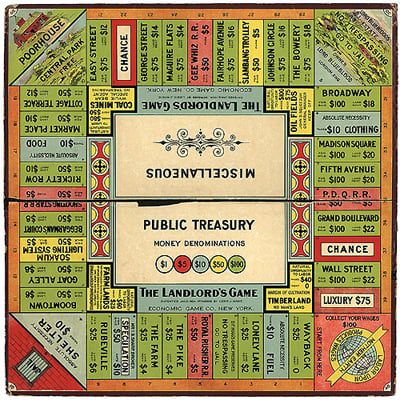
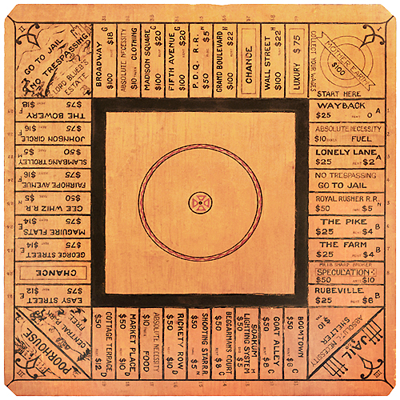
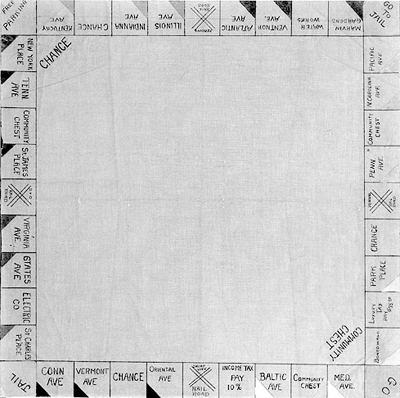


 AuntyUta